Cannabis suppositories are an alternative delivery method that allows cannabinoids like THC and CBD to be absorbed through the rectal or vaginal mucosa. While not as widely discussed as smoking or edibles, they are gaining attention for their potential medical benefits and localized relief.
This guide will walk you through what cannabis suppositories are, their benefits, risks, and how to make them at home.
What Are Cannabis Suppositories?
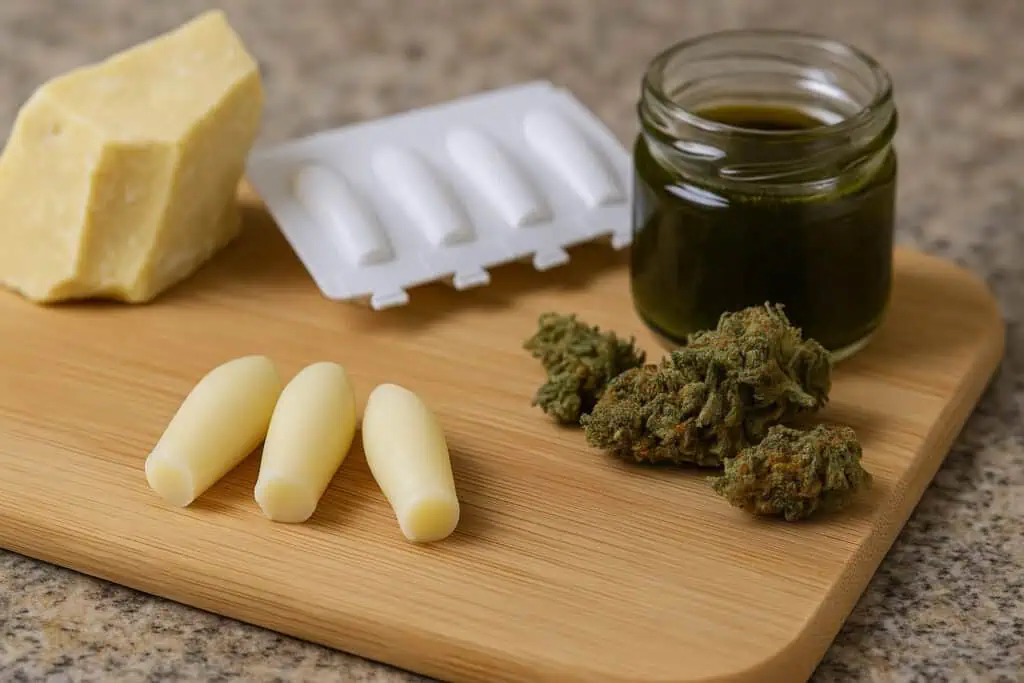
A cannabis suppository is a small, firm, bullet-shaped preparation that is inserted rectally or vaginally. As it melts, cannabinoids are absorbed into the bloodstream or local tissues. Unlike edibles, suppositories largely bypass the liver, resulting in less psychoactive effect but more body-focused relief.
Benefits of Cannabis Suppositories
- Pain Relief: Can provide targeted relief for pelvic pain, cramps, or localized conditions.
- Reduced Psychoactivity: THC suppositories typically cause minimal “high,” making them attractive for patients who want relief without intoxication.
- Fast Absorption: Onset may be quicker than edibles since cannabinoids are absorbed directly into the bloodstream.
- Medical Applications: May support conditions such as endometriosis, prostate issues, colon inflammation, and severe menstrual cramps.
Potential Risks & Considerations From Cannabis Suppositories
- Irritation: Some people experience discomfort or irritation depending on ingredients or dosage.
- Inconsistent Absorption: Rectal and vaginal absorption rates can vary, leading to inconsistent results.
- Storage Issues: Suppositories must stay cool or refrigerated to prevent melting.
- Limited Research: While anecdotal evidence is strong, scientific studies on cannabis suppositories are limited.
Always consult with a healthcare professional before use.
Ingredients You’ll Need
- Cannabis Oil (THC, CBD, or blend): Decarboxylated and infused into a carrier oil like coconut or MCT oil.
- Cocoa Butter (preferred) or Coconut Oil: Acts as the solid base that melts at body temperature.
- Suppository Molds: Silicone or plastic molds (usually 1–2 ml capacity).
- Measuring Tools: Syringe or dropper for precise dosing.
Step-by-Step: How To Make Cannabis Suppositories
- Prepare the Base
- Melt cocoa butter (or coconut oil) gently using a double boiler until liquid.
- Mix with Cannabis Oil
- Stir in your cannabis extract or infused oil.
- Standard ratio: About 1 gram of cannabis oil per 20–30 grams of cocoa butter (adjust depending on desired potency).
- Blend Thoroughly
- Mix until completely uniform. This prevents uneven dosing.
- Pour into Molds
- Use a syringe or dropper to fill suppository molds. Each should be about 1 ml–2 ml.
- Cool and Harden
- Place molds in the refrigerator or freezer until firm.
- Remove and Store
- Pop out suppositories and store in an airtight container in the fridge or freezer.
Dosage Guidelines
- Beginner: 5–10 mg THC or CBD per suppository.
- Intermediate: 10–25 mg.
- Medical Use (with doctor supervision): May range higher depending on condition.
Always start low and adjust gradually.
Common Uses of Cannabis Suppositories
- For Menstrual Cramps: Vaginal suppositories may ease pain and muscle tension.
- For Endometriosis: Some women report localized relief and reduced inflammation.
- For Prostate Cancer Support: Rectal suppositories are sometimes used in complementary care.
- For Colon Health: May help with conditions like Crohn’s disease or ulcerative colitis.
Expanding the Science, Dosage, and Best Practices
The article provides an excellent guide on cannabis suppositories, covering their mechanism, benefits, DIY recipe, and common uses. To elevate its helpfulness, we can expand into three critical areas: Pharmacokinetics (why they’re often non-intoxicating), Dosage & Medical Applications, and Storage/Best Practices.
Deep Dive into the Pharmacokinetics (Why Suppositories Usually Don’t Cause a “High”)
Cannabis suppositories are unique because they typically offer relief without intoxication. This effect can be explained by how cannabinoids are absorbed:
- Rectal Absorption and the Vena Cava System:
The lower rectum drains into the inferior vena cava, bypassing the liver. This means THC avoids first-pass metabolism and is not converted into 11-hydroxy-THC, the metabolite that makes edibles so psychoactive. The result is symptom relief with little to no mental “high.”
- Lower vs. Upper Rectum:
- Lower and middle rectal veins → deliver cannabinoids directly to the bloodstream (non-intoxicating).
- Upper rectal veins → drain into the liver, where first-pass metabolism occurs (potentially intoxicating).
Tip: Proper insertion depth helps ensure the suppository remains in the lower rectum to avoid unwanted psychoactive effects.
- Vaginal Absorption:
The vaginal mucosa is highly permeable, allowing cannabinoids to be absorbed locally in the pelvic region. This pathway also bypasses first-pass metabolism, further reducing the risk of intoxication while delivering targeted relief.
Refining Dosage and Medical Applications
While the base guidelines of 5–25 mg are a solid start, medical applications often require tailoring:
- High-CBD Suppositories
- Best for: generalized inflammation, colon inflammation (Crohn’s, colitis), and seizure support.
- Effect: systemic relief without intoxication.
- Balanced 1:1 THC:CBD Suppositories
- Best for: severe menstrual pain (dysmenorrhea), endometriosis, and pelvic muscle tension.
- Effect: THC relaxes muscles; CBD reduces inflammation, working together locally.
- THC-Dominant Suppositories
- Less common but may be used in palliative care or cancer-related pain when stronger localized analgesia is needed.
Key Distinction:
Because suppositories avoid most first-pass metabolism, the effective dose for local relief is often 50–100 mg per suppository — much higher than a psychoactive edible dose (5–10 mg) — without producing a “high.” This is an essential point for medical patients seeking higher therapeutic dosing without impairment.
Storage and Best Practices for Home Production
Homemade cannabis suppositories should be crafted and stored with care:
- Shelf Life & Stability
- Frozen: Up to 6–12 months if kept airtight.
- Refrigerated: 2–4 weeks before potency and stability may degrade.
- Packaging
- Use blister packs or wrap individually in parchment paper before placing in a sealed container. This prevents sticking and contamination.
- Temperature Control
- Avoid overheating the cocoa butter or oil base. High heat destroys cannabinoids and terpenes.
- Always melt gently using a double boiler method, never direct heat.
- Hygiene & Sterilization
- Sterilize molds, utensils, and tools with isopropyl alcohol before use.
- Wear food-grade or medical gloves when handling the final product to ensure safety.
FAQs About Cannabis Suppositories
Do cannabis suppositories get you high?
Usually not, or much less than smoking or edibles. Many users experience relief without intoxication.
Can I use coconut oil instead of cocoa butter?
Yes, but cocoa butter is preferred because it melts slowly and is more stable at room temperature.
How long does it take to feel effects?
Most users report onset within 10–30 minutes, lasting 4–8 hours.
Are cannabis suppositories safe for vaginal use?
Generally yes, if made with pure cannabis oil and cocoa butter. Avoid additives, sugar, or essential oils which may cause irritation.
Where can I buy cannabis suppositories?
In legal cannabis states, dispensaries may carry pre-made options. Otherwise, they can be made at home.
Can I make cannabis suppositories without molds?
Yes. You can roll the mixture in wax paper into small “torpedo” shapes, then refrigerate until firm.
Final Thoughts on Cannabis Suppositories
Cannabis suppositories are a unique, effective option for people seeking targeted relief without strong psychoactive effects. By making them at home with cannabis oil and cocoa butter, you can control potency, ingredients, and freshness.
As always, consult with your healthcare provider for medical use, especially when treating serious conditions.
More in Cannabis 101




 IACET Accredited Provider · online cannabis education
Since 2009 • 50,000+ students trained worldwide
IACET Accredited Provider · online cannabis education
Since 2009 • 50,000+ students trained worldwide