Updated October 2026
Terpenes are the aromatic compounds that give cannabis, and many other plants, their smell and flavor. The most common cannabis terpenes are myrcene, limonene, caryophyllene, pinene, linalool, humulene, and terpinolene, and each one has its own aroma, from earthy and musky to citrus, pepper, pine, and lavender.
Terpenes shape the overall experience of a strain, mostly through aroma and flavor. Researchers are also studying whether they change how THC and CBD feel, but much of that work is still early.
The idea that terpenes and cannabinoids work together is called the “entourage effect,” where the combined effect of the whole plant may differ from each compound on its own.
That idea is one reason full-spectrum products, which keep the plant’s natural terpenes, have become popular alongside isolates and distillates.
Simply put, terpenes are the fragrant oils that cannabis and other plants naturally make, and they define their aromas and flavors.
They’re what give Lemon Skunk its distinctive citrusy funk and Chem Dawg its pungent diesel-fuel aroma.
Each strain is different, and terpenes are the most obvious element that set them apart.
Terpenes are found in many other plants as well. Do you love the smell of fresh basil? Yep, you can thank terpenes for basil’s enticing fragrance.
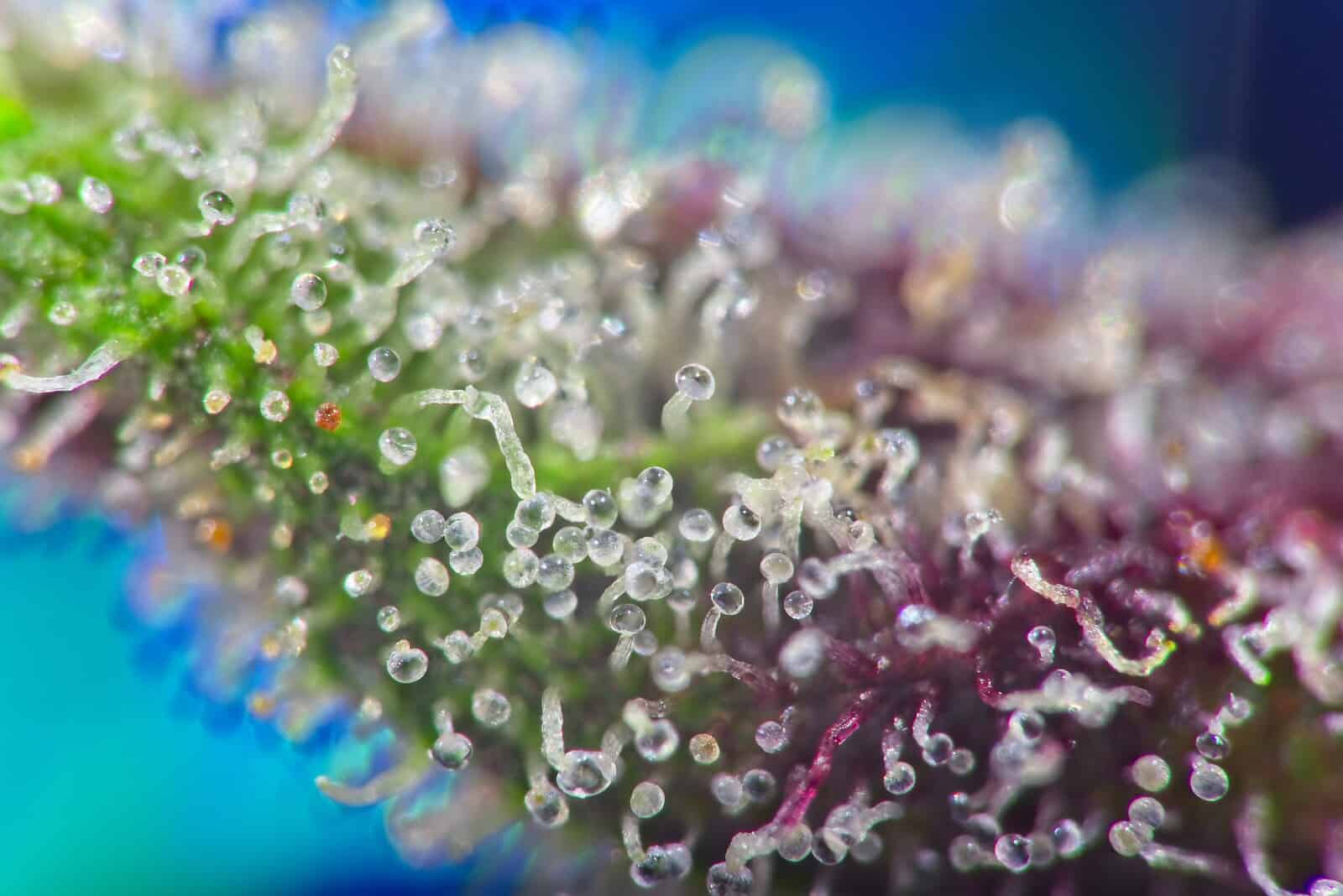
In cannabis, terpenes are made mostly in the glandular trichomes, the same resin glands that make THC and CBD, and they are most concentrated in mature, unfertilized (seedless) flower.
Unfortunately, these terpenes evaporate and degrade easily in cured flowers through improper storage, handling, heat, and exposure to light and air.
Any discussion about terpenes should also touch on cannabinoids.
Terpenes and cannabinoids (including THC and CBD) both contribute to the character of cannabis when consumed.

THC produces the high by acting on CB1 receptors in the brain. Most terpenes do not act on cannabinoid receptors in the same way. One exception is beta-caryophyllene, which binds to the CB2 receptor (more on that below).
How terpenes and cannabinoids interact is still being studied.
Some consumers prefer whole flower or full-spectrum extracts over cannabis concentrates such as distillates, which strip out most natural terpenes during refining.
Suffice it to say that the cannabinoid/terpene relationship is both fascinating and complex, but terpenes alone will be the focus here, and there’s plenty to discuss.
Well over 100 terpenes have been identified in cannabis, but only about a dozen show up in meaningful amounts in most strains, and we’ll focus on the most relevant of those.
The term “entourage effect” comes from a 1998 study by S. Ben-Shabat, Raphael Mechoulam, and colleagues. It found that some of the body’s own fatty-acid compounds, inactive by themselves, boosted the activity of the endocannabinoid 2-AG (European Journal of Pharmacology, 1998).
In 2011, neurologist Ethan Russo extended the idea to cannabis terpenes in a widely cited review, proposing ways terpenes might shape THC’s effects and calling for clinical trials to test them (British Journal of Pharmacology, 2011).
Controlled human studies are still few. Research is ongoing, and none of the terpenes below is an approved treatment for any condition. If you’re thinking about cannabis or terpenes for a health reason, talk to a clinician.
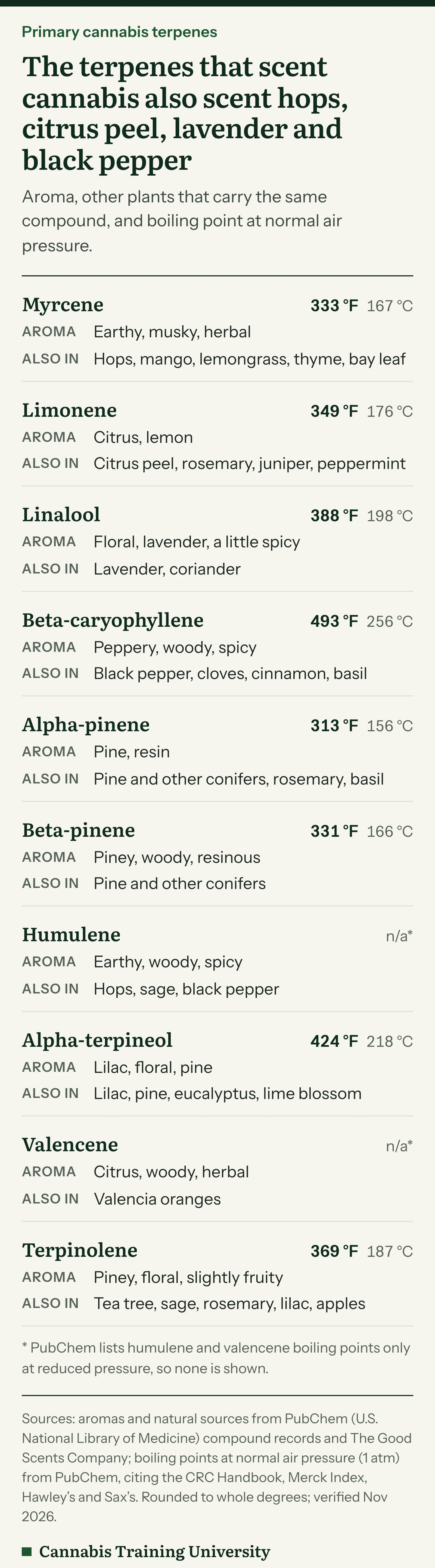
Myrcene is usually the most abundant terpene in cannabis, and in some strains lab reports show it making up more than half of the total terpene content.
It produces earthy, musky, herbal notes with a hint of fruit. Outside cannabis, it’s found in hops, mango, lemongrass, thyme, and bay leaves.

A popular belief says that eating a mango about 45 minutes before smoking weed makes the high stronger because mangoes contain myrcene. It’s a fun piece of cannabis folklore, but no controlled study has tested it.
Myrcene is the most common terpene produced by cannabis and is also found in many other plant species.
If you favor musky, earthy, skunky indicas like Northern Lights, you most likely appreciate myrcene’s aroma.
Myrcene is often linked with “couch-lock,” the heavy, relaxed feeling some strains are known for. That link is widely repeated in the industry, but it hasn’t been confirmed in controlled human studies. Most of the research on myrcene so far is in animals.
So, if your evening plans are no more ambitious than a pizza delivery and binge-watching Invader Zim, a heady, myrcene-forward indica may be right up your alley.
Limonene is one of the most common terpenes in cannabis.

It is also found in high amounts in the rind of citrus fruits such as oranges, lemons, and tangerines.
It is commonly used in the manufacturing of cleaning products, cosmetics, and food flavorings.
Limonene is a favorite in aromatherapy for its bright, fresh scent.
Its name is a giveaway for what it smells like: lemons. Limonene and pinene are both monoterpenes built from the same 10-carbon starting molecule in the plant, which is why they often show up together.
Cannabis varieties like Super Lemon Haze are high in limonene, and many consumers describe citrusy strains as bright and upbeat.
This citrusy terpene is the major component of citrus rind oils and also appears in rosemary, juniper, peppermint, and several pine needle oils.
Plants use limonene partly as a natural defense that helps deter insects.
Its solvent power and fresh scent are why it’s so common in cleaning products and degreasers.
Limonene is one of the most studied terpenes. In a small 2024 Johns Hopkins trial with 20 healthy adults, inhaled limonene taken with THC reduced THC-related anxiety compared with THC alone (Spindle et al., Drug and Alcohol Dependence, 2024). These are early findings. Research is ongoing, and limonene is not an approved treatment for any condition.

Linalool is responsible for the floral notes in cannabis. It is also common in lavender, coriander, and aromatic herbs.
Linalool is the main reason lavender smells the way it does, and lavender has been used in calming bedtime rituals and aromatherapy for centuries.
Linalool shows up in strains like Lavender, Skywalker OG, and ZaZa, which consumers often describe as soft, floral, and mellow.
Its aroma is floral and slightly spicy. Pure linalool is colorless to pale yellow.
It is found in many commercial products like perfumes, shampoos, cleansers, detergents, and soaps.
It is also used in some insect repellents.
Studies in mice suggest that inhaled linalool may reduce anxiety-related behavior. Researchers have also looked at linalool in animal models of pain and memory. Human evidence is limited, so these remain research questions, not uses.

Caryophyllene has a strong spicy aroma and is common in black pepper, cinnamon, and spices such as oregano, basil, and rosemary.
Beta-caryophyllene is the best-known terpene that binds directly to the body’s CB2 receptors. A 2008 study in PNAS identified it as a “dietary cannabinoid” because it acts on CB2 and is eaten every day in spices (Gertsch et al., 2008).
CB2 receptors are found mostly in immune tissue, not the brain, so caryophyllene does not produce a high. Animal studies have looked at its role in inflammation; human research is still limited.
In addition to its presence in cannabis, beta-caryophyllene is found in many plants, such as Thai basil, cloves, cinnamon leaves, and black pepper.
This terpene’s aroma is peppery, woody, and/or spicy.
Strains like AK-47, Girl Scout Cookies, and Donny Burger contain caryophyllene.
Pinene terpenes have the aroma of pine trees.
As its name implies, pinene is known for its pine and fir aroma. It occurs in pine and other coniferous (and some non-coniferous) plants, balsamic resin, rosemary, basil, and some citrus fruits. Alpha-pinene is the most common terpene in nature.
Pinene is a main ingredient in turpentine and is widely used in fragrances.
Russo’s 2011 review proposed that pinene might offset some of THC’s short-term memory effects. That idea hasn’t been confirmed in controlled human trials.
Some excellent varieties of cannabis contain this terpene. Sativa-dominant strains like Blue Dream, Jack Herer and Panama Red possess pinene.

Humulene is most commonly associated with hops, and it’s part of the earthy, woody, spicy aroma in many IPAs. Its name comes from the hop plant, Humulus lupulus.
It’s also present in cannabis, often alongside caryophyllene, as well as in plants like Vietnamese coriander, sage, ginseng, and black pepper.
A study published in the European Journal of Pharmacology reported that humulene reduced markers of inflammation in mice. Results in animals don’t always carry over to people.
Humulene is also often described online as an appetite suppressant and linked to weight management. There is no good human evidence for that yet.
For cannabis consumers who enjoy the flavor of hops, humulene-rich strains are worth seeking out.
7. Terpineol
This is a less common terpene that smells of lilacs.
The aroma of terpineol not only hints of lilac but also flower blossoms, as well as pine and clove.
Not surprisingly, terpineol often is found in cannabis varieties that have high pinene levels, which, unfortunately, mask the more subtle fragrances of this terpene.
As a lone terpene, terpineol’s aroma is best described as floral, with a soft fragrance of lilac blossoms with a slight citrus twist. In the flavor department, terpineol has been likened to mint and anise, with semi-sweet lime notes.
Terpineol is found in a number of other plant species besides cannabis, including lilac, pine and fir trees, eucalyptus, and lime blossoms. It’s widely used in perfumes and soaps.
This is an exotic terpene that is found in significant amounts in sweet Valencia oranges.
Valencene is a less common terpene with a citrus, herbal, and woody aroma.
Limited research, mostly in cells and animals, has looked at valencene and inflammation and skin. There is very little human data.
Valencene has many commercial uses, including food flavorings, cleaning products, cosmetic products, and pest control products.

Terpinolene has a piney, floral, slightly fruity aroma. It is also present in sage, rosemary, tea tree, lilac, and apples. It is commonly used in the manufacture of soaps and perfumes.
It’s a less common dominant terpene, but strains that lead with it tend to smell very distinctive. One study in mice reported a sedative effect when terpinolene was inhaled; that hasn’t been studied in people.
Strains with Terpinolene in them include MAC 10, XJ-13, and Golden Goat.
Phellandrene has a peppery, minty, slightly citrus aroma. Plants rich in it have a long history in traditional herbal remedies.
Phellandrene can be found in mint, parsley, dill, black pepper, cinnamon, lavender and water fennel.
It is also found in eucalyptus oil and is used in fragrances and flavorings.
This terpene produces a pleasant cypress, sweet, and earthy aroma. It’s found in pine and cedar resin, rosemary, basil, and bell peppers.
Carene has been studied in animal and lab research, but there is no established human use for it.
Strains with Carene include Super Glue, Skunk #1, and Lemon Haze.
Alpha-bisabolol, also known as levomenol, produces a sweet, floral aroma. It is found in high amounts in chamomile flower and the candeia tree.
It’s a common ingredient in skin-care and cosmetic products.
This terpene is also known as cineol (1,8-cineole), and it produces cool, minty notes like those of eucalyptus trees. It’s used in mouthwashes, cough drops, and fragrances.
Eucalyptol usually appears in cannabis only in small amounts.
Popular strains with Eucalyptol include Sweet Tea, Super Silver Haze, and Headband.
This terpene is found in small amounts in cannabis, while higher amounts are found in pennyroyal and other mints.
It has a strong peppermint-like smell and insecticidal properties. Pennyroyal oil, which is high in pulegone, is toxic in large doses. In 2018 the FDA removed synthetic pulegone from its list of approved synthetic food flavorings after high doses caused cancer in lab animals (FDA).
Sabinene is also found in Norway spruce, black pepper, nutmeg, and basil. It has a piney, spicy aroma.
This is a secondary terpene that is also common in jasmine, lemongrass, and tea tree oil. It has a floral, woody aroma reminiscent of fresh bark, and it’s used in perfumes and as a flavoring.
Camphene has a strong aroma of fir needles, with a damp, woody, earthy edge.
Some lab studies have reported that camphene has antifungal properties, often when combined with other essential oils. These are laboratory findings, not proven treatments.
Camphene was once part of “camphine,” a lamp fuel made from turpentine that was popular in the 1800s before kerosene.
It is also commonly used in the preparation of fragrances and as a food flavoring agent.
Borneol has a herbal, camphor-like, minty aroma and may be found in high amounts in rosemary, camphor, and mint.
It is known for its insecticidal properties.
Borneol has been studied in the lab, including research on borneol and cancer cells. Lab results like these are an early step and do not show that borneol treats cancer.
Borneol is a bicyclic monoterpene that has been part of traditional Chinese herbal medicine for centuries.
It is also commonly used in natural insect repellents and by the fragrance industry to create colognes and perfumes.
Borneol used to be harvested from the trunk of Dryobalanops aromatica, known as the Borneo camphor tree, and re-condensed into a clear substance.
Modern borneol is mostly made from turpentine oil or camphor.
Phytol is a diterpene with a floral, balsamic aroma. It’s a breakdown product of chlorophyll, so it’s found in green plants and in green tea.
It’s used in fragrances and as a building block for making vitamins E and K1.
This is a secondary terpene with a strong, medicinal aroma that is useful for repelling insects. It’s best known as an ingredient in over-the-counter chest rubs and anti-itch products. Camphor is toxic if swallowed, so camphor products should be kept away from children.
This terpene has a woody, warm, slightly spicy aroma, and it’s found in bergamot, carrot, lime, and black pepper oils.
Terpinene has a woody, citrusy aroma and is found in tea tree oil, cardamom, and marjoram. It’s used in flavorings, perfumes, and cosmetics.
This terpene is common in lemongrass, citronella, and geranium oils.
It has a fruity, rosy aroma and is used widely in perfumes and flavorings.
No. Terpenes can shape your experience, but they don’t produce intoxicating effects like THC.
Inhaling terpenes on their own won’t produce a buzz. Concentrated terpenes can irritate the throat and lungs, which is one reason pure terpene oils are meant to be diluted.
Researchers are testing whether certain terpenes change how THC feels. The 2024 Johns Hopkins limonene study is one of the few controlled human trials so far, and it found less THC-related anxiety when limonene was added. More studies are needed.
Terpenes won’t get you high, but they might improve your overall experience.
One of the best ways to taste the terpenes in cannabis flower or concentrates is vaporization.
Desktop and portable vaporizers for dry herb and cannabis extracts heat material below the point of combustion, which preserves more of the terpenes than smoking.
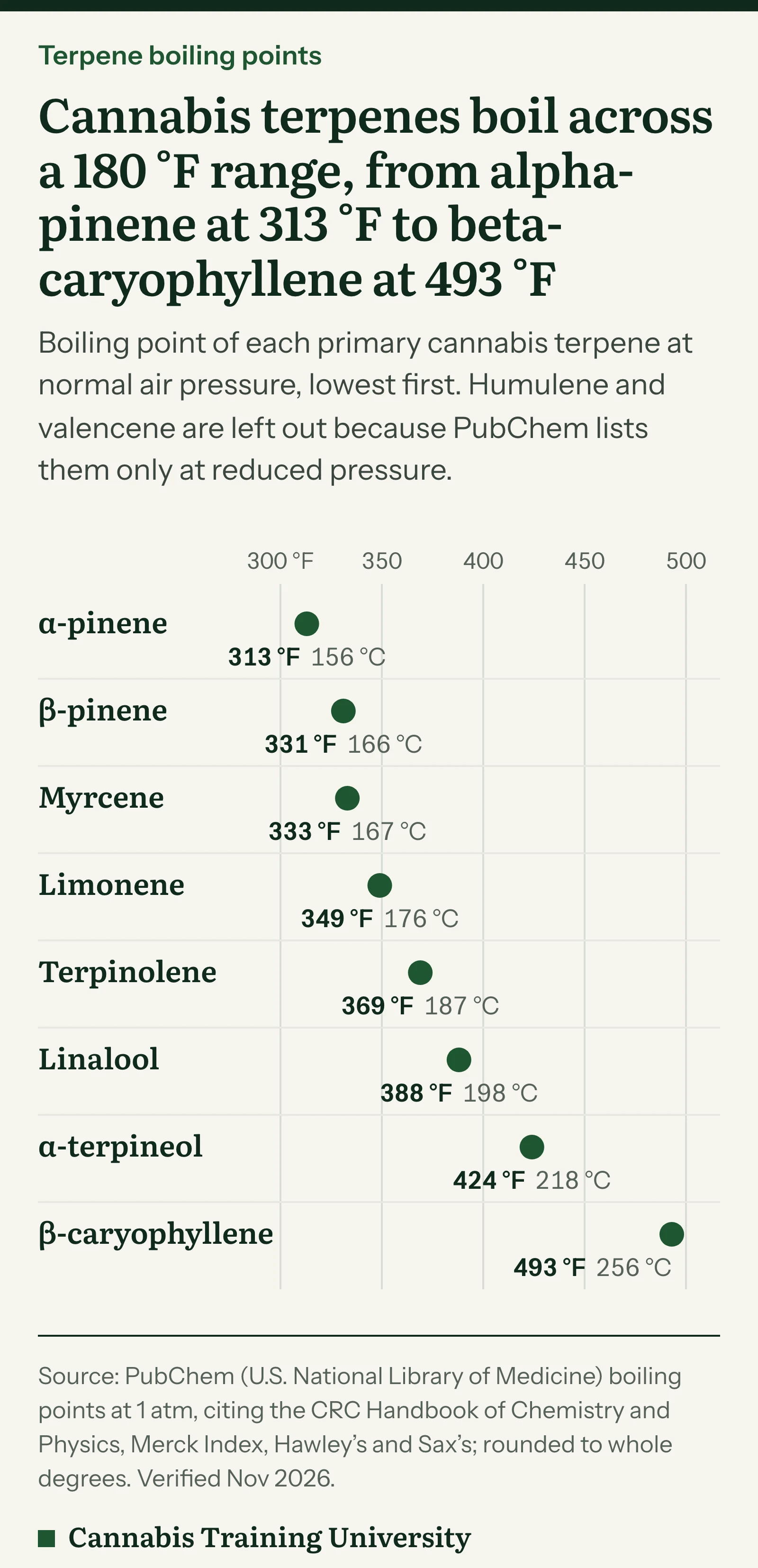
Each terpene boils at a different temperature. For example, myrcene’s boiling point is about 333ºF (167ºC), and alpha-pinene boils at about 313ºF (156ºC). THC vaporizes at about 315ºF (157ºC), while linalool boils higher, at about 388ºF (198ºC) (Russo, 2011).
Vaporizers with precise temperature control let you start low for flavor and step up the heat from there.
Consumers can also buy terpene oils from a number of established terpene brands such as True Terpenes, Floraplex Terpenes, and Blue River Terpenes.
Are terpenes legal? Generally, yes. Terpenes can be botanically derived from many plants that aren’t cannabis, and they contain no THC.
Several terpenes, including limonene and linalool, are on the FDA’s list of substances generally recognized as safe (GRAS) for use as food flavorings (21 CFR 182.60). That status covers eating them in food. It is not FDA approval, and it says nothing about inhaling or vaping them.
Food-grade terpenes are infused into edibles, concentrates, topicals, and more. Follow the supplier’s dilution guidance.
Personal reports about terpenes are common, but they vary a lot from person to person. Research is ongoing; if you have a health question, talk to a clinician.
Consumption method matters. Terpenes are delicate compounds that evaporate and degrade easily. Here’s how to keep more of them:
The same terpenes found in cannabis are in plenty of everyday products:
Seeing terpenes as everyday plant compounds, not just cannabis compounds, makes it easier to recognize them by smell.
No. Terpenes aren’t intoxicating. Terpenes give each strain its smell and taste. Whether they change how THC or CBD feels (the ‘entourage effect’) is still being studied, and results so far are mixed.
No. Each strain has a unique terpene profile, which is why aromas and effects differ so widely
Yes. Food-grade terpenes are available for infusion into oils, edibles, and even vape cartridges. Always source from reputable suppliers.
Yes. Heat, light, and oxygen break down terpenes. Proper storage in airtight containers and cool, dark spaces helps preserve them.
Research is ongoing. In a small 2024 Johns Hopkins study, inhaled limonene taken with THC reduced THC-related anxiety in healthy adults, but no terpene is an approved treatment for anxiety. If anxiety is a concern, talk to a clinician.
Generally, yes, terpenes are found in many fruits, herbs, and spices we consume daily. In very high concentrations, some terpenes may cause irritation, so moderation matters.
We’ve just begun to scratch the surface of what terpenes do. As research restrictions on cannabis ease, scientists will be able to test more of these ideas in people.
You can learn much more about medical cannabis in our cannabis as medicine certification program online.
Although the study of terpenes can be complex and challenging for even the most scientific mind, for the layman, terpenes play a huge role in providing variety to the many cannabis strains available on the market today.
Terpenes provide the unique, individual flavors of our favorite strains, and life would be pretty bland without that variety!
Learn more about the amazing cannabis plant by checking out our online cannabis program.
More in Medical cannabis

Check your state's cannabis laws

Medical cannabis, CBD, patient-focused education
 IACET Accredited Provider · online cannabis education
Since 2009 • 50,000+ students trained worldwide



Copyright Cannabis Training University, a subsidiary of Online Training Providers. © 2026. All Rights Reserved.
Medical Disclaimer: The information on this website is for informational purposes only and is not intended to be a substitute for professional medical advice, diagnosis, or treatment.
Always seek the advice of a physician or other qualified health provider with any questions you may have regarding a medical condition.
Legal Compliance: Cannabis remains federally illegal. Products and information are intended only for jurisdictions where cannabis use and possession is legal.
By using this site, you affirm that you are of legal age (21+) and responsible for understanding your local laws.