Early Black Friday SaleAll 7 courses $199 through Cyber Monday, then $299 · Discount auto-applied at checkout16Days04Hrs17Min47SecGet the offer

Medical Cannabis: Science, Uses, Safety, Regulations & Patient Education

Medical cannabis refers to the use of cannabis and cannabinoid-based products under medical supervision for the management of certain health conditions. As legalization expands across states and countries, medical cannabis has become a structured regulatory framework separate from adult-use recreational markets. However, medical cannabis is often misunderstood. It is not simply "recreational cannabis prescribed by a doctor." Medical cannabis operates within specific legal systems, patient qualification guidelines, dosing considerations, and product standards.
Medical cannabis science uses safety regulations patient education

The Endocannabinoid System (ECS)

The foundation of medical cannabis research lies in the endocannabinoid system (ECS). The ECS is a biological signaling system found in the human body that helps regulate mood, appetite, sleep, pain perception, immune function, memory, and inflammation response. The ECS is a biological signaling system found in the human body that helps regulate mood, appetite, sleep, pain perception, immune function, memory, and inflammation response.

Mood

Appetite

Sleep

Pain Perception

Immune Function

Memory

Explore Medical Cannabis Topics

The Endocannabinoid System

The foundation of medical cannabis research lies in the endocannabinoid system (ECS).

Cannabinoids and Terpenes

Cannabis contains over 100 identified cannabinoids. The two most widely studied are THC and CBD.

Delivery Methods

Medical cannabis products are available in multiple forms including inhalation, edibles, tinctures, capsules, and topicals.

Qualifying Conditions

Medical cannabis programs vary by state with commonly approved qualifying conditions.

Patient Safety Considerations

Medical cannabis is not appropriate for everyone. Potential considerations include pregnancy, heart conditions, and medication interactions.

State Medical Cannabis Programs

Each state designs its own program with physician certification, patient registration, and ID card issuance.

Advanced Perspectives on Medical Cannabis

Evaluating Medical Cannabis Research

Medical cannabis research differs from traditional pharmaceutical research in several ways. Cannabis research has historically faced regulatory limitations that restrict large-scale randomized controlled trials. As a result, evidence may include observational studies, small clinical trials, patient-reported outcomes, preclinical laboratory research, and animal model studies. When evaluating medical cannabis research, it is important to consider study size, study design, funding source, product standardization, and control groups. Not all research carries equal weight. Understanding levels of evidence helps patients and professionals interpret findings responsibly.
Evaluating medical cannabis research
Drug interactions medical oversight

Drug Interactions & Medical Oversight

Cannabinoids are metabolized by liver enzymes, particularly the cytochrome P450 system. Because many prescription medications are processed by the same enzyme system, potential interactions may occur. Examples of medication categories that may interact include blood thinners, antidepressants, anti-anxiety medications, antiepileptics, and immunosuppressants. Possible effects of interaction may include increased medication levels, decreased medication effectiveness, and altered sedation levels. Medical supervision is important when combining cannabis with prescription medications.

THC Tolerance & Sensitivity

Tolerance to THC may develop over time. Factors influencing tolerance include frequency of use, dosage levels, delivery method, and individual metabolism. Some individuals may be highly sensitive to THC, experiencing anxiety, paranoia, and increased heart rate. Lower THC products or higher CBD ratios may reduce the likelihood of unwanted psychoactive effects in sensitive individuals.
THC tolerance sensitivity
Medical cannabis in older adults

Medical Cannabis in Older Adults

Older adults represent a growing segment of medical cannabis patients. Considerations for older populations include slower metabolism, polypharmacy (multiple medications), fall risk due to dizziness, and cognitive sensitivity. Dosing adjustments and careful monitoring may be necessary.

Standardization Challenges in Medical Cannabis

Unlike pharmaceutical drugs, cannabis products vary widely in THC concentration, CBD concentration, terpene content, extraction method, and product formulation. Standardization remains an ongoing challenge. Laboratory testing improves consistency, but variability still exists between brands and batches. Patients may need to adjust dosing when switching products.
Standardization challenges in medical cannabis
Medical cannabis education patient responsibility

Medical Cannabis Education & Patient Responsibility

Patients should understand dosing strategy, product labeling, onset times, impairment risks, and legal limits. Education reduces misuse and enhances safety. Medical cannabis product labels typically include THC percentage, CBD percentage, serving size, batch number, and lab testing verification. Patients should verify that products are tested through state-approved laboratories.
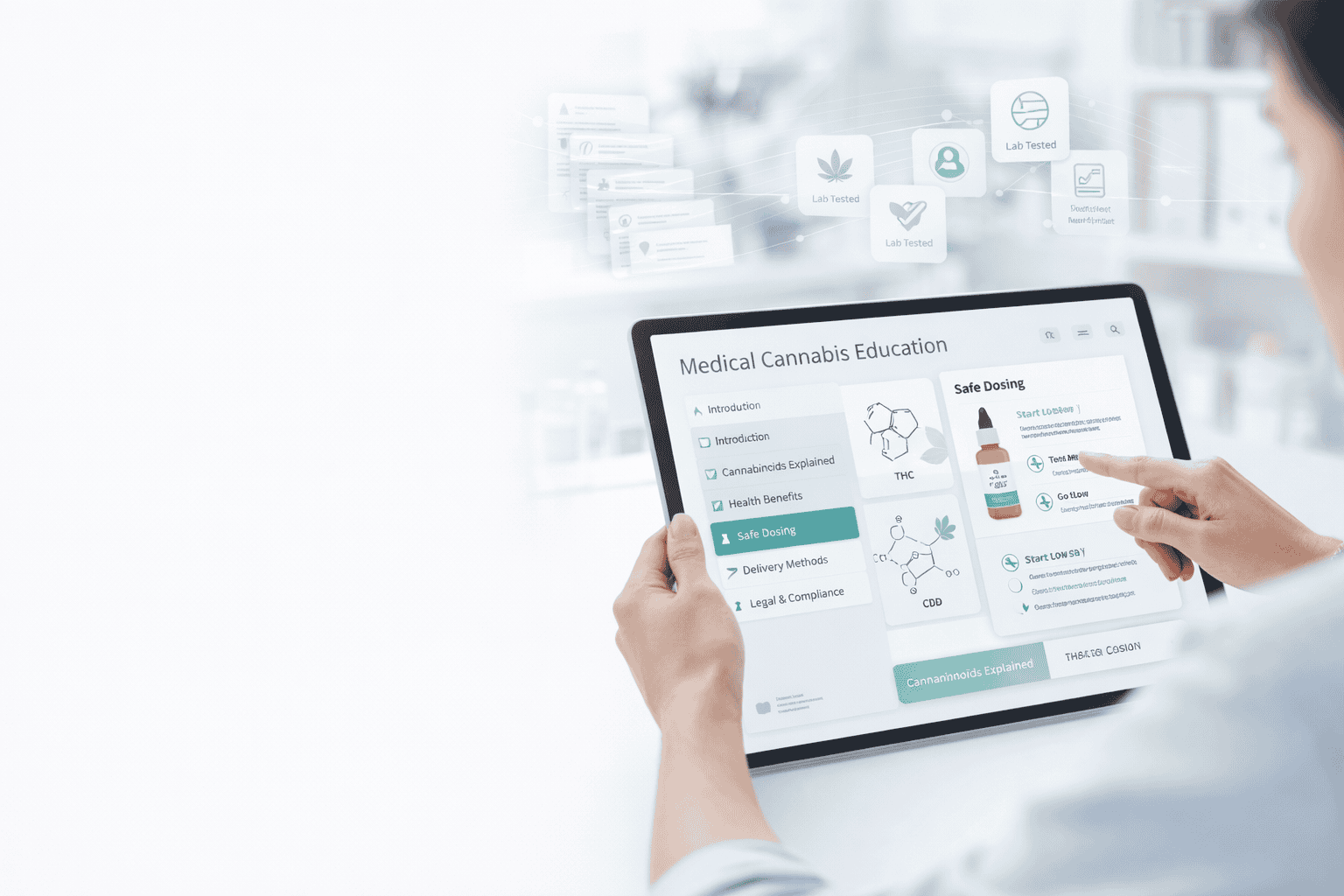
Learn medical cannabis standards

Learn Medical Cannabis Standards

As the medical cannabis industry evolves, patient education becomes critical. Patients benefit from understanding cannabinoid differences, delivery methods, proper dosing, legal compliance, and product labeling. Educational resources help reduce misuse and confusion. Understanding medical cannabis in a structured, evidence-informed manner empowers patients and professionals to navigate this emerging healthcare landscape responsibly.

Frequently Asked Questions About Medical Cannabis

Not legally. Medical programs operate under different regulatory structures.

Yes, in most state programs.

Generally no. Most insurance providers do not cover medical cannabis due to federal illegality. Patients typically pay out-of-pocket. This affects accessibility and affordability.

CBD products may fall under different regulatory categories depending on source and formulation.

Medical cannabis programs vary by state. However, commonly approved qualifying conditions may include chronic pain, cancer-related symptoms, epilepsy, multiple sclerosis, PTSD, HIV/AIDS, glaucoma, Crohn's disease, and Parkinson's disease.

Medical cannabis dosing is individualized. Factors influencing dosage include body weight, metabolism, tolerance level, condition being addressed, and delivery method. A common approach is 'start low and go slow.' Patients often begin with low doses and gradually adjust under medical supervision.

Potential side effects may include dry mouth, drowsiness, increased heart rate, impaired coordination, and anxiety in some individuals. CBD products generally have a lower risk of intoxication-related side effects. Individual responses vary significantly.

THC can impair coordination and reaction time. Medical cannabis patients must understand state driving laws, workplace policies, and employer drug testing procedures. Impairment thresholds vary by state. Patients should avoid operating vehicles or heavy machinery when impaired.

More Medical Cannabis Articles

Can Cannabis Make You Lose Weight?

Can Cannabis Make You Lose Weight?

Cannabis, particularly THC, is famous for stimulating appetite and giving users the “munchies.” But, multiple population studies report that people who use cannabis regularly tend to have lower body mass…
Read more
What Is 7OH? : 7-Hydroxymitragynine Effects

What Is 7OH? : 7-Hydroxymitragynine Effects

The world of kratom is vast and often misunderstood, and few compounds within it attract as much attention as 7-Hydroxymitragynine, 7OH, or 7-OH. But what is 7OH? This naturally occurring alkaloid…
Read more
6 Best High CBD Strains – Benefits, Uses, Effects

6 Best High CBD Strains – Benefits, Uses, Effects

High CBD strains have become a go-to choice for medical marijuana patients and wellness-focused cannabis users seeking the health benefits of cannabis without an overwhelming psychoactive high. High CBD strains may benefit…
Read more
5 Best Terpenes for Anxiety and Relaxation

5 Best Terpenes for Anxiety and Relaxation

What are the best terpenes for anxiety? Strains high in calming terpenes like linalool, myrcene, and limonene are typically the most effective at easing anxiety. Each cannabis strain has a…
Read more
Ultimate List of Terpenes and Terpene Benefits

Ultimate List of Terpenes and Terpene Benefits

Updated October 2026 Terpenes are the aromatic compounds that give cannabis, and many other plants, their smell and flavor. The most common cannabis terpenes are myrcene, limonene, caryophyllene, pinene, linalool,…
Read more
How Long Does Weed Stay In Your System?

How Long Does Weed Stay In Your System?

One of the most common cannabis-related questions in 2025 is, how long does weed stay in your system? The THC detection times can vary greatly depending on many different factors.…
Read more
Percocet and Marijuana Side Effects

Percocet and Marijuana Side Effects

Cannabis and opioids have been used to relieve pain and other conditions for thousands of years, but can these two substances provide more significant pain relief together? Research is limited on…
Read more
Medical Disclaimer
The information on this website is for educational purposes only and is not intended as medical advice. Always consult a qualified healthcare professional.
Legal Compliance Disclaimer
Cannabis remains illegal under U.S. federal law. Education provided is intended only for jurisdictions where cannabis activity is legal. Users are responsible for understanding local laws.
Guarantee
7-day money-back guarantee · Refund Policy
  • Cannabis Training University 600 17th St, Suite 2800 Denver, CO 80202
© 2026 Cannabis Training University. All Rights Reserved. Cannabis Training University® is a registered trademark of Online Training Providers LLC.

Copyright Cannabis Training University, a subsidiary of Online Training Providers. © 2026. All Rights Reserved.

Medical Disclaimer: The information on this website is for informational purposes only and is not intended to be a substitute for professional medical advice, diagnosis, or treatment.
Always seek the advice of a physician or other qualified health provider with any questions you may have regarding a medical condition.
Legal Compliance: Cannabis remains federally illegal. Products and information are intended only for jurisdictions where cannabis use and possession is legal.
By using this site, you affirm that you are of legal age (21+) and responsible for understanding your local laws.


Divider Text
7-day money-back guarantee. See our Refund Policy at /refund-policy/.
Accepted payment cards
All 7 courses $199Ends in 16d 4h · then $299Get the offer
})