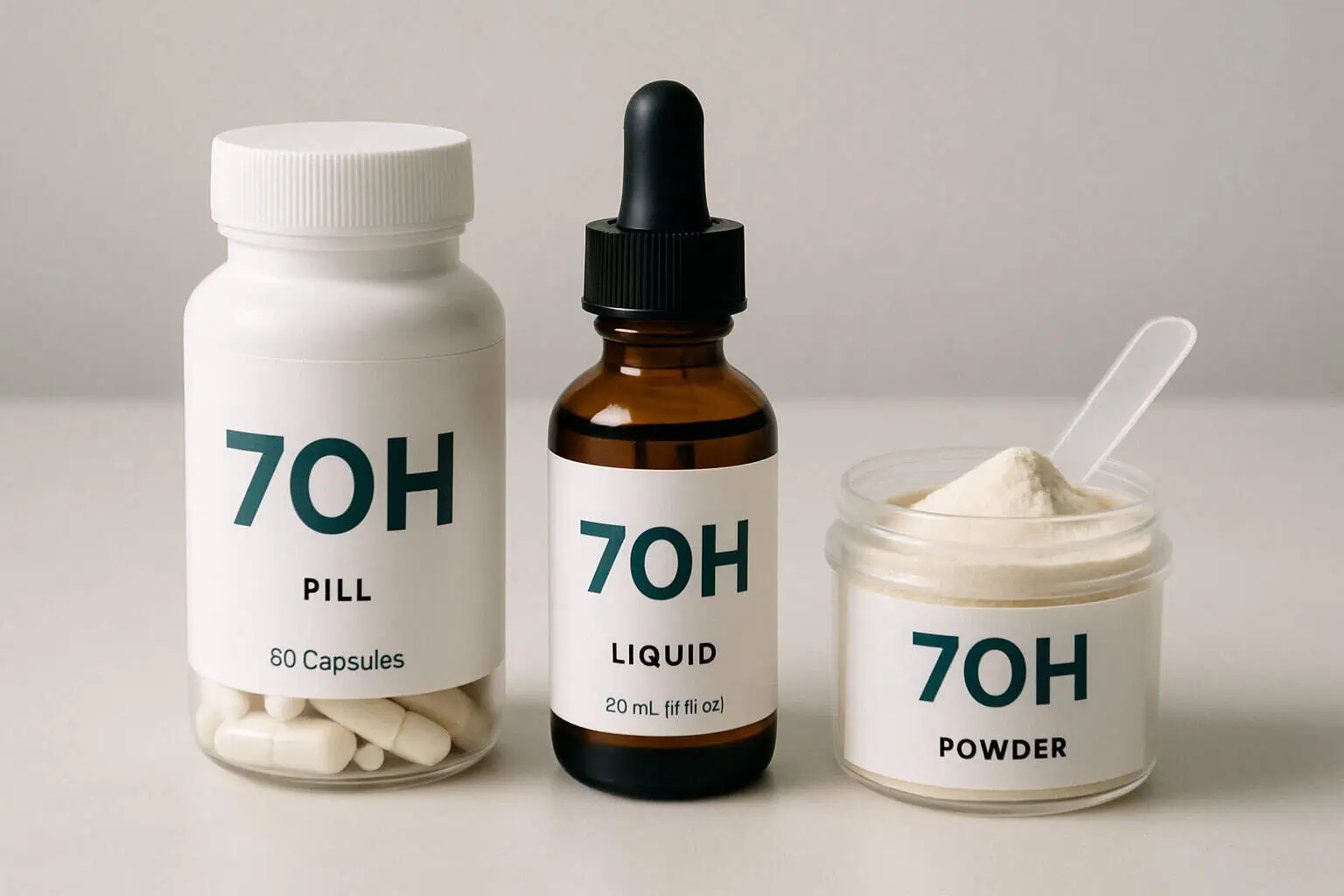
The world of kratom is vast and often misunderstood, and few compounds within it attract as much attention as 7-Hydroxymitragynine, 7OH, or 7-OH. But what is 7OH?
This naturally occurring alkaloid is both praised and feared: praised for its pain-relieving and mood-enhancing properties, feared for its potential for dependence and misuse.
This guide covers everything from what 7OH is, how it compares to mitragynine, the different product forms available(tablets, vapes, syrups, powders), community insights from Reddit, safety considerations, and a deep dive into side effects, withdrawal, legality, brand-specific offerings, effects, comparisons, and health advisories.
It is sought for pain relief, sedation, and mood enhancement, but it carries risks similar to opioids
No. Kratom is the full plant; 7OH is one isolated alkaloid.
Effects usually last 2–4 hours, depending on the dose and method of use.
It depends on the jurisdiction. Some areas regulate kratom, but pure alkaloids are often unaddressed in laws.
Yes. Users report opioid-like withdrawal symptoms with regular use.
Mitragynine is abundant but less potent; 7OH is rare but far stronger.
Yes, but regulation is lacking. Many products may not be safe or accurately labeled.
Yes, kratom leaf naturally contains 7OH, but in small amounts, balanced by other alkaloids.
These are branded or vendor-specific variations, not scientific terms.
Drowsiness, nausea, and dependency risks. Some syrups contain other additives.
*Caution! Numerous health issues have been reported and upcoming changes to laws surrounding 7 OH are likely.

7OH, 7-oh, or 7-Hydroxymitragynine, is a minor but extremely potent alkaloid found in the kratom plant (Mitragyna speciosa). Although it only makes up a small percentage of kratom’s natural alkaloid profile, it has outsized effects.
7-OH is powerful and should not be underestimated. It is not the same as kratom leaf powder, it is one isolated component that behaves much differently when concentrated.
Kratom contains over 40 alkaloids, but 7OH is one of the strongest. Its primary action is on the mu-opioid receptors in the brain.
When users search for 7OH kratom, they are usually looking for:
But while it may sound like a miracle alkaloid, this potency raises serious questions about safety, regulation, and dependency.
Users often encounter branded or vendor-specific 7OH names online:
Note: Most of these are unregulated products. Lab testing, transparency, and safety vary significantly.
Reddit remains one of the most honest sources of real-world user experiences.
Example: Threads like “7OH withdrawal Reddit” highlight restlessness, sweating, insomnia, and anxiety when users stop suddenly.
When dependence develops, withdrawal can be severe. Commonly reported symptoms include:
Reddit discussions emphasize that quitting cold turkey is difficult. Tapering slowly is often recommended by experienced users.
Still, research is limited. Most data comes from preclinical studies or user anecdotes.
Most of these terms are marketing rather than science.
“The danger with 7-OH is that people see it as a shortcut to kratom’s benefits, but forget that nature built kratom as a complete package. Isolating one of its strongest alkaloids changes its risk profile dramatically. Consumers should proceed with caution, and always prioritize lab-tested, transparent products. Adverse health effects have been reported in numerous cases.”
— Dr. Elaine Patterson, PhD, Pharmacology
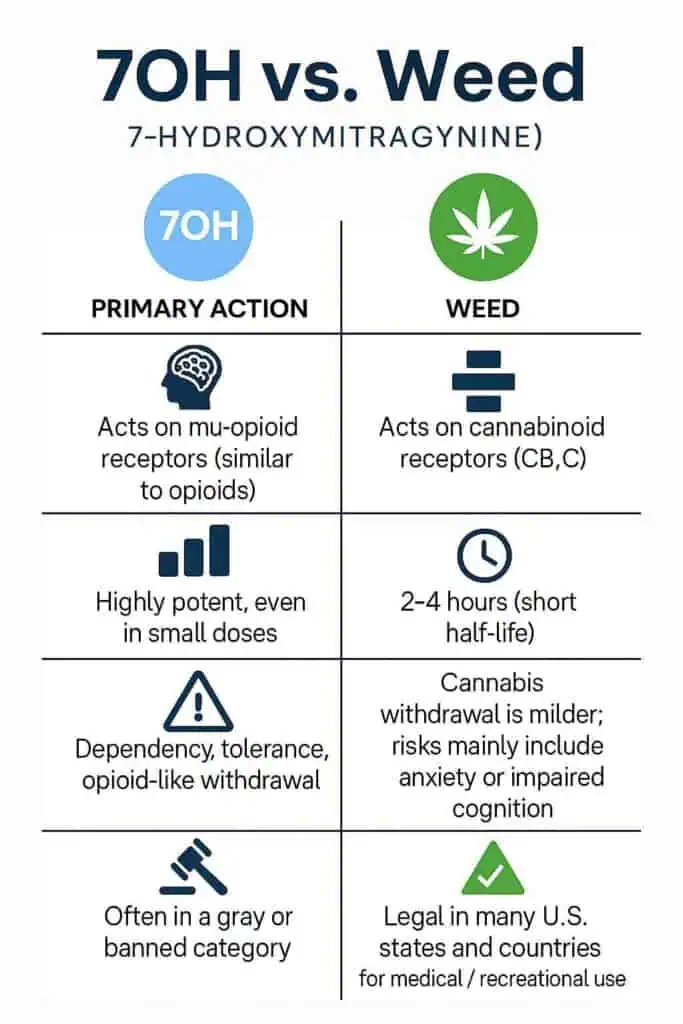
Kratom’s alkaloid 7-Hydroxymitragynine (7OH) and cannabis (weed) are often compared because both are used for pain relief, relaxation, and mood enhancement. However, their mechanisms, safety profiles, and cultural roles are very different.
| Aspect | 7OH (Kratom Alkaloid) | Weed (Cannabis) |
|---|---|---|
| Primary Action | Acts on mu-opioid receptors (similar to opioids) | Acts on cannabinoid receptors (CB1/CB2) |
| Potency | Highly potent, even in small doses | Potency varies widely by THC % |
| Duration | 2–4 hours (short half-life) | 2–6 hours depending on strain and method |
| Risks | Dependency, tolerance, opioid-like withdrawal | Cannabis withdrawal is milder; risks mainly include anxiety or impaired cognition |
| Legal Status | Often in a gray or banned category | Legal in many U.S. states and countries for medical/recreational use |
Some users experiment with combining kratom or 7-OH extracts with cannabis. The reasons often include:
Potential Risks of Combining:
7OH is one of the most powerful and controversial components of kratom. While it holds promise for pain relief and mood enhancement, its potency makes it risky when isolated or concentrated.
The bottom line: 7-OH may be one of the strongest natural alkaloids known, but with great power comes great responsibility. The FDA is currently taking steps to restrict 7-OH.
The US Food & Drug Administration has reported that some products containing 7-OH can cause serious harm.
In 2025, there have already been 165 reports of exposures to 7-OH.
Of those patients reporting exposure to 7-OH , 35% had serious health problems and 67% were treated at a healthcare facility.
Symptoms reported after 7-OH use include:
More in Medical cannabis

Check your state's cannabis laws

Medical cannabis, CBD, patient-focused education
 IACET Accredited Provider · online cannabis education
Since 2009 • 50,000+ students trained worldwide



Copyright Cannabis Training University, a subsidiary of Online Training Providers. © 2026. All Rights Reserved.
Medical Disclaimer: The information on this website is for informational purposes only and is not intended to be a substitute for professional medical advice, diagnosis, or treatment.
Always seek the advice of a physician or other qualified health provider with any questions you may have regarding a medical condition.
Legal Compliance: Cannabis remains federally illegal. Products and information are intended only for jurisdictions where cannabis use and possession is legal.
By using this site, you affirm that you are of legal age (21+) and responsible for understanding your local laws.