Reviewed by Jeff Zorn, founder of Cannabis Training University (since 2009, 50,000+ students) · LinkedIn
Jeff Zorn is the founder of Cannabis Training University (CTU), an online cannabis school with 50,000+ students since 2009. CTU is an IACET Accredited Provider, and its courses cover cannabis cultivation, business, medical cannabis, budtending, cooking, extraction and industry regulations.

Cannabinoids are naturally occurring chemical compounds found in the cannabis plant that interact with the endocannabinoid system (ECS), a cell-signaling network of receptors (CB1, CB2), the body’s own endocannabinoids and the enzymes that break them down.
Most botanists treat cannabis as one species, Cannabis sativa L. ‘Indica’ and ‘sativa’ are trade labels, not separate species (McPartland 2018).
Understanding the different cannabinoids, how they are made in the plant and how the law treats them is core product knowledge for growers and budtenders. The cannabis sativa plant is a major source of known cannabinoids, including THC and CBD.
There are over 100 cannabinoids present in cannabis; these are known cannabinoids, including both major and minor compounds.
Many cannabinoids bind to the two main cannabinoid receptor types, CB1 and CB2, which are part of the endocannabinoid system.
Cannabis derived compounds include both natural and synthetic cannabinoids, some of which are used in FDA-approved medications.
Cannabinoid chemistry chart
What is the difference between THCA and THC?
THCA is the acid form the plant makes. Heat removes its carboxyl group as CO2, leaving THC.
The plant joins olivetolic acid and GPP into CBGA, then enzymes turn CBGA into THCA, CBDA or CBCA. Heat, light and time strip CO2 from each acid (decarboxylation), giving THC, CBD and CBC. THC that oxidizes as it ages becomes CBN. Because the CO2 leaves, 1 g of THCA can give at most 0.877 g of THC.
Chemistry only, no effects or health claims · Checked October 2026 · Sources below
The acid forms (gold) are what the living plant makes; the neutral forms (green) appear after decarboxylation; grey are breakdown and conversion products.
Pathway: Gülck & Møller (2020), Trends in Plant Science 25(10); Hanuš et al. (2016), Natural Product Reports 33(12). Formulas: PubChem. Δ8-THC route: Kruger & Kruger (2022), Journal of Cannabis Research 4:4. Checked October 2026.
THCA lost CO2 about twice as fast as CBDA or CBGA when heated at 80–145 °C (University of Mississippi, Wang et al. 2016).
Δ9-THC, CBD, CBC and Δ8-THC all have the formula C21H30O2 (314.5 g/mol). They are isomers: same atoms, different arrangement.
314.5 ÷ 358.5 = 0.877: the molar mass of THC divided by that of THCA. The same ratio applies to CBDA and CBD.
USDA hemp testing reports total THC = Δ9-THC + 0.877 × THCA, on a dry weight basis (7 CFR 990.1).
An estimate of the THC a sample could give if all its THCA decarboxylated; real heating loses some to side reactions and CBN.
Molar masses link to each PubChem record. PubChem lists a boiling point for only two of them, both measured under vacuum, so neither is a sea-level value.
| Cannabinoid | Form | Formula | g/mol | Boiling point (PubChem) | Comes from | Federal note |
|---|---|---|---|---|---|---|
| CBGAcannabigerolic acid | Acid (plant) | C22H32O4 | 360.5 | Not listed | Olivetolic acid + GPP (prenyltransferase enzyme) | Not named in 7 U.S.C. 1639o |
| CBGcannabigerol | Neutral | C21H32O2 | 316.5 | Not listed | CBGA − CO2 | Not named in 7 U.S.C. 1639o |
| THCAΔ9-tetrahydrocannabinolic acid | Acid (plant) | C22H30O4 | 358.5 | Not listed | CBGA (THCA synthase) | Counted in total THC for USDA hemp tests (7 CFR 990.1) |
| Δ9-THCΔ9-tetrahydrocannabinol | Neutral | C21H30O2 | 314.5 | 200 °C at 0.02 mm Hg | THCA − CO2 | Hemp: no more than 0.3% dry weight (7 U.S.C. 1639o) |
| CBDAcannabidiolic acid | Acid (plant) | C22H30O4 | 358.5 | Not listed | CBGA (CBDA synthase) | Not named in 7 U.S.C. 1639o |
| CBDcannabidiol | Neutral | C21H30O2 | 314.5 | Not listed | CBDA − CO2 | Not named in 7 U.S.C. 1639o |
| CBCAcannabichromenic acid | Acid (plant) | C22H30O4 | 358.5 | Not listed | CBGA (CBCA synthase) | Not named in 7 U.S.C. 1639o |
| CBCcannabichromene | Neutral | C21H30O2 | 314.5 | Not listed | CBCA − CO2 | Not named in 7 U.S.C. 1639o |
| CBNcannabinol | Breakdown / isomer | C21H26O2 | 310.4 | 185 °C at 0.05 mm Hg | THC that oxidizes as it ages (loses 4 H) | Not named in 7 U.S.C. 1639o |
| Δ8-THCΔ8-tetrahydrocannabinol | Breakdown / isomer | C21H30O2 | 314.5 | Not listed | Isomer of Δ9-THC; trace in the plant, mostly made from CBD | See the December 11, 2026 change below; state rules vary |
| THCVAtetrahydrocannabivarinic acid | Acid (plant) | C20H26O4 | 330.4 | Not listed | CBGVA (varin pathway) | Not named in 7 U.S.C. 1639o |
| THCVtetrahydrocannabivarin | Neutral | C19H26O2 | 286.4 | Not listed | THCVA − CO2 | Not named in 7 U.S.C. 1639o |
| CBDVcannabidivarin | Neutral | C19H26O2 | 286.4 | Not listed | CBDVA − CO2 | Not named in 7 U.S.C. 1639o |
Not legal advice. State law can be stricter.
Sources: Gülck, T. and Møller, B.L. (2020), "Phytocannabinoids: Origins and Biosynthesis", Trends in Plant Science 25(10): 985–1004 (doi). Hanuš, L.O. et al. (2016), "Phytocannabinoids: a unified critical inventory", Natural Product Reports 33(12): 1357–1392 (doi). Wang, M. et al. (2016), "Decarboxylation Study of Acidic Cannabinoids", Cannabis and Cannabinoid Research 1(1): 262–271 (doi). Kruger, J.S. and Kruger, D.J. (2022), Journal of Cannabis Research 4:4 (doi). PubChem, National Library of Medicine (formulas, molar masses, boiling points; pubchem.ncbi.nlm.nih.gov). 7 U.S.C. 1639o; 7 CFR 990.1 and 990.3; CRS IF13136; Federal Register 2026-08176. All checked October 2026.
Learn the plant's chemistry properly
Cannabis 101 starts with the plant and its compounds. Master of Cannabis includes all 7 CTU courses, each with a certificate.
Cannabinoids are chemical messengers that bind to specific receptors in your body, influencing a wide range of functions. They can be:
The ECS is a complex cell-signaling network made up of:
Synthetic cannabinoids (e.g., JWH-018) are lab-made compounds unrelated in structure to plant cannabinoids. Many are Schedule I controlled substances under federal law (21 CFR 1308.11), and they are not sold by licensed cannabis retailers.
‘Entourage effect’ is a hypothesis, first proposed for endocannabinoids (Ben-Shabat et al. 1998), that compounds in cannabis interact. It is still debated in the research literature.
Product terms: full-spectrum keeps the plant’s range of cannabinoids and terpenes; broad-spectrum removes THC; isolate is a single purified cannabinoid.
Related: Can you smoke marijuana leaves?
The legal landscape for cannabinoids, including THC and CBD, is complex and varies widely depending on location. In the United States, federal law still classifies cannabis as a controlled substance, making its sale and possession illegal at the national level.
FDA has approved one cannabis-derived drug (Epidiolex, cannabidiol) and three synthetic-cannabinoid drugs (Marinol and Syndros, dronabinol; Cesamet, nabilone), each for the uses on its FDA label (FDA, ‘FDA and Cannabis’).
While some cannabinoid medications are FDA approved, products containing THC or CBD cannot be marketed as dietary supplements under federal law.
Despite federal restrictions, many states have enacted their own laws permitting the medical or recreational use of cannabis and cannabinoids. This patchwork of regulations means that the availability and legal status of cannabis and cannabinoids can differ greatly from one region to another.
As research continues and public attitudes evolve, the legal status of cannabis and cannabinoids keeps changing (e.g., the federal hemp definition changes on Dec 11, 2026), so check the date on any legal summary.
Scientists have identified over 100 cannabinoids, with THC and CBD being the most well-known.
Federal and state limits are set on THC: total THC, including THCA, under the hemp definition that takes effect Dec 11, 2026. Δ8 and Δ10 are THC isomers, and many states regulate them like Δ9.
In the US, hemp is currently defined as ≤0.3% delta-9 THC (2018 Farm Bill). From Dec 11, 2026 the federal definition counts total THC, including THCA (P.L. 119-37 §781; CRS IF13136). State rules vary; see /laws/.
THCA is the acid form the plant makes. Heat decarboxylates THCA into THC.
Hemp is defined by law by its THC level (see above); most hemp cultivars are bred to be CBD- or CBG-dominant.
THC and CBD are isomers: both have the formula C21H30O2 (PubChem), with the atoms arranged differently.
Trusted sources include the National Center for Complementary and Integrative Health (NCCIH) and the National Institutes of Health (NIH). These organizations support research into integrative health approaches, including the use of cannabis and cannabinoids.
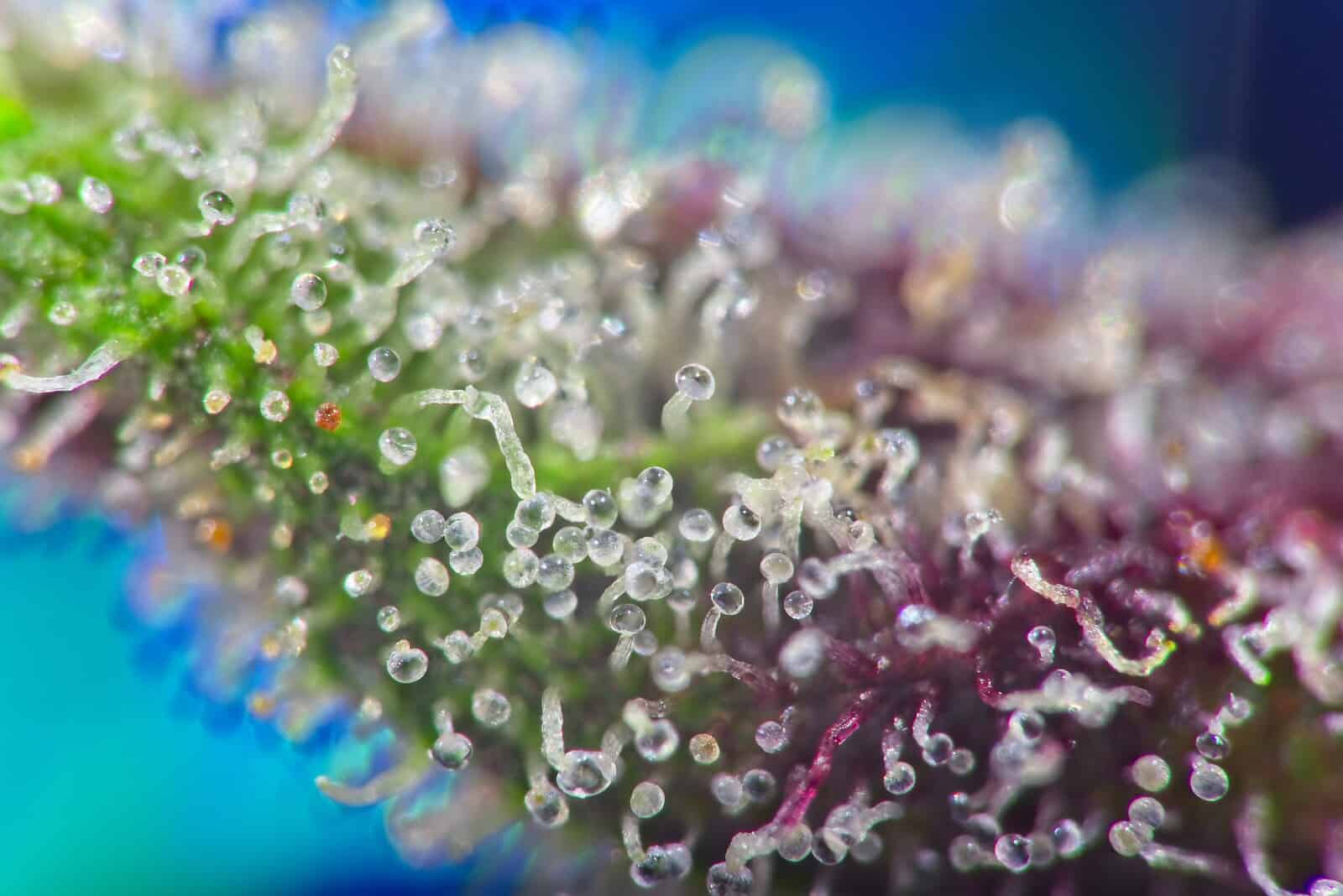
Cannabinoids are plant compounds made in the trichomes. Knowing their chemistry, where each comes from and how the law measures them is core knowledge for anyone who grows, sells or explains cannabis.
More in Medical cannabis

Check your state's cannabis laws

Medical cannabis, CBD, patient-focused education
 IACET Accredited Provider · online cannabis education
Since 2009 • 50,000+ students trained worldwide



Copyright Cannabis Training University, a subsidiary of Online Training Providers. © 2026. All Rights Reserved.
Medical Disclaimer: The information on this website is for informational purposes only and is not intended to be a substitute for professional medical advice, diagnosis, or treatment.
Always seek the advice of a physician or other qualified health provider with any questions you may have regarding a medical condition.
Legal Compliance: Cannabis remains federally illegal. Products and information are intended only for jurisdictions where cannabis use and possession is legal.
By using this site, you affirm that you are of legal age (21+) and responsible for understanding your local laws.