Updated October 2026
Yes, you can smoke marijuana leaves, but you won’t get much from them. Big fan leaves contain very little THC and burn harsh, while the small, resin-coated sugar leaves near the buds give a mild effect at best. Most growers save leaves for edibles, hash, or kief instead.
When people think about smoking cannabis, the first thing that comes to mind is the flower, or “bud.” These are known as the flower buds, which are the most potent part of the plant. But many new users wonder: can you smoke marijuana leaves?
The short answer is yes, but it’s not the same experience as smoking buds, and it isn’t free of risk.
This guide explores whether marijuana leaves are good to smoke, what smoking them does to your lungs, and what happens when you try.
We’ll also cover the differences between leaves and buds, how each part of the plant has different uses and effects, how to use marijuana leaves effectively, and whether they are better suited for edibles, teas, or concentrates instead of smoking.
Weed leaves and the marijuana leaf are often associated with cannabis culture and symbolism, but their use for smoking is less common compared to buds.
Marijuana leaf smoking is possible, but flower buds are typically preferred for their higher potency and smoother experience.
The cannabis plant is known for its distinctive leaves, but not all leaves are created equal. The two main types you’ll find on a marijuana plant are fan leaves and sugar leaves, each serving a unique purpose in the plant’s growth and your cannabis experience.
Fan leaves are the large, iconic leaves that most people picture when they think of a marijuana plant. These leaves are broad, with multiple “fingers,” and play a crucial role in capturing sunlight for photosynthesis.
While fan leaves are instantly recognizable and essential for the plant’s health, they contain very little THC, the compound responsible for the psychoactive effects of cannabis. Because of their low THC content, fan leaves are not considered potent and are rarely used for smoking.
Sugar leaves, on the other hand, are much smaller and grow nestled around the buds of the cannabis plant. These leaves are coated in trichomes, the tiny, crystal-like structures that contain THC and other cannabinoids.
Thanks to their proximity to the buds and higher THC content, sugar leaves are more potent than fan leaves and are sometimes included in joints or used to make concentrates and edibles.

Understanding the difference between fan leaves and sugar leaves helps you make the most of your cannabis plant, whether you’re looking to smoke, cook, or create extracts.
While fan leaves are best left for compost or non-psychoactive uses, sugar leaves can add a mild kick to your cannabis experience.
Yes, marijuana leaves can be smoked. However, the leaves contain much less THC (the psychoactive compound) than the buds. That means smoking them won’t usually get you very high.
Some cannabis plants may also have single finger leaves, which are less common and not typically used for smoking.
So, while the leaves of marijuana can be smoked, they are not nearly as potent as the flower. Smoking marijuana leaves often results in harsher smoke because of their fibrous content. While you can smoke weed leaves or smoke weed in this way, the effects are limited since the leaves contain lower concentrations of THC and other cannabinoids.
So while smoking marijuana leaves won’t poison you, it isn’t harmless, and it’s not the most enjoyable option. The CDC notes that cannabis smoke has many of the same toxins, irritants, and carcinogens as tobacco smoke.
Many people ask: can I smoke fresh marijuana leaves?
Technically, yes, but fresh leaves are full of moisture, which makes them very difficult to burn. Smoking fresh cannabis leaves is unpleasant and produces a harsh, grassy taste. They must be dried and cured first, just like buds, to provide any smokable experience.
Another common question is: are marijuana leaves smoked or the bud?
That’s why the cannabis industry focuses on buds for smoking and uses leaves, especially sugar leaves, for extracts, oils, edibles, and making concentrates.
Proper harvesting and processing of marijuana leaves can make a big difference in their potency and how you use them.
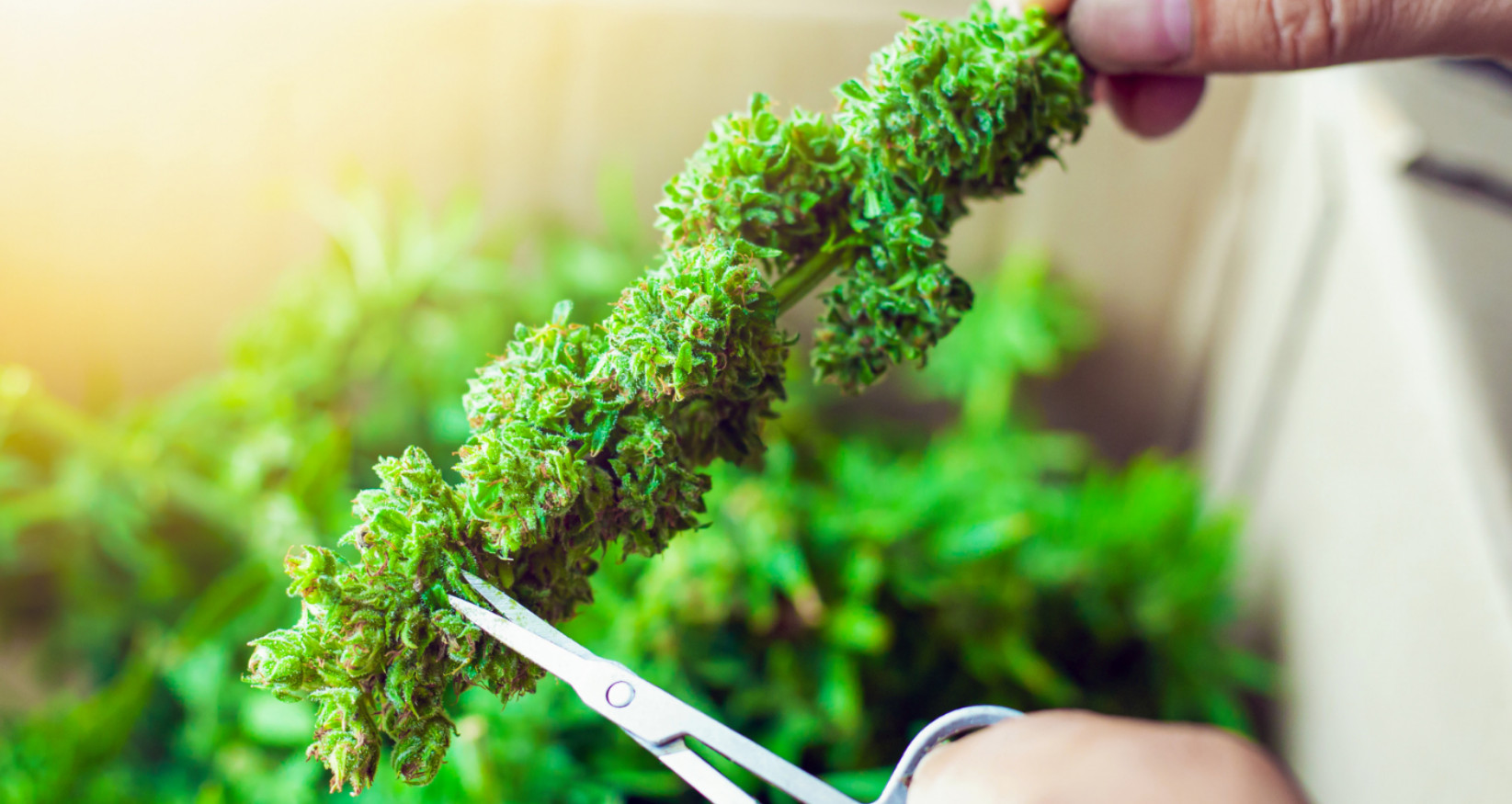
For the best results, collect the right leaves at the right time. Fan leaves come off during defoliation and at harvest, while sugar leaves are clipped off the buds during trimming. Sugar leaves from a mature, well-frosted plant hold the most trichomes, so save that trim separately from the big fan leaves.
Once you’ve collected your cannabis leaves, the next step is drying. Hang the cannabis leaves in a dark, well-ventilated space for about 7 to 10 days. This slows the breakdown of cannabinoids in the leaves and reduces moisture, which is important for preventing mold.
After drying, curing the leaves in glass jars for 2 to 3 weeks improves their flavor and smoothness. Open the jars daily for 10-15 minutes to let out excess moisture and allow fresh air in.
Dried marijuana leaves can be ground and steeped to make a mild cannabis tea (THC doesn’t dissolve well in water, so many recipes add milk, butter, or coconut oil), or used as an ingredient in edibles and concentrates.
While fan leaves have limited potency, sugar leaves can contribute more THC to your homemade cannabis products. By following these steps, you can get more value out of your cannabis leaves in a variety of ways.

Instead of rolling them up in a joint, marijuana leaves are often used in:
Raw cannabis leaves can also be added to smoothies or salads. They won’t get you high because the THCA hasn’t been heated. Online claims about their nutritional or health value haven’t been well studied, so treat them as a leafy green, not a supplement.
This makes them much more versatile and effective than simply trying to smoke them.
Before you decide to smoke cannabis leaves or use them in other ways, it’s important to understand the legal landscape in your area.
Laws regarding cannabis leaves, smoking cannabis leaves, and even the difference between smoking buds and smoking leaves can vary widely depending on your country, state, or region.
In some places, cannabis is fully legal for recreational or medicinal use, allowing you to possess and use all parts of the plant, including marijuana leaves. In other areas, any form of cannabis, whether it’s the buds, leaves, or other plant material, remains strictly prohibited. Under US federal law, the definition of marijuana covers all parts of the plant except mature stalks, fiber, and sterilized seeds, so leaves count the same as buds (21 U.S.C. § 802). See CTU’s guide to states where weed is legal for your state’s status.
It’s essential to check your local regulations before smoking cannabis leaves or making edibles to avoid legal trouble.
Additionally, consider the potential health implications of smoking cannabis leaves. Smoking any plant material irritates the lungs, and the CDC links smoking cannabis to a greater risk of bronchitis, cough, and mucus production.
If you have pre-existing health conditions or concerns, consult a healthcare professional before incorporating cannabis into your routine.
By staying informed about the legal status of cannabis in your area and understanding the potential health effects, you can make responsible choices and minimize risks.
Some wonder: can marijuana smoke leave harmful residue on clothing like cigarettes?
Yes, any smoke, whether from tobacco, marijuana buds, or marijuana leaves, can cling to fabrics and leave a smell. And it’s not just odor: according to the CDC, cannabis smoke contains many of the same toxins, irritants, and carcinogens as tobacco smoke.
Still, it can stick to furniture, hair, and clothes, especially when smoking fan leaves, which burn hotter and produce more noticeable odor.
Yes, but they are less potent and harsher than buds. The potency and experience can also vary between different cannabis strains and due to environmental factors during growth.
Smoking leaves won’t poison you, but any smoke irritates the lungs. The CDC notes that cannabis smoke contains many of the same toxins, irritants, and carcinogens as tobacco smoke, and leaves give little effect.
Yes, sugar leaves can be ground and smoked, but fan leaves are not recommended. The leaf shape and number of leaflets can help identify the type of leaf, and how many leaves a plant has can vary depending on genetics and growing conditions.
Sugar leaves may provide a mild high, but fan leaves will not.
Not effectively, they must be dried and cured first. The plant’s moisture content makes fresh leaves difficult to smoke.
Some people mix sugar leaves with bud to stretch their supply, but most prefer buds alone. Some also use the whole plant, including leaves and even the stem, though the stem is not typically smoked due to its low cannabinoid content.
Some types of leaves may make it possible. Sugar leaves, which are small and close to the buds, have more THC than fan leaves, which are bigger. Smoking sugar leaves can give you a mild high, but not as strong as smoking buds. Since fan leaves don’t have much THC in them, smoking them probably won’t make you feel very high. If you choose to vaporize marijuana leaves, using higher temperatures may help release more cannabinoids, but the effects will still be milder than smoking buds.
Due to the lower THC level, the effects are not as strong as when you smoke buds. On the other hand, smoking sugar leaves can give you a milder high, which some people like because they want a less powerful experience. It may also be a good idea to use the whole plant, including the leaves, to cut down on waste.
The taste may be different for each type of leaf. The taste of a weed leaf when smoked can be quite distinct and is often described as grassy or earthy. Because they are closer to the buds and have trichomes, sugar leaves may taste a bit like buds but not as strong. Fan leaves have more chlorophyll than resin, so they may taste grassier or harsher.
For sugar leaves: Cutting: Carefully cut them away from the buds. Drying and Curing: Let them dry in a cool, dark place for a week. Then, put them in airtight jars and let them cure for a month. Every day, open the jars and let any wetness out. The process is the same for fan leaves, but burning them will have much less of an effect, if any.
Harmful tar and carbon monoxide can be made when you smoke any plant material. Because marijuana leaves have lower concentrations of THC, users may need to smoke more material to achieve an effect, which increases exposure to these dangerous substances. Always use weed in a smart way, and think about other ways to get the benefits with less effort.
You can use marijuana leaves, especially sugar leaves, to make cannabutter or oil for food or tea more successfully. Better THC extraction can be achieved with these ways, especially if decarboxylated first. The experience can also be more enjoyable without the harsh smoke.
Most of the time, smoking marijuana leaves has less of an effect than burning buds, and the effects can also vary between different cannabis plants due to genetic and environmental differences. This is because THC and other cannabinoids are less concentrated in the leaves than in the flowers.
Sugar leaves might give you a light, mild high, but fan leaves probably won’t do much to get you high at all.
From a health perspective, cannabis professionals generally agree that smoking marijuana leaves is not the best use of the plant. While you can smoke marijuana leaves, it’s better to save them for cannabis cooking, extracts, or juicing.
The bud is what you want to smoke for maximum potency and smoother effects. In cannabis culture, using all parts of the plant, including leaves, stems, and trim, is valued for sustainability and creativity.
Marijuana leaves are best thought of as backup material: something you can use if you’re out of flower, but not a primary smoking choice.
These leaves are typically considered leftover leaf material from the plant’s growth and harvest, and are often collected for making concentrates or infused products.
So, can you smoke marijuana leaves? Yes, but whether it’s worth it is another story. Smoking marijuana leaves won’t poison you, but it still means inhaling smoke, and it’s not very enjoyable or effective compared to buds. Fan leaves in particular are harsh and low in THC, while sugar leaves may add mild effects.
If you want the best results, smoke the buds and use the leaves for other creative purposes like edibles, teas, and concentrates.
More in Cannabis 101

Check your state's cannabis laws

 IACET Accredited Provider · online cannabis education
Since 2009 • 50,000+ students trained worldwide



Copyright Cannabis Training University, a subsidiary of Online Training Providers. © 2026. All Rights Reserved.
Medical Disclaimer: The information on this website is for informational purposes only and is not intended to be a substitute for professional medical advice, diagnosis, or treatment.
Always seek the advice of a physician or other qualified health provider with any questions you may have regarding a medical condition.
Legal Compliance: Cannabis remains federally illegal. Products and information are intended only for jurisdictions where cannabis use and possession is legal.
By using this site, you affirm that you are of legal age (21+) and responsible for understanding your local laws.