


If you’ve ever wondered, what does weed look like as a plant? You’re not alone. Cannabis is one of the most recognizable plants in the world, yet its appearance can vary widely depending on strain, stage of growth, and environment.
This guide breaks down the anatomy, key features, stages of growth, and unique traits of marijuana plants, while also including grower reviews, FAQs, and tips to help you identify and understand them in detail.
The Classic Look of a Marijuana Plant

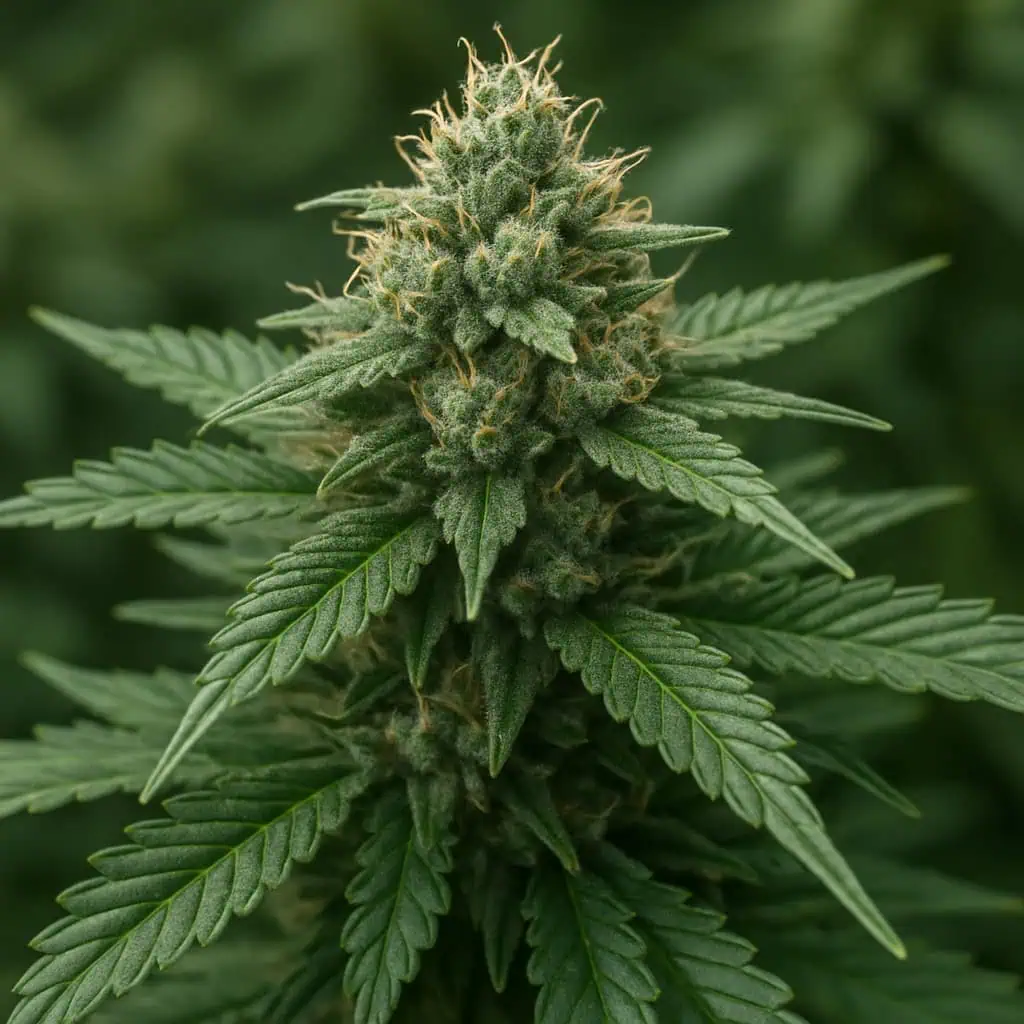
The marijuana plant is instantly recognizable for its iconic fan leaves, tall stems, and resinous buds. Whether grown indoors or outdoors, cannabis develops certain key features:
- Fan Leaves: Large, palm-shaped leaves with serrated edges. Most commonly, these leaves have 7–9 fingers, though some strains display as few as 5 or as many as 13.
- Color: Typically vibrant green, but can range from pale lime to dark forest green. Some plants develop purple, red, or even bluish hues, especially in cooler climates or from specific genetics.
- Shape: Sativa plants tend to be tall and slender, while indica plants are short and bushy. Hybrids often fall somewhere in between.
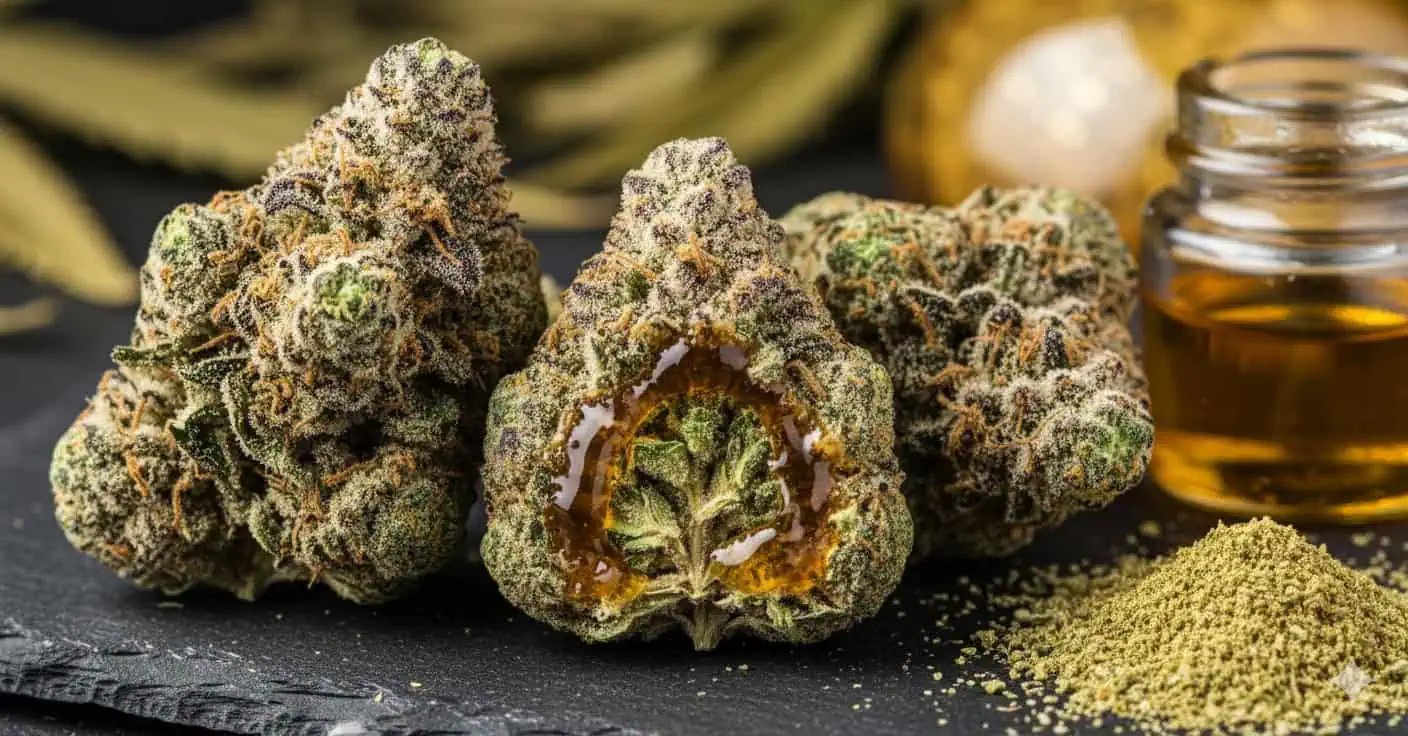
- Texture: The buds are sticky due to resinous trichomes that look like a frosty coating.
- Aroma: Even from a distance, cannabis plants often release strong, pungent scents ranging from earthy and skunky to citrus, pine, or sweet.
Anatomy of a Cannabis Plant
Leaves
The most recognizable feature of cannabis. Fan leaves have sharp serrated edges and spread out in a fan-like pattern. “Sugar leaves” are smaller leaves coated with trichomes that grow close to the buds.
Stems and Branches
Cannabis plants develop a sturdy central stalk with multiple side branches. Indicas have thick, short stalks while sativas grow taller and thinner.
Flowers (Buds)
Female plants produce the sticky, resin-coated buds rich in THC and CBD. During flowering, clusters of calyxes form dense colas, covered in trichomes that sparkle like frost.
Pistils
Hair-like structures that emerge from the buds. They begin white and gradually turn orange, red, or brown as the plant matures.
Trichomes
Tiny, mushroom-shaped glands that coat buds and sugar leaves. These contain cannabinoids (THC, CBD, CBG) and terpenes, giving cannabis its potency, aroma, and flavor.
Roots
A fibrous root system anchors the marijuana plant and absorbs nutrients and water. Healthy roots are white and firm, filling out the container or soil bed.
Stages of Growth and Appearance of a Weed Plant
Seedling Stage
- Small, delicate plants with just a few rounded “cotyledon” leaves.
- Bright green in color and only a few inches tall.
Vegetative Stage
- Rapid growth with more fan leaves developing.
- Plants begin to show differences: indicas become bushy, sativas grow tall.
- Strong stems and branches form to support future buds.
Flowering Stage
- Female plants begin producing sticky buds covered in trichomes.
- Pistils appear white at first, then darken with maturity.
- Aroma becomes much stronger and easily identifiable.
Maturity and Harvest
- Buds swell and become dense.
- Pistils change color to orange, red, or brown.
- Trichomes turn from clear to milky or amber, indicating peak potency.
Indica vs. Sativa vs. Hybrid Appearance
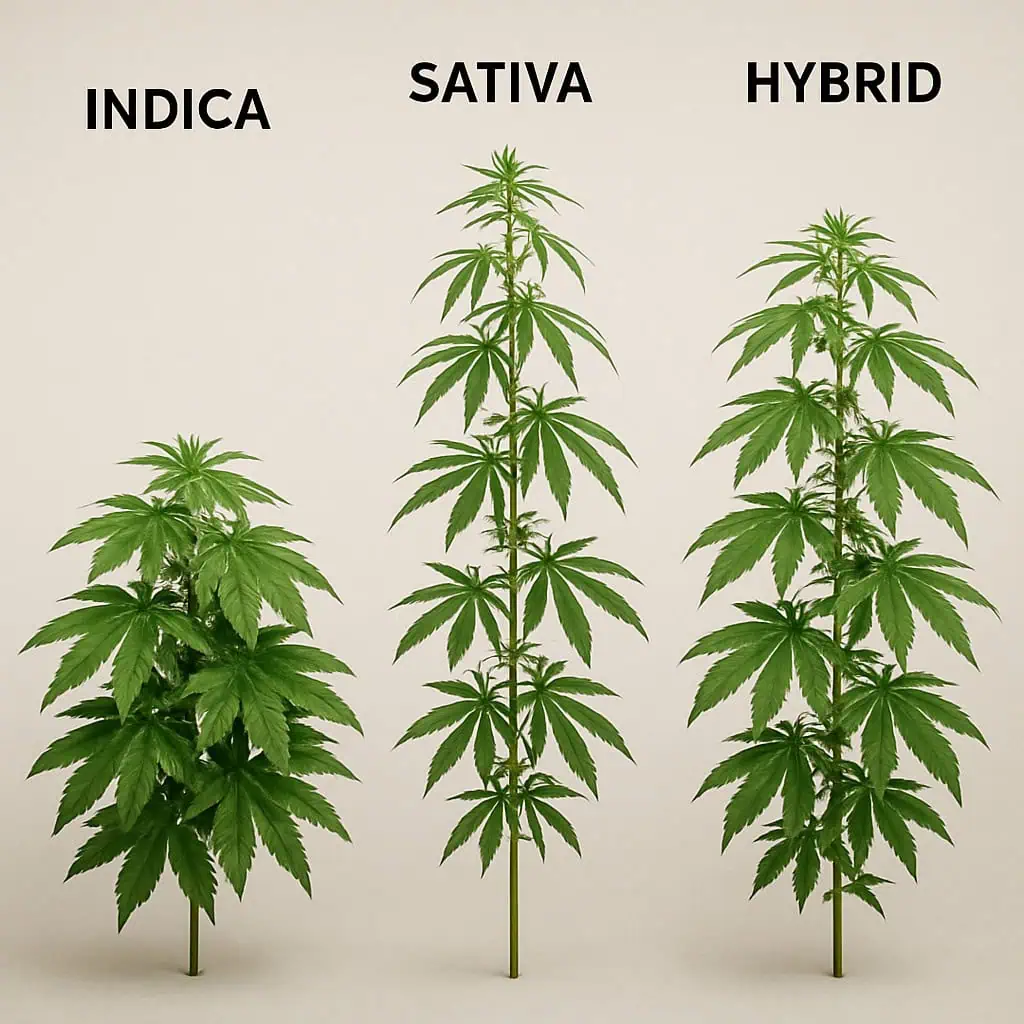
- Indica Plants: Short, bushy, with wide leaves. They look compact and sturdy.
- Sativa Plants: Tall, slim, with long, narrow leaves. They often tower above indicas and can stretch over 10 feet outdoors.
- Hybrids: A mix of both traits, sometimes medium height with moderately broad leaves.
Grower Reviews: First-Hand Descriptions
“My sativa plants shot up over six feet tall in just a few months. Their leaves were long and narrow, swaying in the breeze like feathers.”
“The indica plants looked squat and bushy indoors, with fat dark-green leaves. They crowded the grow tent but produced dense, frosty buds.”
“During flowering, the whole plant seemed to sparkle under the lights. The trichomes made it look like someone dusted the buds with sugar.”
What does weed look like as a plant? Let's dive in further.
Key Features That Define a Marijuana Plant
| Feature | Description |
|---|---|
| Leaves | Fan-shaped, serrated, 5–13 fingers |
| Height & Shape | Indicas are short and bushy; sativas tall and lanky |
| Color | Green shades, sometimes purple, red, or blue |
| Buds | Dense, sticky, trichome-covered flowers |
| Pistils | Hair-like structures changing color as plant matures |
| Aroma | Strong, distinct smell ranging from earthy to citrusy or sweet |
| Trichomes | Crystal-like resin glands covering buds and sugar leaves |
FAQs About What Does Weed Look Like As A Plant?
What does a weed plant look like compared to hemp?
Hemp looks similar but is generally taller, thinner, and less resinous. Marijuana plants are denser with sticky buds rich in cannabinoids.
How can you tell male vs. female plants?
Male plants produce small pollen sacs. Female plants grow pistils and buds. Female plants are the ones harvested for consumption.
Why do some cannabis plants look purple?
Genetics and cold nighttime temperatures can trigger anthocyanin pigments, creating purple hues.
Do all marijuana plants look the same?
No. Indica, sativa, and hybrid strains vary widely in leaf shape, size, and overall appearance.
Can marijuana plants be mistaken for other plants?
Yes. Some species, like Japanese maple, have somewhat similar leaves, but cannabis is easily identified by its serrated, fan-shaped leaves and strong aroma.
Extra Tips for Identifying Cannabis
- Look for Symmetry: Marijuana leaves grow in symmetrical pairs from the stem.
- Examine Buds: Mature cannabis buds are sticky, dense, and covered in crystals.
- Smell Test: Cannabis has a strong and unmistakable aroma.
- Height and Shape: Notice whether the plant is tall and spindly (sativa) or short and bushy (indica).
Elevating Your ID Skills with Micro-Detail Observation
While classic leaf shape and overall structure serve as primary identifiers, the real mastery comes from tiny details:
- Vein-to-Notch Alignment: Examine each leaflet's veins—on cannabis, the central vein directs precisely toward each serrated tip. This pattern is a subtle but reliable cue to confirm the plant’s identity.
- Leaf Texture: Cannabis leaves often have a slightly waxy sheen, with visible texture when viewed under bright light. This texture isn’t typical in look-alike plants.
- Stem Hairiness: Younger cannabis stems tend to have fine hairs (called trichomes early), giving a slightly fuzzy feel in contrast to smoother stems on similar plants.
These granular observations help knowledgeable cultivators and enthusiasts differentiate cannabis confidently in mixed gardens or natural landscapes.
Growing Environment Impact on Appearance
No two cannabis plants look identical—environment shapes them. Understanding these influences can help users recognize what they’re seeing:
- Light Intensity: Under strong grow lights or direct sunlight, plants display tightly packed internodes, vibrant coloration, and stronger trichome production.
- Nutrient Access: Nitrogen-rich environments encourage lush, dark leaves; a phosphorus-rich flowering environment deepens bud density and alters leaf coloration.
- Airflow & Spacing: Crowded or stagnant environments produce long, thin stems and sparse leaf development. Proper spacing and ventilation create compact, even growth.
- Temperature Fluctuations: Cooler nights can trigger purple or red undertones on leaves and buds—adding distinctive color without altering species identity.
Recognizing these environmental signatures empowers growers to assess growing health and anticipate necessary adjustments.
Advanced Grower Notes: Seasonal & Outdoor World Cues
When cannabis is grown outdoors:
- Sunlight Angles Shape Plants: Outdoor plants on sloped terrain might reach toward light, developing asymmetric growth patterns.
- Wind Conditioning: Natural breeze strengthens stalks and thickens stems—this makes outdoor cannabis more robust but visually tougher.
- Seasonal Indicators: Outdoor plants begin flowering with daylight reduction as seasons shift—identifying pistil emergence alongside calendar cues can time harvest windows.
Outdoor enthusiasts learn to read growth habits in the context of nature. Indoor growers can mirror these patterns by adjusting light schedules and airflow for healthier plants.
Health Indicators for Visual Diagnosis
Beyond identifying the plant, visual signs help assess health and vitality:
- Leaf Color: Deep green indicates vigor; yellowing or bronze leaves suggest deficiency or stress.
- Bud Quality: Healthy buds are tight and resin-coated; fluffy, airy, or powdery buds may indicate mold risk or environmental imbalances.
- Pest & Disease Signs: White powdery spots, tiny webs, or leaf mottling signal early pest infestation. Quick detection from visual cues avoids spreading damage.
- Root Behavior (when visible): Roots peeking from the pot bottom should be white and firm. Dark, brittle roots indicate root rot or poor drainage.
A sharp eye lets growers intervene swiftly—yielding healthier plants and better harvests.
Cultural and Historical Perspectives
Cannabis appearance has influenced human societies and traditions for centuries:
- Wildland Identification: Indigenous communities learned to distinguish cannabis from similar wild plants using leaf and scent recognition. This knowledge passed through oral tradition and botanical storytelling.
- Art and Illustration: Early botanical drawings exaggerated serration and leaf shape to teach medicinal users. These visuals helped establish standardized imagery still used today.
- Community Recognition: Informal peer networks often rely on visual peer review—new growers share plant pictures and seek communal input. Shared observation builds both confidence and cannabis literacy.
These cultural touchpoints reinforce the importance of visual literacy across generations of growers and advocates.
Common Misconceptions Debunked
- “All purple plants are rare hype genetics.” Not always. Cold stress, pH imbalance, or simple pigment expression can produce purple tones—even in mainstream strains.
- “Wide leaves mean indica—always.” While generally true, hybrids can surprise with unexpected leaf patterns. Genetics can override simplistic classification.
- “Only female plants produce buds.” Correct, but hermaphrodites may develop both bud tissue and pollen sacs—a reminder to watch for stress-induced sex shifts.
Clearing misunderstandings empowers readers to interpret what they see accurately and confidently.
Final FAQs—Elevating Practical Wisdom
Why does my plant’s leaf shape shift over time?
Leaves may change from broad to narrow (or vice versa) as the plant transitions through growth stages or responds to stress. These shifts can reflect adaptive physiology, especially in hybrids.
What do beginner growers often overlook visually?
They may miss early pistil formation or miscount leaflets. Teaching beginners to slow down, visually confirm, and count leaflets precisely can avoid early mistakes.
Can visual traits predict potency or smell?
Only partially. Frosty trichomes suggest high resin content, but smell and strength also depend on terpene-cannabinoid chemistry. Visual cues can guide expectation but not guarantee effect.
How does lighting angle alter plant anatomy?
Light drop angles stretch or spread leaves. Low-angle light encourages wider branching; overhead lighting produces compact, stacked nodes. Visual patterns reflect lighting strategy.
The journey from casual recognition—“that’s a cannabis leaf”—to true visual literacy is transformative. From fine hair on stems to transitioning leaf colors, from environmental reactions to sex identification, each visual cue deepens understanding.
Learning to see these details empowers both new and seasoned growers to cultivate with confidence, troubleshoot intelligently, and engage a higher plane of cannabis knowledge.
Final Thoughts on What Does Weed Look Like As a Plant?
A healthy cannabis plant is a vibrant green, fan-leafed beauty with serrated edges, sticky resinous buds, and a scent that ranges from earthy to sweet.
Whether tall sativas stretching to the sky, compact indicas crowding grow tents, or hybrids blending the best of both worlds, cannabis has a look that is unmistakable once you know its features.
From the frosty trichomes glistening like sugar to the changing pistil colors signaling harvest, marijuana plants are as distinctive as they are diverse.
With this guide, you now have a complete understanding of how to recognize and describe cannabis plants at every stage of their life cycle.
Learn how to grow a marijuana plant at home with online training from CTU.

Fred Hernandez
Fred Hernandez is a highly accomplished and versatile writer, boasting an extensive background in the cannabis industry. With an in-depth understanding of various sectors including cultivators, processors, retailers, and brands, Fred's expertise spans across the entire cannabis landscape. As a prominent contributor to CTU, he consistently delivers insightful articles exploring the latest developments, news, and regulations shaping the cannabis industry. Whether it's delving into the intricacies of cannabis products, cannabis strain reviews, or providing comprehensive analyses of cannabis laws, or sharing expert insights on cannabis cultivation techniques, Fred's wealth of knowledge positions him as an invaluable writer and educator for all cannabis-related subjects.



 Jeff was involved in an accident where he endured a traumatic brain injury. He had a week-long stay in ICU where brain surgeons
  100% risk free money back guarantee within 48 hours after purchase if student has not completed any of the courses or exams.
