



When it comes to cannabis, knowing weed measurements is one of the most important skills for both consumers and professionals.
Whether you’re rolling a joint, running a dispensary, or buying cannabis flower in bulk, being able to confidently measure weed ensures that you:
- Pay a fair price
- Stay compliant with local laws
- Understand slang and common lingo
- Dose properly for recreational or medical use
- Build credibility in conversations about cannabis
Weed is sold in standardized units, but cultural slang and regional habits can sometimes make it confusing. For example, you might hear someone say “I grabbed a zip” while another person says “I bought an ounce.” Both mean the same thing: 28 grams of cannabis.
The Metric vs. Imperial Systems in Cannabis
Cannabis is unique in that it straddles both imperial measurements (ounces, pounds) and metric units (grams, kilograms).
- Grams: The industry standard for small amounts of cannabis.
- Ounces and Pounds: Still used widely in the United States for both retail and wholesale transactions.
- Kilograms: Often referenced in large-scale international trade, cultivation, and illicit operations.
This dual system is why many new consumers get confused when trying to convert. For example:
- 1 ounce ≈ 28 grams
- 1 pound = 16 ounces = 453 grams
Knowing these conversions is essential when navigating dispensary menus, wholesale orders, or cannabis culture in general.

Weed Measurements Chart
Here’s a simple breakdown of the most common cannabis weights:
- 1 gram – a single joint or small purchase
- 2 grams – often referred to as a “dub”
- 3.5 grams – an eighth of an ounce (most common amount)
- 7 grams – a quarter ounce
- 14 grams – a half ounce
- 28 grams – a full ounce, often called a “zip”
- 113 grams – a quarter pound (QP)
- 226 grams – a half pound (HP)
- 453 grams – a full pound (lb, elbow)
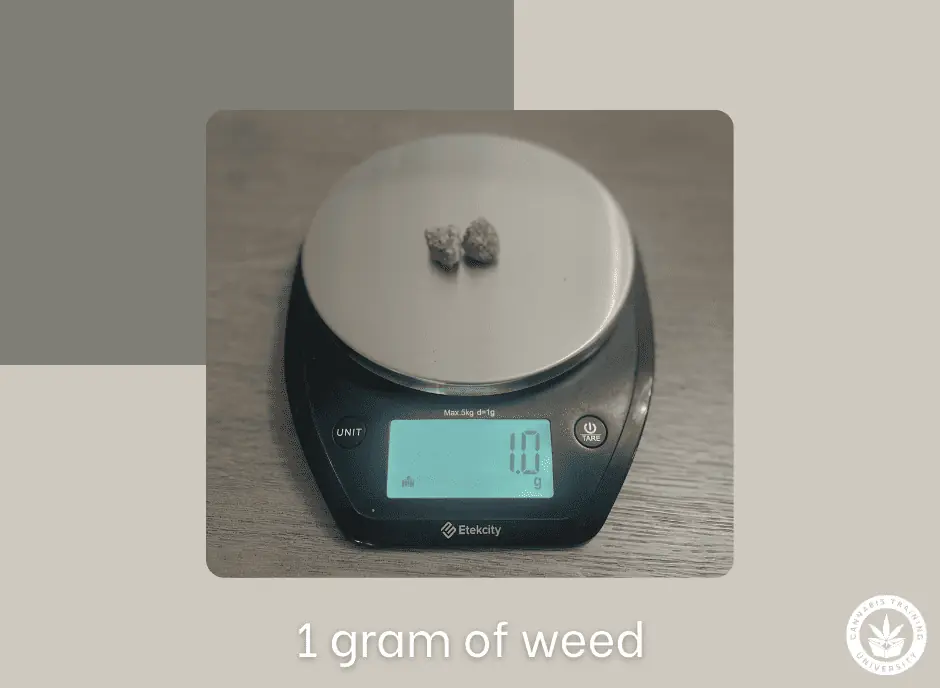
Starting Small: The Gram
A gram of weed is the smallest standard purchase in dispensaries.
- Equivalent: Roughly 1–2 joints or 2–3 bowls.
- Price: Typically $10–20 depending on strain, potency, and location.
- Slang: A “dime bag” traditionally referred to $10 worth of weed, usually around 1 gram.
The gram is the foundation of weed measurements because all larger quantities build from it.
Two Grams – The Dub Sack
A dub sack is slang for 2 grams of cannabis.
- Equivalent: About 3–4 joints.
- Price: Around $20.
- Slang: “Dub” has been used for decades to mean $20 worth of weed.
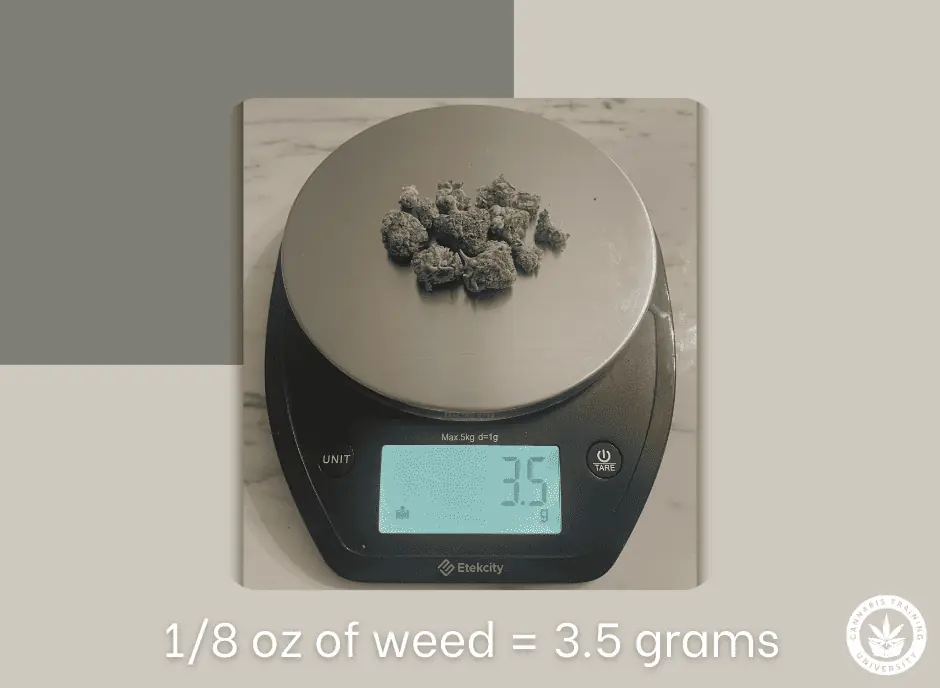
The Eighth: 3.5 Grams
The eighth (⅛ of an ounce) is by far the most popular measurement.
- Equivalent: About 7 joints or 3 blunts.
- Grams: 3.5 grams.
- Slang: “Slice,” “Eify,” “Eighth.”
- Why it’s popular: Affordable, convenient, lasts a few sessions.
Many dispensaries price eighths competitively, often offering bulk discounts when you buy multiple.
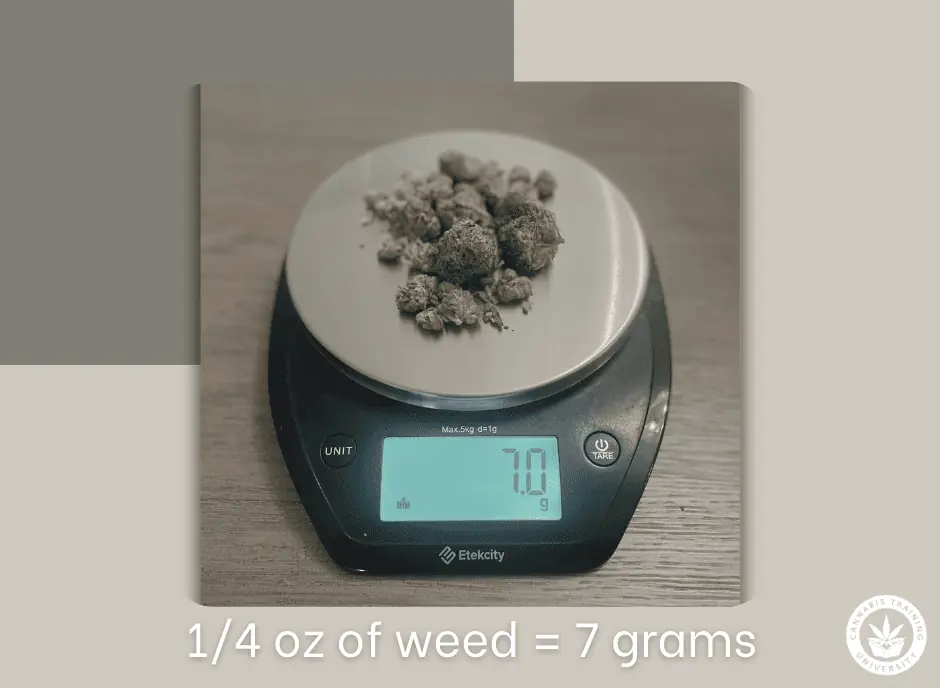
The Quarter: 7 Grams
A quarter ounce is 7 grams of cannabis.
- Equivalent: 14 joints or half an ounce of concentrate use.
- Slang: “Q,” “Quad.”
- Common Buyers: More frequent smokers, small group purchases, or people looking to stretch their supply for a week.
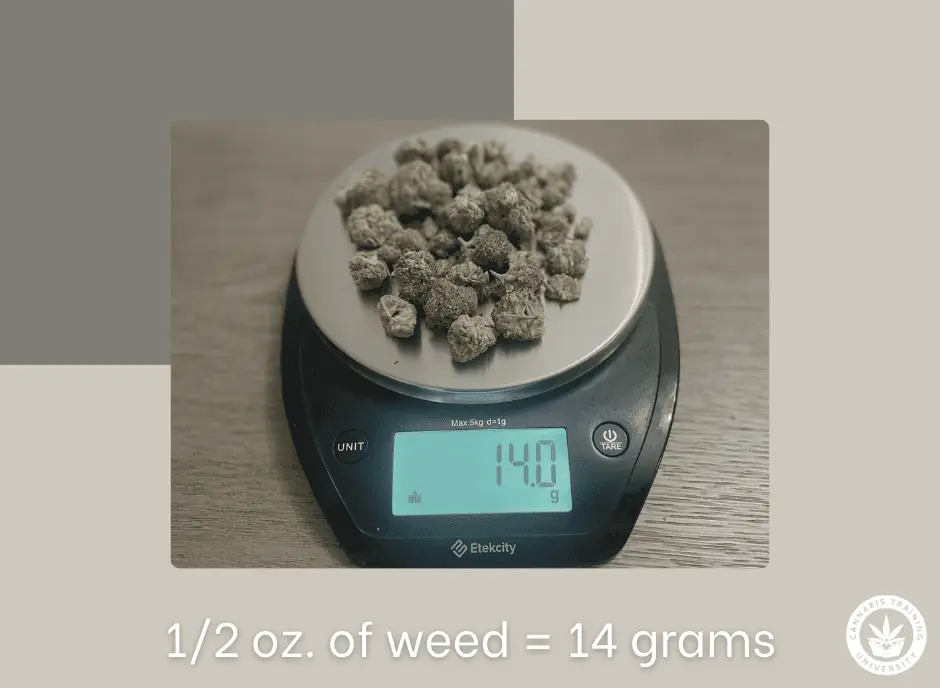
The Half Ounce: 14 Grams
The half ounce (½ oz) is 14 grams.
- Equivalent: Roughly 28 joints.
- Slang: “Half O,” “Half zip.”
- Who buys this amount: Heavier users, people preparing for an event or party, or medical patients who require consistent supply.
The Ounce (The Zip): 28 Grams
The ounce is one of the most important cannabis measurements.
- Equivalent: 28 grams.
- Slang: “Zip” (because a full ounce often fills a zip-lock bag), “O,” “Full O.”
- Price: Highly variable — anywhere from $100 in some markets to $300+ depending on legality and quality.
- Legal Relevance: Many states cap retail purchases at 1 ounce per transaction for recreational users.
Quarter Pound: 113 Grams
The quarter pound (QP) is where cannabis transitions from personal use to bulk sales.
- Equivalent: 4 ounces or 113 grams.
- Slang: “QP,” “Quarter P.”
- Who buys it: Medical patients with high needs, small-time dealers, or cultivators.
Half Pound: 226 Grams
The half pound (HP) is 8 ounces or 226 grams.
- Slang: “Half P,” “Half pack.”
- Who buys it: Growers, processors, wholesale buyers, or those stocking up for months.
The Pound (Elbow): 453 Grams
A pound of weed is the ultimate wholesale measurement.
- Equivalent: 16 ounces or 453 grams.
- Slang: “P,” “Pack,” “Elbow.”
- Price: Can range from $1,000 to over $3,000 depending on strain, quality, and legality.
- Who uses this measurement: Distributors, cultivators, large-scale processors.
Common Slang Terms and Their Origins
- Dime bag: Originally $10 worth of weed (about a gram).
- Dub sack: $20 worth of weed (~2 grams).
- Eighth: 3.5 grams.
- Quad: A quarter ounce (7 grams).
- Zip: An ounce (28 grams).
- QP: Quarter pound.
- Elbow: A pound (lb).
These terms became popular in underground markets where precision measurements weren’t always possible but slang gave users a common language.
Pricing and Bulk Discounts
The more weed you buy, the cheaper it usually gets per gram.
- 1 gram: $10–20
- Eighth (3.5 g): $25–40 ($7–10/g)
- Quarter (7 g): $50–70 ($7–9/g)
- Half ounce (14 g): $100–120 ($7–8/g)
- Ounce (28 g): $150–300 ($5–10/g)
- Pound (453 g): $1,000–3,000+ ($2–6/g wholesale)
How Many Joints in a Gram?
- 1 gram: 2 joints
- Eighth (3.5 g): 7 joints
- Quarter (7 g): 14 joints
- Half ounce (14 g): 28 joints
- Ounce (28 g): 56–60 joints
- Quarter pound (113 g): 225 joints
- Pound (453 g): 900–1,000 joints
Why “Ounces in a Pound” Is Crucial Knowledge
Cannabis culture often discusses wholesale weights. A pound of weed = 16 ounces = 453 grams. Breaking this down is essential for:
- Understanding bulk pricing.
- Navigating slang like QP, HP, Elbow.
- Avoiding confusion between metric and imperial units.
Legal Limits by State
Most legal states cap recreational possession at 1 ounce per person. Medical allowances may be higher, sometimes allowing up to 8 ounces or more for qualified patients.
Wholesale and cultivation licenses permit pounds and kilograms, but only for licensed businesses.
Tips for Selling Cannabis
- Transparency: Always weigh cannabis in front of the customer.
- Education: Train staff to explain grams vs ounces vs slang.
- Compliance: Understand your state’s legal limits for sales.
- Consistency: Use standardized digital scales.
- Customer Trust: Show conversions clearly on menus.
Cultural Importance of Weed Measurements
Weed measurements aren’t just math, they’re cultural signifiers. From the dime bag of the 1970s to the ounce deals of the 1990s to today’s dispensary menus listing grams and eighths, cannabis weights are part of social history.
Hip-hop, reggae, and stoner films often reference zips, pounds, and dubs, embedding this lingo into mainstream awareness.
Advanced Notes: Moisture, Density, and Weed Weight
Not all weed weighs the same visually. Two bags of 3.5 grams might look different depending on:
- Moisture content (drier buds weigh less per volume).
- Density (fluffy buds vs compact buds).
- Stem/seed content (lower quality adds weight but not smokeable product).
This is why precise scales are essential.
Weed Measurements vs Everyday Measurements

One of the biggest challenges new cannabis consumers face is putting weed measurements into perspective.
Tablespoons, Teaspoons, and Weed Concentrates
Sometimes you’ll see recipes calling for cannabis oil or tinctures measured in tablespoons or teaspoons. Just like with cooking:
- 1 tablespoon = 3 teaspoons
- 1 tablespoon = 0.5 fluid ounces
This becomes important in cannabis cooking and microdosing, where tinctures are often dispensed in milliliters (ml) but recipes are written in teaspoons.
Everyday Perspective: How Weed Weights Compare
- 1 gram of weed ≈ a teaspoon of sugar
- 3.5 grams (eighth) ≈ about a heaping tablespoon and a half of flour
- 28 grams (ounce) ≈ fills a small sandwich bag loosely
- 453 grams (pound) ≈ similar in weight to a loaf of bread
Final Thoughts
Weed measurements are the language of cannabis. From grams and eighths to zips and elbows, knowing the system builds confidence whether you’re a consumer, medical patient, or dispensary operator.
- 1 pound = 16 ounces = 453 grams
- 1 ounce = 28 grams
- 1 eighth = 3.5 grams
Learning the slang and math ensures fairness, compliance, and cultural literacy in the cannabis space.
Learn all about buying and selling cannabis in our online cannabis courses.

Fred Hernandez
Fred Hernandez is a highly accomplished and versatile writer, boasting an extensive background in the cannabis industry. With an in-depth understanding of various sectors including cultivators, processors, retailers, and brands, Fred's expertise spans across the entire cannabis landscape. As a prominent contributor to CTU, he consistently delivers insightful articles exploring the latest developments, news, and regulations shaping the cannabis industry. Whether it's delving into the intricacies of cannabis products, cannabis strain reviews, or providing comprehensive analyses of cannabis laws, or sharing expert insights on cannabis cultivation techniques, Fred's wealth of knowledge positions him as an invaluable writer and educator for all cannabis-related subjects.




 Jeff was involved in an accident where he endured a traumatic brain injury. He had a week-long stay in ICU where brain surgeons
  100% risk free money back guarantee within 48 hours after purchase if student has not completed any of the courses or exams.
