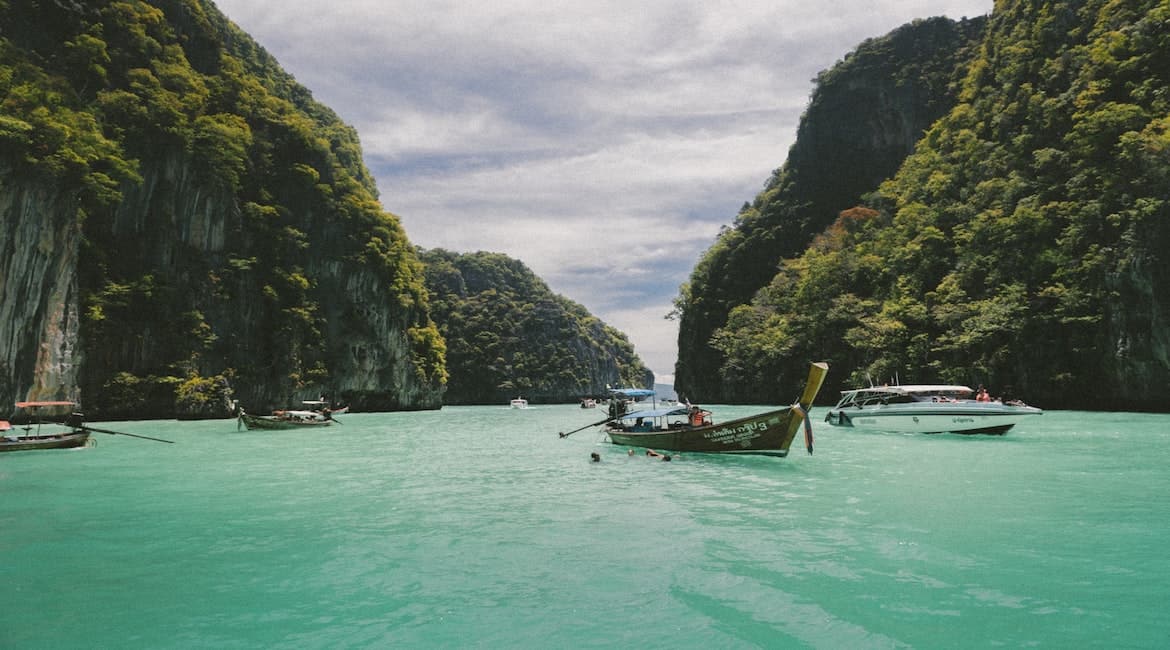
If you are interested in growing your cannabis hobby or career in Thailand, the Cannabis College Thailand offers a complete curriculum for students of all skill levels. Thailand is set to be one of the major players in the growing Asian medical cannabis and hemp market. Get ready for massive expansion over the next few years by completing industry certification at CTU.
Cannabis Training University’s industry certification is part of the most renowned training program in the world. Whether you live in Bangkok, Nonthaburi, or Chiang Mai, Thailand Cannabis University offers a remote learning experience at an affordable price. For the busy go-getter with an eye on the cannabis industry, there are many benefits to enrolling in CTU.
Start learning today all from the comfort of your home. CTU’s completely online platform is super easy to use as long as you have a computer and internet connection. As a growing hub for digital nomads, the Land of Smiles offers wi-fi in cafes or robust internet packages so you can get educated without the extra burden of long driving commutes to classes.
Balance work, family life, and fun with online cannabis education from CTU. Enrolling in Thailand Cannabis University gives you twelve-weeks of access to the complete program. That gives you plenty of time to go through as much of the course content as you want.
Go as slow or as fast as you want through the courses. Quizzes along the way help you retain information to help you pass the final exam to receive certification.
With a small initial investment in your future and education, you can enroll in a self-paced online cannabis training program. Plus, our curriculum covers a broad range of industry topics. If you’re not sure where you fit into the industry, you can learn about the most important areas of the industry including:
Even if you’re not interested in pursuing a career in cannabis, enrollment in CTU can help you take advantage of the changing laws in Thailand. In 2018, Thailand legalized medical cannabis use. In 2020, the country began the process of allowing home cannabis cultivation of up to six plants. Pretty soon, citizens will be able to grow their own weed and sell it to the government.
As a medical user, industry certification allows you to develop a strong educational foundation on how to use cannabis as medicine. Learn about the different strains, products, and therapeutic compounds found in the cannabis and hemp plant. Learning how cannabis works will help you use it wisely and get the most relief possible.
In addition, certification from CTU gives you the knowledge you need to start growing cannabis when it’s finally legal across the country.
Learn directly from master growers how to start an indoor, outdoor, or greenhouse garden on a budget. From planting your seed to harvesting its buds, our curriculum goes through every step of the growth process in an easy-to-understand manner.
Significant changes have been made to the regulations governing cannabis in Thailand over the past few years, making this a topic worthy of discussion for individuals who are interested in cannabis education and future employment prospects within the business. An overview of the laws that currently govern cannabis in Thailand as of the year 2024 is as follows:
Since 2019, the use of cannabis for medical purposes has become permitted in Thailand. Industrial use of cannabis has also been legalized.
Additionally, in June of 2022, Thailand became the first nation in Asia to legalize the cultivation, sale, and utilization of cannabis and hemp plants for medical purposes as well as other authorized uses.
This involves the removal of cannabis and hemp plants, as well as their unprocessed parts, from the Narcotics Code. This will make it possible for the private sector to cultivate, possess, sell, and use cannabis and hemp plants that are grown locally without the need for a license.
However, cannabis and hemp extracts that contain more than 0.2% tetrahydrocannabinol (THC) are still subject to regulation under the Narcotics Act. In order to handle substances that contain THC levels that are higher than this limit, a license is normally required.
The use of cannabis for recreational purposes is prohibited in Thailand where it is illegal to do so. On the other hand, the growing of cannabis as well as its possession are no longer considered illegal. While the consumption of cannabis in public places is still prohibited, it is possible to purchase cannabis at certain cafes and restaurants located in major cities, provided that the THC content is less than 0.2%.
In Thailand, there are distinct restrictions that apply to small, medium, and big cannabis farmers. These regulations are part of the regulatory framework.
Small growers, such as those with up to ten plants per home, may not be required to pay fees; nonetheless, they are required to inform the Thai Food and Drug Administration of their growing operations. According to the Food and Drug Administration (FDA), large cultivators are considered commercial and are required to obtain a license and pay compensation to the state.
Cannabis parts are permitted to be used as ingredients in ready-to-eat foods, with the exclusion of flowers and seeds.
Cosmetics are also permitted to use elements of cannabis. Additionally, hemp parts are allowed, with the exception of flowers. It is permissible for cosmetic goods to contain some components of hemp and cannabis, provided that the raw ingredients are derived from plants that are grown in Thailand.
Patentability and Plant Variety Protection: Applications that are related to cannabis are eligible for patents if they are not for recreational purposes, if they are not a diagnostic or therapeutic procedure, and if they are not the plant itself, a component of the plant, or a crude extract.
Furthermore, the Cannabis L. genus has been acknowledged for protection as a new plant variety in accordance with the Plant Variety Protection Act (1999).
The rules and regulations that pertain to cannabis in Thailand are currently in the process of transitioning through a period of transformation. The Cannabis and Hemp Act, which is intended to govern concerns that have not yet been resolved, has not yet been converted into a legislation that has been published.
Institutions such as Cannabis Training University are becoming increasingly relevant for individuals who are interested in engaging in the Thai cannabis industry, whether for the purpose of employment or entrepreneurial endeavors.
This is due to the fact that the laws governing cannabis in Thailand are constantly evolving, which has led to an increase in the number of people interested in cannabis education and training.
At the moment, medical cannabis is distributed through cannabis clinics managed by specialized staff. Hospitals and research facilities are the only ones allowed to apply for production and extraction licenses. However, the government is planning on allowing Thai businesses to apply for licenses soon.
In provinces that grow medical cannabis, local farmers are hiring for a variety of cultivation jobs. Farms are looking for trimmers, growers assistants, and head growers to manage the increase in demand for medical cannabis. In addition, companies are hiring workers to help transform the raw material into a variety of extract and infused products.
In the future, citizens and foreigners may be able to use medical cannabis, which would increase the country’s wellness and tourism sector. The tourism and sports minister is assembling a tour of cannabis plantations for educational purposes. In addition, some restaurants are incorporating leaves, stems, stalks, and roots into their local cuisines. The future looks green in Thailand.
While the cannabis jobs in Thailand are limited at the moment, the country is set to expand dramatically over the next few years. As more cultivators, processors, and distributors open up shop in Thailand, they’ll be looking for local talent. Here’s how you can set yourself up for success in the industry:
Do you want to grow your cannabis hobby or career? Are you looking for online industry certification to fit your busy schedule?
Enroll in Cannabis Training University’s Thailand Cannabis College today!
Complete your industry cannabis certification at the most renowned cannabis college in the world. Become one of the thousands of other students who have gotten certified and hired in the industry. There’s no need to wait to get your education started. Start learning today!
In 2019, Thailand became the first country in the world to legalize cannabis for medicinal purposes. Additionally, in June of 2022, Thailand became the first nation in Asia to legalize the cultivation, sale, and utilization of cannabis and hemp plants for medical purposes as well as other authorized uses. This involves the removal of cannabis and hemp plants, as well as their unprocessed parts, from the Narcotics Code. This will make it possible for the private sector to cultivate, possess, sell, and use cannabis and hemp plants that are grown locally without the need for a license. However, cannabis and hemp extracts that contain more than 0.2% tetrahydrocannabinol (THC) are still subject to regulation under the Narcotics Act. In order to handle substances that contain THC levels that are higher than this limit, a license is normally required.
The use of cannabis for recreational purposes is prohibited in Thailand. On the other hand, the growing of cannabis as well as its possession are no longer considered illegal. While the consumption of cannabis in public places is still prohibited, it is possible to purchase cannabis at certain cafes and restaurants located in major cities, provided that the THC content is less than 0.2%.
When it comes to cannabis cultivation in Thailand, there are several restrictions that apply to small, medium, and large plant growers. Small growers, such as those with up to ten plants per home, may not be required to pay fees; nonetheless, they are required to inform the Thai Food and Drug Administration of their growing operations. According to the Food and Drug Administration (FDA), large cultivators are considered commercial and are required to obtain a license and pay compensation to the state.
More in Training


Brand-search defense
Keep at the very bottom or exclude from hub
 IACET Accredited Provider · online cannabis education
Since 2009 • 50,000+ students trained worldwide
Copyright Cannabis Training University, a subsidiary of Online Training Providers. © 2026. All Rights Reserved.
Medical Disclaimer: The information on this website is for informational purposes only and is not intended to be a substitute for professional medical advice, diagnosis, or treatment.
Always seek the advice of a physician or other qualified health provider with any questions you may have regarding a medical condition.
Legal Compliance: Cannabis remains federally illegal. Products and information are intended only for jurisdictions where cannabis use and possession is legal.
By using this site, you affirm that you are of legal age (21+) and responsible for understanding your local laws.