Updated October 2026
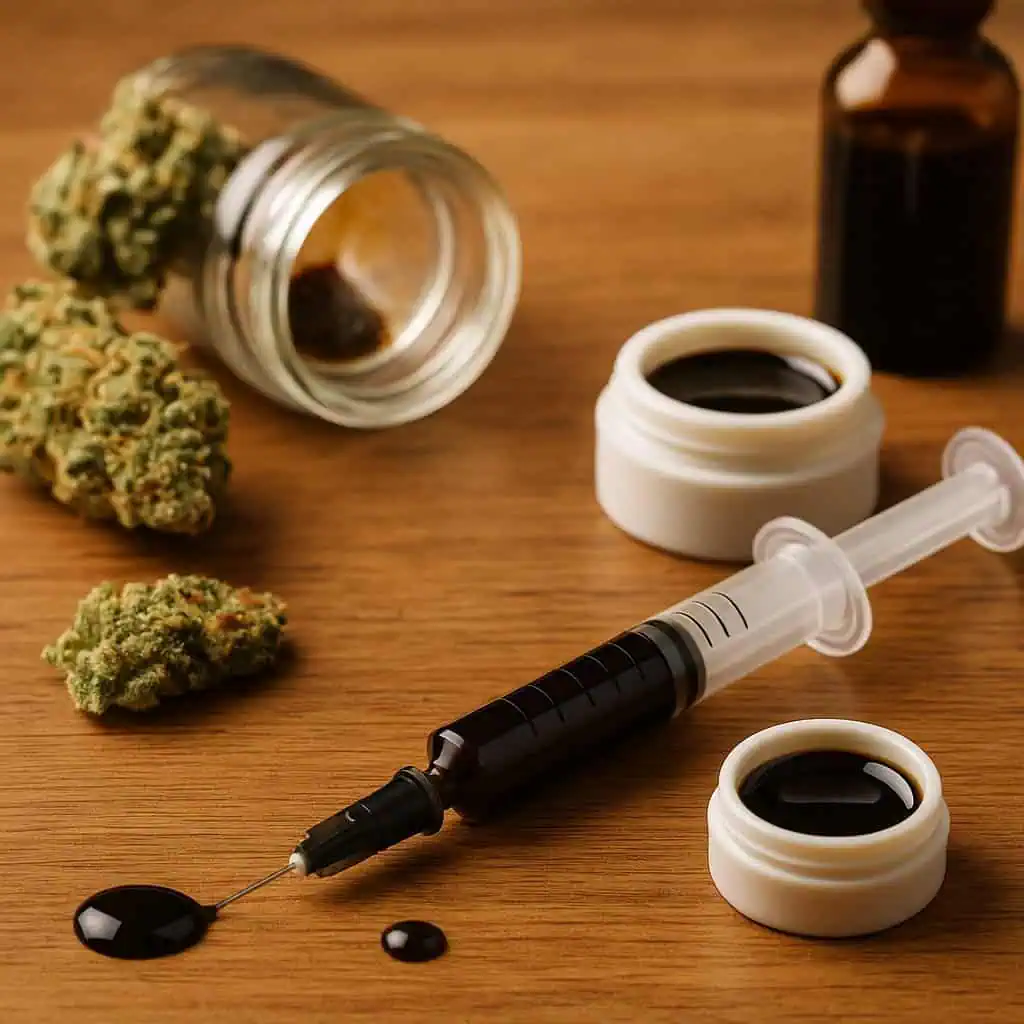
RSO (Rick Simpson Oil) is a thick, dark, high-THC cannabis oil made by soaking cannabis flower in a solvent such as food-grade ethanol, straining it, and evaporating the solvent off. The result is a tar-like full extract cannabis oil (FECO) that keeps most of the plant’s cannabinoids and terpenes. It’s usually swallowed or applied to the skin, not smoked.
It’s named after Canadian engineer Rick Simpson, who promoted the oil in the early 2000s after claiming it cleared up his skin cancer, a claim never confirmed by clinical research.
Unlike CBD oils or distillates, RSO is highly potent, often with very high levels of THC.
Today, RSO is sold in many state dispensaries, usually in oral syringes. Scientific evidence on RSO itself is very limited.
This guide covers what RSO is, where it came from, how it’s made and taken, the types available, what the research shows, side effects, legality, and where to buy it.
Rick Simpson was working as an engineer in Canada when he suffered a serious head injury in 1997. He has said cannabis helped when other medications didn’t.
Around 2003, after being diagnosed with basal cell carcinoma (a common skin cancer), he applied a homemade cannabis extract to spots on his skin and later claimed they disappeared (Healthline overview of RSO).
That account was never scientifically verified. Simpson shared his recipe for free, the story spread online and through documentaries, and the oil became known as Rick Simpson Oil (RSO).
It’s easy to confuse RSO with other cannabis extracts. Here’s how it compares:
| Product | Cannabinoid Profile | Consistency | Common Uses | Legality |
|---|---|---|---|---|
| RSO (Rick Simpson Oil) | High THC, full spectrum | Thick, tar-like | Oral, topical | Legal in regulated states only |
| CBD Oil | High CBD, low THC | Thin oil | Sublingual, added to drinks or food | Sold as hemp in the US (federal hemp rules tighten Nov 12, 2026) |
| FECO (Full Extract Cannabis Oil) | THC or CBD dominant | Thick | Oral, topical | Depends on local cannabis laws |
| Tincture | THC or CBD, alcohol-based | Liquid | Sublingual | Widely available in dispensaries |
| Distillate | Isolated THC or CBD | Syrupy | Edibles, vaping | Legal in regulated markets |
Key takeaway: RSO is not CBD oil. Most RSO is strongly intoxicating; if you don’t want a high, CBD products are a different category.
Disclaimer: RSO is not FDA-approved, and this page is not medical advice. Research is ongoing; talk to a clinician before using any cannabis product for a health condition.
“RSO has always been one of the most talked-about cannabis extracts because of its potency and full-spectrum profile. At Cannabis Training University, we emphasize that while many patients share positive experiences with RSO, it should be approached with caution, education, and respect for its strength. Always start low, go slow, and buy from a trusted source.”
— Jeff Zorn, CEO of Cannabis Training University
Fire, Ventilation and Legal Warning: Do this legally, only where permitted. Some states and cities restrict or ban home extraction even where cannabis itself is legal, so check your state and local law first. Ethanol is flammable, and its vapor can ignite from a spark, pilot light, gas stove, or cigarette. Work outdoors or with strong ventilation, use electric heat only, keep every open flame and spark source away, and keep a fire extinguisher within reach. Use only food-grade ethanol. Never use butane, naphtha, lighter fluid, or any other hydrocarbon solvent at home. Many people buy lab-tested RSO from a licensed dispensary instead.
The ethanol method below is shown for education. It is the only method we cover for home use. Extraction with other solvents belongs in a licensed, purpose-built facility, not a home. To study extraction in more depth, see CTU’s Cannabis Extraction course.
Yield: 1 ounce of cannabis produces about 3–4 grams of RSO depending on potency. Homemade oil isn’t lab-tested for potency or leftover ethanol.
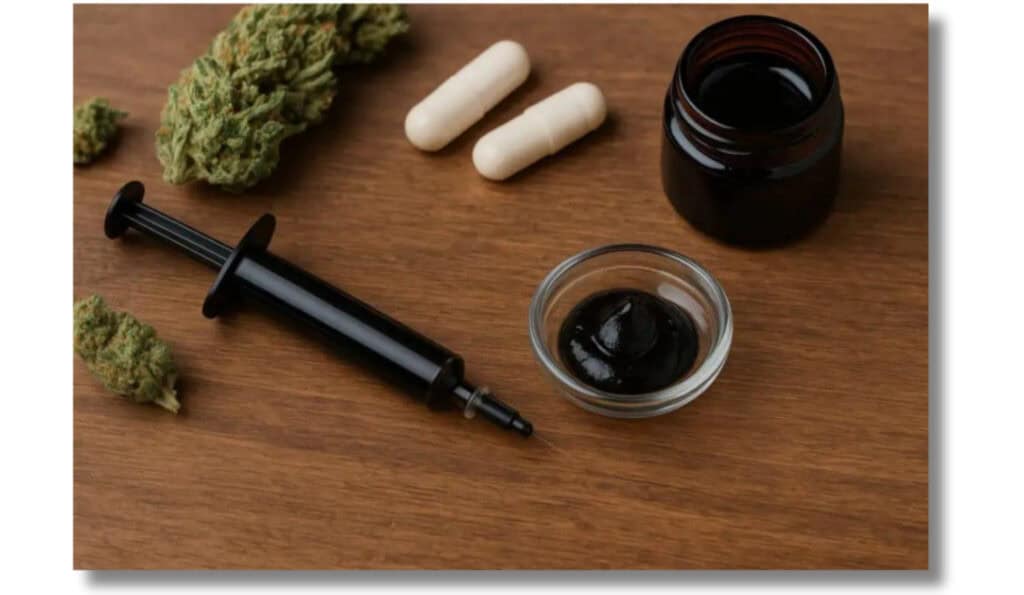
RSO isn’t just one product. It comes in different forms:
Because RSO is extremely potent, careful dosing is essential. Swallowed THC can take up to 2 hours to kick in, so don’t take more just because you don’t feel it yet.
This is the schedule Simpson promoted, shown for historical context only. It was never tested in clinical trials, and a gram a day of 60–90% THC oil is a very large THC dose.
Keep RSO locked away from children and pets; a small amount contains a lot of THC.
Tip: Search “RSO near me” or “where to buy RSO oil” in your state to find regulated options.
Rick Simpson Oil.
Most use oral ingestion or capsules.
Not recommended — too thick, designed for ingestion.
THC can remain in your body for days to weeks.
Only in states/countries with legal THC.
No. There is no clinical evidence that RSO cures cancer, and the FDA has not approved cannabis or cannabinoids as a cancer treatment. Research is ongoing; talk to a clinician.
RSO is one of the most potent and best-known cannabis extracts. If you’re thinking about trying it, the most important factors are:
RSO isn’t for everyone. Learn how full extract cannabis oil is made with online cannabis cooking and extraction courses from CTU, or study extraction in more depth in the Cannabis Extraction course.
More in Cannabis cooking

Check your state's cannabis laws

Edibles, infused products, cannabis kitchens
 IACET Accredited Provider · online cannabis education
Since 2009 • 50,000+ students trained worldwide
IACET Accredited Provider · online cannabis education
Since 2009 • 50,000+ students trained worldwide

Copyright Cannabis Training University, a subsidiary of Online Training Providers. © 2026. All Rights Reserved.
Medical Disclaimer: The information on this website is for informational purposes only and is not intended to be a substitute for professional medical advice, diagnosis, or treatment.
Always seek the advice of a physician or other qualified health provider with any questions you may have regarding a medical condition.
Legal Compliance: Cannabis remains federally illegal. Products and information are intended only for jurisdictions where cannabis use and possession is legal.
By using this site, you affirm that you are of legal age (21+) and responsible for understanding your local laws.