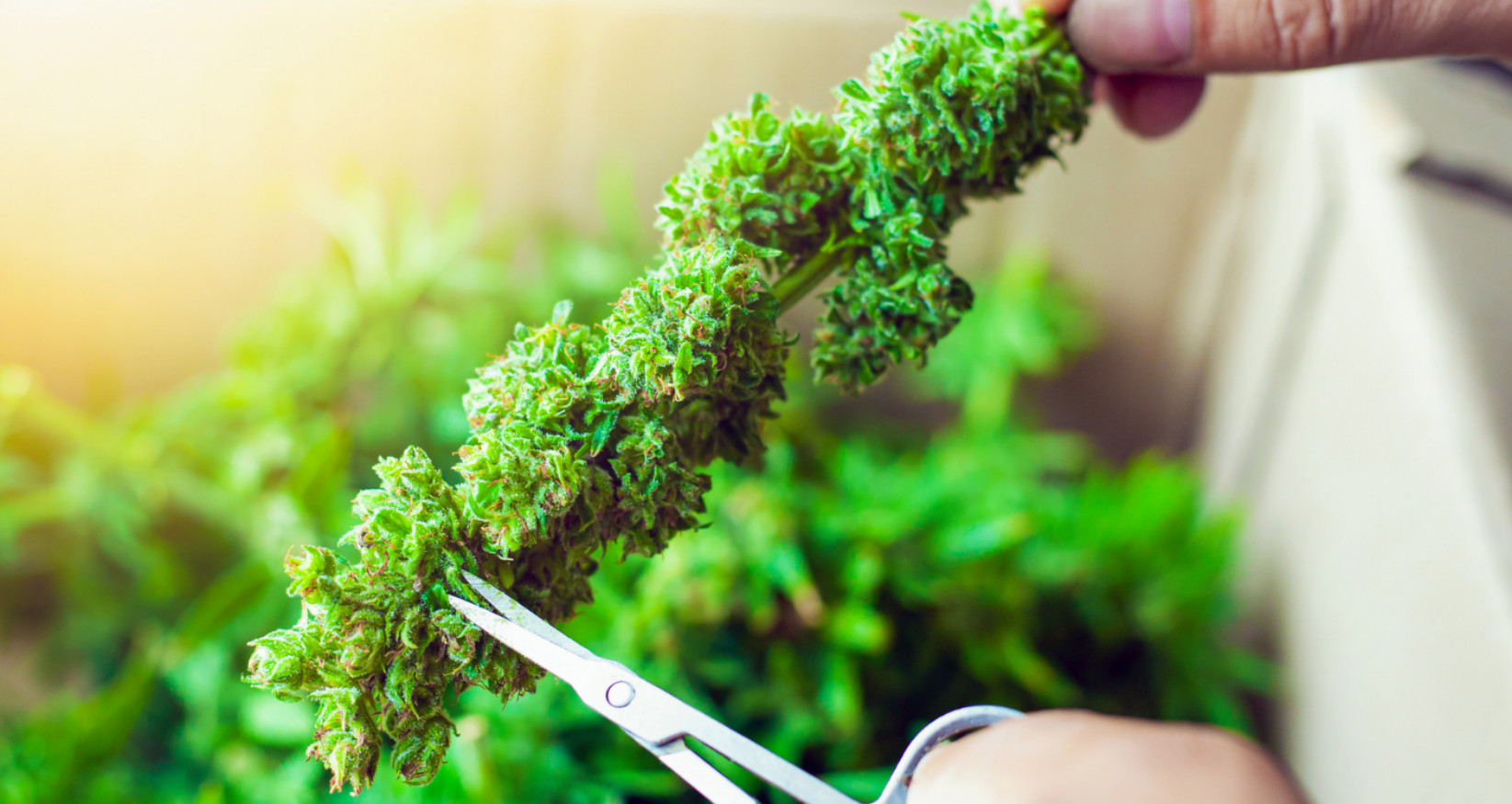
Full-Extract Cannabis Oil, often abbreviated FECO and sometimes referred to as RSO-style oil, is a high-potency, whole-plant cannabis extract made with food-grade alcohol.
Unlike distillates that isolate a narrow band of compounds, FECO aims to preserve a broad spectrum of cannabinoids (THC, CBD, CBG, etc.), terpenes, flavonoids, and other phytochemicals for a robust “entourage effect.”
Below you’ll find a complete, practical guide: what FECO is, how it’s made safely, equipment and ingredients, dosing and uses, costs, product quality checks, legal/medical cautions, brand-shopping tips, FAQs, and a step-by-step process for home use with food-grade ethanol. (No butane—ever.)
If you run a dispensary or plan to, there are notes sprinkled throughout for training staff and building compliant SOPs.
“Think of FECO as the whole plant, concentrated. The goal is not just high THC or CBD; it’s the synergyof the full chemical fingerprint, captured safely and consistently.”
What FECO Is (and What It Isn’t)
- FECO: A dark, viscous, full-spectrum oil made by soaking cannabis in high-proof, food-grade ethanol, filtering, then carefully evaporating the solvent at low heat. The result contains a wide range of cannabinoids and terpenes, plus chlorophylls and polyphenols (hence the dark color and earthy taste).
- Not the same as distillate: Distillate is refined to isolate a single cannabinoid (e.g., ~90%+ THC), often with fewer ancillary compounds.
- Not butane hash oil (BHO): BHO uses hydrocarbon solvents; it can be perfectly safe in licensed labs, but never attempt hydrocarbon extraction at home.
Why people choose Full Extract Cannabis Oil (FECO)
- Full-spectrum composition (potential entourage benefits).
- Versatility (sublingual, edible capsules, topical blends, suppositories by qualified users).
- Straightforward solvent system (ethanol), which is food-grade and easier to handle than hydrocarbons when you follow safety rules.
Safety First (Read This Before Anything Else)
- Local law compliance: Cannabis extraction is regulated. In some jurisdictions, home extraction is illegal (even with ethanol). Know your state/country rules.
- No open flames: Ethanol is highly flammable. No gas stoves, no candles, no smoking. Use an electric hot platewith a thermostat and excellent ventilation (ideally outdoors or in a fume-hood-style environment).
- Ventilation & PPE: Work in a well-ventilated area. Use gloves, safety glasses, and keep a Class B fire extinguisher nearby.
- Food-grade ethanol only (190–200 proof where legal). Never use denatured alcohol, isopropyl, methanol, or any non-food solvent.
- Temperature control matters: low, steady heat for solvent removal; never boil aggressively.
- No butane/propane at home: Hydrocarbons require C1D1 rooms and pro-lab equipment. Leave that to licensed labs.
FECO vs. RSO: What’s the Difference?
- RSO (Rick Simpson Oil) typically refers to a style of whole-plant extract popularized years ago, often using ethanol or naphtha. Modern best practice: food-grade ethanol only.
- FECO emphasizes full extract and food-grade process. In modern dispensary/medical contexts, FECO is the preferred term for a safe, ethanol-based, full-spectrum oil.
Equipment & Ingredients (Home Method, Ethanol-Based)
Ingredients
- Cannabis flower or trim (quality in = quality out).
- Food-grade ethanol (190–200 proof), where legal.
- (Optional) Carrier oil (MCT, olive) if you plan to dilute for tinctures/capsules.
- (Optional) Sunflower lecithin to enhance bioavailability in edibles/capsules.
Equipment
- Electric grinder (or hand-break to avoid over-pulverizing).
- Freezer (for cold wash—reduces chlorophyll pickup).
- Two glass jars with lids (wide-mouth Mason style).
- Fine mesh strainer, cheesecloth, and lab-style coffee filters.
- Funnel and glass collection dish (borosilicate preferred).
- Electric hot plate or water bath with thermostat control.
- Infrared thermometer or probe thermometer.
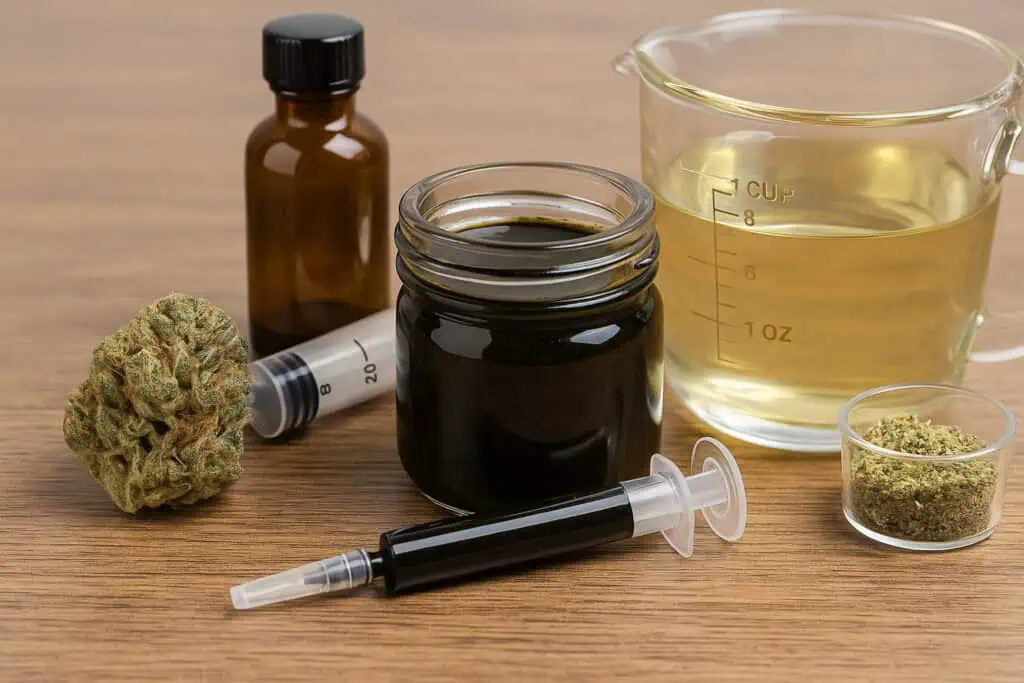
- Syringes (for dosing the final FECO), amber glass vials, capsule machine if making caps.
- PPE: nitrile gloves, eye protection, apron; Class B fire extinguisher.
Step-by-Step: Ethanol FECO (Cold Wash Method)
Total time: 3–6 hours active + solvent evaporation time.
Yield: Varies by potency, starting material, and technique. Expect ~10–20% by weight from high-quality flower (very approximate).
Step 1 — Decarb (Optional, Depends on End Use)
- Why: Decarboxylation converts THCA → THC (or CBDA → CBD), creating psychoactive (THC) or active CBD effects orally.
- How:
- Preheat oven to 230–240°F (110–115°C).
- Loosely break flower into small pieces (not powder).
- Spread thinly on parchment-lined tray; bake 35–45 minutes (stir once).
- When to skip: If you want a raw, acidic extract (THCA/CBDA emphasis), skip decarb.
Step 2 — Cold Soak
- Place decarbed (or raw) cannabis and ethanol in separate jars and freeze them for at least 2 hours (overnight is better). Cold reduces chlorophyll pickup → cleaner taste.
- Combine frozen ethanol with frozen cannabis in the jar, using enough ethanol to submerge completely (typically 8–10 mL ethanol per gram of cannabis for a first pull).
Step 3 — Agitation & Quick Wash
- Cap tightly; shake gently for 2–5 minutes.
- Strain through a mesh strainer into a clean jar, then filter again through coffee filters.
- (Optional) Perform a second quick wash (2–3 minutes) on the same biomass for higher yield; combine filtrates.
Step 4 — Solvent Recovery (Evaporation)
- Pour the filtered solution into a wide borosilicate dish.
- Use a gentle water bath (hot plate + pot of water) to warm the dish to 120–150°F (49–65°C).
- Stir occasionally; do not boil; maintain ventilation. Evaporation takes 1–3+ hours depending on volume.
- When bubbles slow and the oil thickens, tip the dish to check viscosity, no visible ethanol should remain (you can smell a faint sweetness from terpenes but not the sharp ethanol note).
Pro tip: If available, a vacuum chamber or ethanol reclaim unit speeds evaporation at lower temperatures, preserving more terpenes.
Step 5 — Finishing the FECO
- Once ethanol is fully gone, the concentrate is thick and tar-like.
- While warm (more fluid), draw into syringes for easy dosing, or blend into MCT/olive oil for tinctures/capsules.
- Store in amber glass at cool temps; avoid light/heat/air to protect potency.
Optional Formulations (Practical Use Cases)
- Sublingual FECO
- Use the syringe to place a rice-grain amount under the tongue; hold 60–90 sec; swallow.
- Strong taste; microdose first.
- Oil-Based Tincture
- Blend FECO into MCT/olive oil (e.g., 1 gram FECO in 10 mL oil).
- Add lecithin (0.5–1%) for bioavailability.
- Label dosage by mg/mL (calculate with lab potency or a reasonable estimate).
- Capsules
- Warm FECO slightly; mix with MCT; fill size 0/00 caps using a capsule machine.
- Store in fridge.
- Topicals
- Combine FECO into a shea/cocoa butter + MCT base, add essential oils sparingly (skin-safe).
- Patch-test for sensitivity.
Medical routes like suppositories should only be attempted with medical guidance and sterile technique. (See your clinician; follow local law.)
Potency & Dosing (Start Low, Go Slow)
- Potency math (estimate): If your flower is 20% THC and extraction+losses net ~70% of cannabinoids into FECO, 1 g FECO may contain ~140–160 mg THC (very rough). For precise dosing, lab test.
- Beginners: start 2–5 mg THC equivalent; wait 2–3 hours.
- Intermediate: 5–15 mg per serving, titrate slowly.
- High-tolerance/medical (under clinician guidance): doses may be 50–100+ mg/day, split into multiple smaller doses to manage side effects.
Cannabinoid profiles
- THC-dominant FECO: stronger euphoria, analgesia, appetite effects.
- CBD-dominant FECO: minimal intoxication; anxiolytic/anti-inflammatory potential.
- Balanced (1:1): gentle euphoria, good daytime functionality for some.
FECO Flavor & Color: What’s “Normal”?
- Color: Dark green to almost black due to chlorophyll and polyphenols (normal in FECO).
- Aroma/Taste: Earthy, bitter, herbaceous. Cold wash and fast filtration help; blending into oil or capsules improves palatability.
Quality FECO Checklist (Buying or Making)
When buying FECO:
- COA (Certificate of Analysis) from a licensed lab covering:
- Cannabinoids (potency by mg/mL or %).
- Residual solvents (ethanol should be within safe limits).
- Pesticides, heavy metals, mycotoxins, microbial safety.
- Label transparency: strain/type, batch, date, ingredients, carrier oils, allergens.
When making FECO:
- Document everything: batch weight, solvent volume, decarb time/temp, evaporation temps, final weight/yield.
- Consistency: use same cultivar batches to keep potency/flavor consistent if you’re producing regularly.
FECO Costs (DIY vs. Retail)
DIY (small batch)
- Equipment: $150–$500 (hot plate, jars, filters, PPE, syringes, capsule kit).
- Ethanol: $30–$80 per bottle (varies by region, proof, taxes).
- Cannabis: Dominant cost; e.g., 28 g at $100–$300+ depending on market and quality.
- Yield: Very variable; cost per mg can be lower than retail if starting material is affordable and your process is efficient.
Retail FECO
- Dispensary: $40–$100+ per gram depending on potency, brand, state taxes, and whether it’s THC, CBD, or balanced.
Brand & Product-Shopping Tips
- Prioritize COA transparency and full-panel testing.
- Look for strain-specific FECO if you want repeatable effects.
- Avoid products with denatured alcohol or unknown solvent residues.
- Check texture: thick and sticky is normal; watery often means diluted (fine if labeled).
- If flavor matters, consider live rosin FECO-style (solventless) or flavored dilutions; expect higher prices.
FECO Laws & Compliance (High-Level 2025 Snapshot)
- United States: Laws vary by state. Some allow home extraction with ethanol; others prohibit any solvent-based extraction outside licensed facilities. Medical/recreational possession limits and manufacturing rules differ.
- International: Rules vary widely; in many countries, possession/extraction remains illegal.
- General rule: Check current regulations in your jurisdiction before possessing, extracting, or selling FECO.
Risks, Side Effects & Warnings of FECO
- Drug interactions: Cannabinoids can interact with CNS depressants, SSRIs, blood thinners (e.g., warfarin), anti-seizure meds. Consult your clinician.
- Overconsumption: THC can cause anxiety, rapid heart rate, dizziness, or nausea. Start low.
- Allergies/sensitivities: Rare but possible—especially to carrier oils or flavorings.
- Solvent safety: Ethanol fumes are flammable; improper evaporation can leave unsafe residuals. Follow low heat, good ventilation.
Training Tips (For Dispensaries & Staff)
- Train staff to explain FECO vs. distillate succinctly and to discuss dosing, onset, and formulation choices (sublingual vs. capsule vs. topical).
- Build SOPs for FECO handling: storage temps, label checks, COA verification, and how to field common patient questions without making medical claims.
How To Use FECO: Quick Decision Flow
- Goal = fast calm, precise titration? → Sublingual (microdose).
- Goal = steady all-day effect? → Capsules/tincture (split dosing).
- Goal = localized relief? → Topical (with permeation enhancers) or clinician-guided routes.
- Avoiding taste? → Capsules or mix FECO into robust-flavor foods (nut butters, dark chocolate).
Sample Home Batch: Quick FECO Recipe Card
- Inputs: 28 g decarbed flower (or raw), 250–300 mL 190-proof ethanol.
- Cold wash: 2–5 min; strain; optional second pull.
- Evaporate: 120–150°F water bath until no ethanol odor remains.
- Finish: Draw into syringes; optional 1 g FECO : 10 mL MCT blend for tincture.
- Dose: Start 2–5 mg THC equivalent; increase slowly every 24–48 hrs.
FAQs: Full Extract Cannabis Oil (FECO)
Is FECO the same as RSO?
They’re closely related styles of whole-plant oil. Modern best practice for both is food-grade ethanol. “FECO” emphasizes full-spectrum ethanol extraction with current quality standards.
Can I make FECO without decarbing?
Yes, but you’ll preserve acidic cannabinoids (THCA/CBDA), which are non-intoxicating and may have different effects. For oral psychoactive THC, decarb first.
How long does FECO take to “kick in”?
Sublingual: 15–45 minutes (some sooner). Swallowed: 45–120 minutes. Capsules/edibles: 1–3 hours. Effects may last 4–8+ hours depending on dose/metabolism.
What’s a good starter dose of full extract cannabis oil?
New users: 2–5 mg THC equivalent; wait a full 2–3 hours before taking more. Consider CBD co-administration if sensitive to THC.
Why is my FECO almost black?
Chlorophyll and polyphenols color the extract. That’s normal with full-extract methods and part of why it tastes earthy.
Is it safe to cook off ethanol indoors?
Only with electric heat, excellent ventilation, and strict fire safety. Many hobbyists work outdoors or in a garage with doors open and no ignition sources.
Can I use isopropyl alcohol or denatured alcohol for FECO?
No. Use food-grade ethanol only. Denatured/isopropyl contain toxic additives.
How do I store FECO?
Cool, dark, airtight. Amber vials/syringes. Refrigeration extends shelf life; freeze for long-term.
Will FECO fail a drug test?
Yes, THC-containing FECO will. Even CBD-rich FECO may contain trace THC. Avoid if drug-tested.
Can FECO be used topically for pain?
Many users try topical FECO in carrier bases. Evidence is still developing; effects are often localized. Avoid open wounds and consult a clinician.
Responsible Use & Medical Disclaimer
- This guide is educational. It is not medical advice.
- Consult a qualified clinician if you have medical conditions, take medications, are pregnant/breastfeeding, or plan high-dose regimens.
- Follow all local laws and safety rules.
Closing Thoughts
FECO sits at the intersection of whole-plant chemistry and practical formulation. When it’s extracted safely, labeled transparently, and dosed thoughtfully, it can be one of the most versatile and cost-effective cannabis formats, at home or in a dispensary product lineup.
Whether you’re a patient looking for steady relief, a knowledgeable budtender elevating customer education, or an entrepreneur building compliant SOPs, mastering FECO fundamentals pays dividends.
More in Cannabis cooking




 IACET Accredited Provider · online cannabis education
Since 2009 • 50,000+ students trained worldwide
IACET Accredited Provider · online cannabis education
Since 2009 • 50,000+ students trained worldwide