What is the best cannabis growing temperature and perfect environment for growing plants and producing high-quality cannabis? When growing cannabis, temperature can be manipulated for optimal results.
Optimal indoor temperatures are crucial for a thriving cannabis crop. The best conditions will enhance both potency and yield.
This guide will explain how temperature affects your cannabis and how you can control it.
Grow it right the first time
Stop guessing. Learn to grow from seed to harvest.
The Indoor & Outdoor Cannabis Growing Certificate covers nutrients, pH, lighting, pests and harvest, with video lessons and a certificate when you finish.
See the Growing Certificate →Free Cannabis Cultivation Guide (ebook)IACET-accredited · 7-day money-back guarantee
Cannabis plants can thrive in various environments and still yield high-quality yields. However, when growing cannabis indoors, it is crucial to provide optimal conditions to compensate for the absence of natural sunlight, which is essential for the plant’s health.
Although lighting solutions can simulate natural sunlight, indoor cannabis plants often end up being less hardy than their outdoor counterparts.
With that in mind, utilizing temperature control to help your indoor plants thrive is imperative for indoor marijuana success.

Seedlings are delicate and require a stable, warm environment to encourage healthy root development and early growth.
Ideal temperature:
The ideal temperature for a cannabis indoor grow during the vegetative stage is 70-85°F. This range is optimal as it promotes efficient photosynthesis and robust plant growth.
Varied temperatures that are too high or low will lower the rate of photosynthesis, and the growth rate of the plant itself.
Cooler night temperatures help mimic natural outdoor conditions.
When the lights are off, it’s best to have a temperature that is around 10° lower than the daytime temperature. So if you keep your grow room at 75° when the lights are on, aim for 65° when they are off.
Ideal Temperature:
In outdoor growing operations, cannabis plants flower in the Autumn when temperatures start to drop.
This ideal flowering temperature is somewhere around 65-80°F. The same 10° differential from light and dark is optimal as well, just as when in a vegetative stage.
This flowering temperature allows terpene and cannabinoid maturation. Too high temperatures can degrade sensitive terpenes, which will affect the flavor, aroma, and high of cannabis.
Manipulating your grow room temperature for flowering can also bring out purple, blue, and pink colors in the buds themselves when the temperature is low enough.
Ideal Temperature:
In the final weeks of the flowering stage, maintaining cooler temperatures can enhance color expression in the buds and further boost resin production.
Ideal Temperature:
Discussing temperature without discussing humidity would be incomplete. Temperature and humidity are closely linked.
Variations in either can significantly impact plant health. Both factors must be carefully managed in order to have an optimal grow.

Higher humidity levels during the seedling stage help young plants retain moisture and develop strong roots.
During the vegetative stage plants benefit from moderately high humidity, which supports vigorous growth and healthy leaf development.
Slightly lower humidity during the flowering stage reduces the risk of mold and mildew while still supporting robust bud development.
Lower humidity levels in the final weeks help to prevent mold and promote the production of dense, resinous buds.
Too low of temperatures in indoor grow rooms can lead to a handful of problems.
Cold temperatures can slow down the metabolic processes in cannabis plants, leading to stunted growth and delayed development.
At too low of temperatures, plants may struggle to absorb nutrients effectively, leading to deficiencies and poor health.
Lower temperatures can slow down the rate of photosynthesis, diminishing the plant’s energy production and overall health.
Cold temperatures can hinder the production of essential oils and resins, affecting the quality and potency of the final product.
Having a grow room temperature too high is much more common for indoor cannabis growers.
A marijuana growing temperature above optimal will increase the risk for pests like spider mites and diseases like powdery mildew.
Cannabis grow lights can put off a lot of heat that can create hot pockets directly below the lights. Proper air circulation and ventilation are crucial when the grow lights are on.
Keeping your cannabis grow room cool enough will be an ongoing job for indoor marijuana producers.
Learning how to control grow room temperature and humidity will make or break your indoor cannabis grow.
You can find the ideal temp for indoor grow room operations with a variety of appliances:
Air conditioners and evaporative coolers lower the temperature. Evaporative coolers also raise humidity levels.
Space heaters heat the room. Combination units that control humidity can raise or lower humidity based on the relative humidity of the cannabis grow room.
Fans don’t change the temperature. Instead, they keep air circulating and help you avoid hot and cold spots.
You may need some or all of these for optimal indoor marijuana growing conditions.
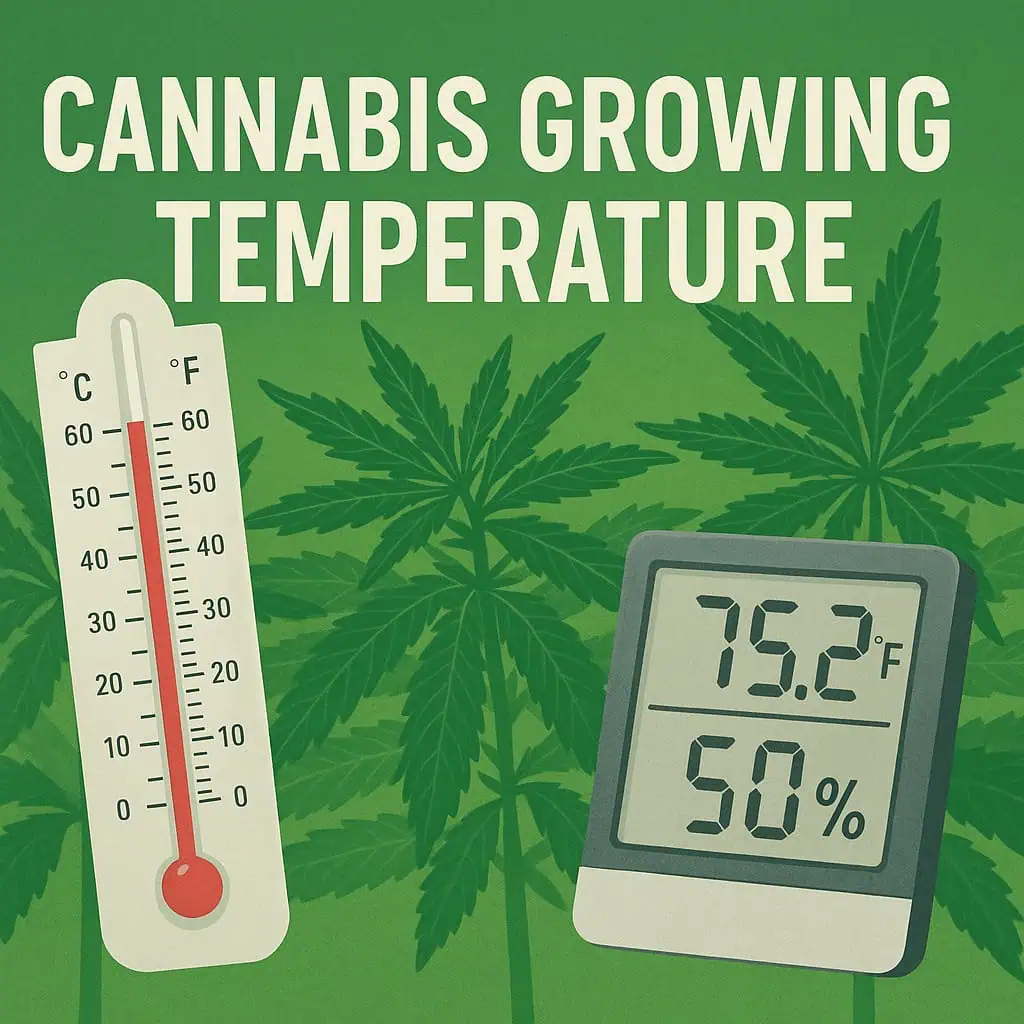
| Growth Stage | Day Temperature | Night Temperature | Humidity Level |
|---|---|---|---|
| Seedlings & Clones | 68–77 °F (20–25 °C) | Slightly cooler | 60–80 % |
| Vegetative | 70–85 °F (21–30 °C) | ~65–75 °F | 50–70 % |
| Flowering (Early) | 65–80 °F (18–26 °C) | 5–10 °F cooler | 40–50 % |
| Flowering (Late) | ~65–75 °F | Cooler night conducive | 40–50 %, aiming lower |
| Outdoor Extremes (Cold) | Avoid extended periods below 50 °F (10 °C), which can slow growth or damage tissue | ||
| Outdoor Extremes (Heat) | Over 90–100 °F (32–38 °C) can cause heat stress; root zone management and shading help |
Including real grower experiences adds authenticity and relatability:
“Some strains thrive in 100–105 °F during veg and 90+ during flower—as long as root systems are healthy.”
“In flower, 70–80 °F lights-on and slightly cooler at night is generally safe practice.”
These firsthand accounts enhance trust by grounding recommendations in real-world experience.
Doing these steps can help you achieve the best cannabis growing temperature both inside and outdoors.
If temperatures drop below 50 °F (10 °C) for extended periods, growth slows dramatically. Leaves may turn purple or yellow, stems become brittle, and in severe cases, plants can die. Cold stress can also increase susceptibility to mold and nutrient lockout.
Yes, but only if the stress is corrected quickly. Signs include drooping leaves, leaf edges curling upward, and bleaching near light sources. Lower the temperature, improve airflow, and provide adequate water to help recovery. Prolonged exposure above 90–100 °F (32–38 °C) can cause permanent damage to yields and potency.
Yes. A 5–10 °F difference between daytime and nighttime encourages healthy plant metabolism. During flowering, cooler nights also help boost terpene production and can bring out color expression in some strains.
Seedlings thrive in warmer conditions of 68–77 °F (20–25 °C) with high humidity (60–80 %). Lower temps can stunt early growth and slow root development.
Use oscillating fans, intake/exhaust systems, and air conditioners or heaters to stabilize temperatures. LED lights help reduce excess heat compared to HID or HPS systems. Automated climate controllers are ideal for maintaining consistency.
Yes. Indica-dominant strains often tolerate cooler conditions better, while sativa-dominant strains tend to handle warmer temperatures. However, all strains benefit from staying within the recommended ranges for each growth stage.
Extremely important. Even if air temperature is ideal, roots that are too cold or too hot will impair nutrient uptake. Aim for 65–70 °F (18–21 °C) in the root zone to support healthy growth.
Yes. In hot climates, use shade cloths or mulch to keep root zones cooler. In colder climates, portable heaters, greenhouses, or even simple covers can protect plants from frost or sudden cold snaps.
Achieving the best cannabis growing temperature is ideal for growing the best possible bud indoors.
Managing your grow temperature with a variety of appliances is your best bet to ensure ideal indoor marijuana growing conditions.
If you want to learn about growing weed indoors and how to optimize the process, keep learning with us here at Cannabis Training University!
More in Growing

Check your state's cannabis laws

Indoor + outdoor growing careers
 IACET Accredited Provider · online cannabis education
Since 2009 • 50,000+ students trained worldwide
IACET Accredited Provider · online cannabis education
Since 2009 • 50,000+ students trained worldwide



Copyright Cannabis Training University, a subsidiary of Online Training Providers. © 2026. All Rights Reserved.
Medical Disclaimer: The information on this website is for informational purposes only and is not intended to be a substitute for professional medical advice, diagnosis, or treatment.
Always seek the advice of a physician or other qualified health provider with any questions you may have regarding a medical condition.
Legal Compliance: Cannabis remains federally illegal. Products and information are intended only for jurisdictions where cannabis use and possession is legal.
By using this site, you affirm that you are of legal age (21+) and responsible for understanding your local laws.