


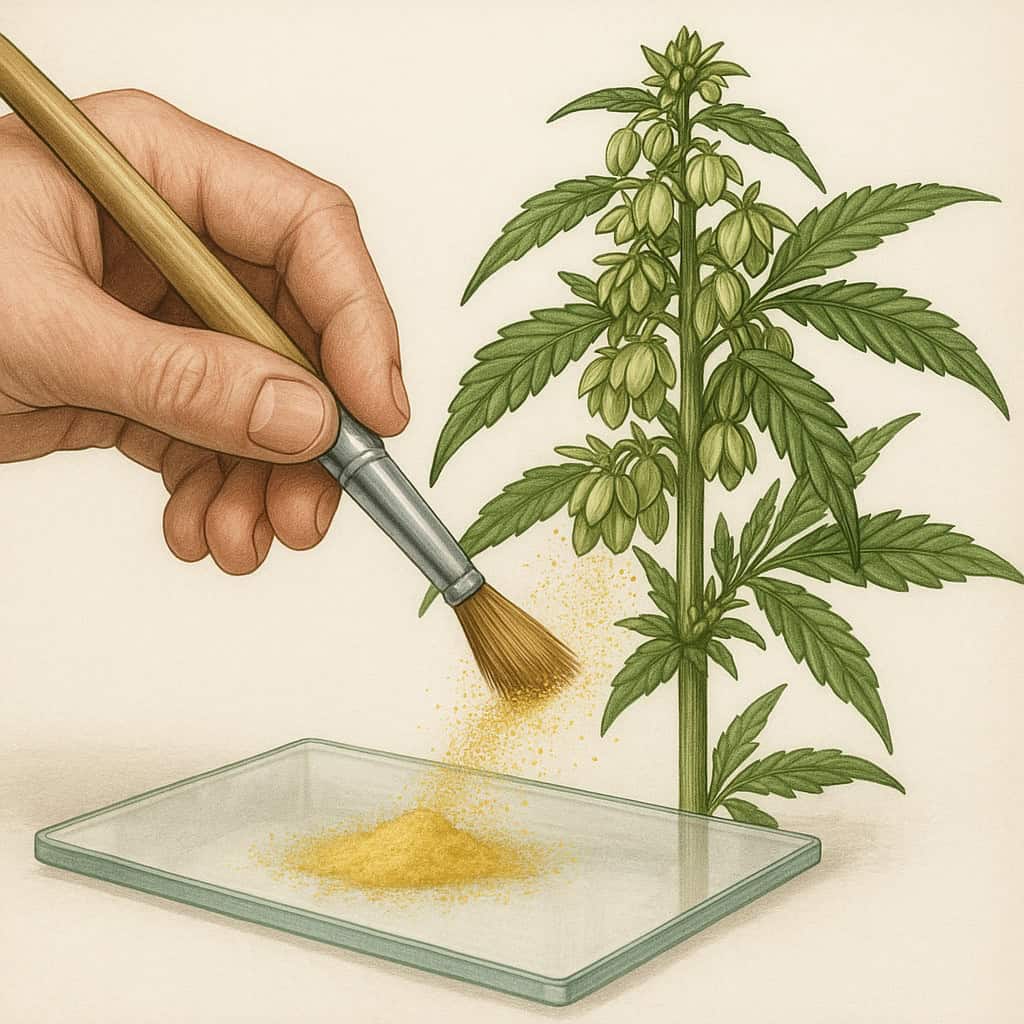
If you're planning to breed a cannabis strain or produce seeds, you might be wondering how to collect cannabis pollen and successfully pollinate your plants.
The good news? It's a simple process when you follow these easy steps.
Identifying Male Cannabis Plants
As a dioecious plant, cannabis produces female and male plants.
When looking to identify a male cannabis plant for breeding and pollination, you’ll want to do more than just spot any male, you need to find a healthy, genetically desirable one.
Since most of the male’s bud traits are hidden in the genes, choose to collect pollen from a male plant that has parents that express strong vegetative growth.
What You Need to Collect Cannabis Pollen
What You’ll Need
- Scissors or pruning shears
- Small paper bags or plastic containers (non-static)
- A fine paintbrush or cotton swab
- Clean glass jar or ziplock bag
- Silica gel packet (for moisture control)
- Gloves (optional but helps with cleanliness)
Step-by-Step Instructions
Step 1: Identify a Mature Male
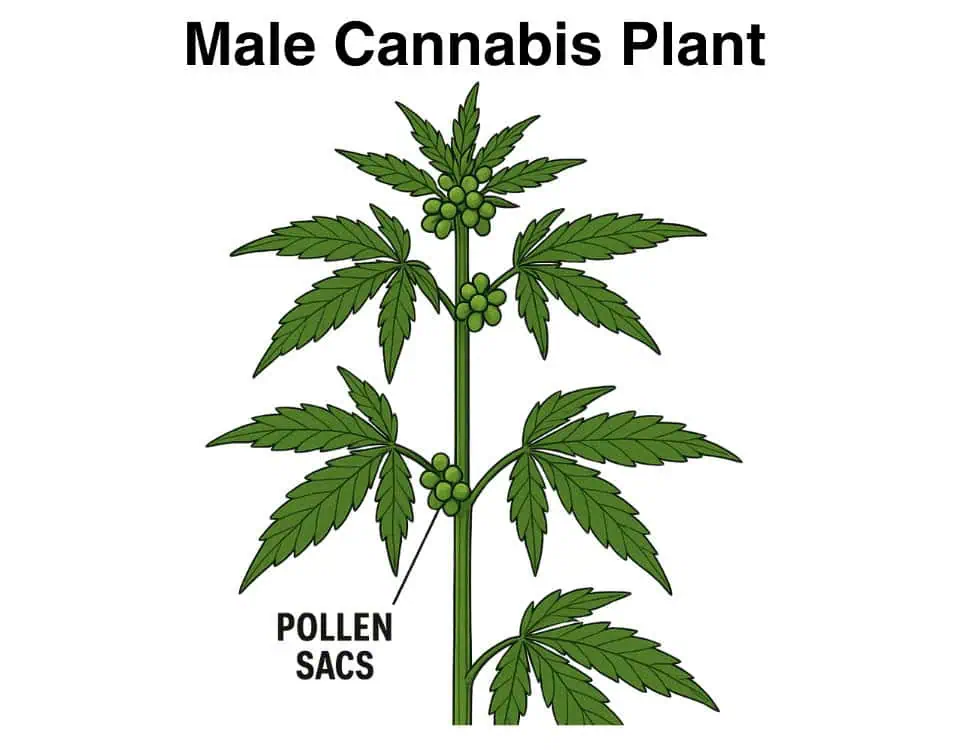
- Look for pollen sacs that are swollen and beginning to open.
- You’ll see tiny yellowish dust (pollen) when sacs burst.
Step 2: Isolate the Male
- Move the male plant away from females to prevent accidental pollination.
Step 3: Collect Pollen
Option 1 – Direct Shake Method
- Gently tap or shake the open pollen sacs over a clean paper bag or container.
- Let the pollen collect like fine dust.
Option 2 – Cut Branches Method
- Snip off a branch with ripe pollen sacs.
- Place the branch upside down in a paper bag for 24–48 hours in a dry, dark place.
- Gently shake the bag – pollen will fall to the bottom.
Step 4: Remove Debris
- Sift the collected pollen to remove any plant matter using a fine mesh strainer if needed.
Step 5: Store the Pollen
- Pour the pollen into a glass jar or ziplock bag.
- Add a silica gel packet to reduce moisture.
- Seal tightly and store in the freezer for up to 12 months
Make sure there’s no air movement in the area. Turn off any nearby fans and close all windows to prevent cannabis pollen from being blown away.
Pollen collecting should be performed in a separate room from any of your female marijuana plants to avoid producing hermaphroditic plants. Hermaphroditic plants limit bud production and produce cannabis seeds.
When you’re done collecting the pollen, make sure you’ve changed your clothes to avoid cross-pollination when you visit your grow room with your female plants.
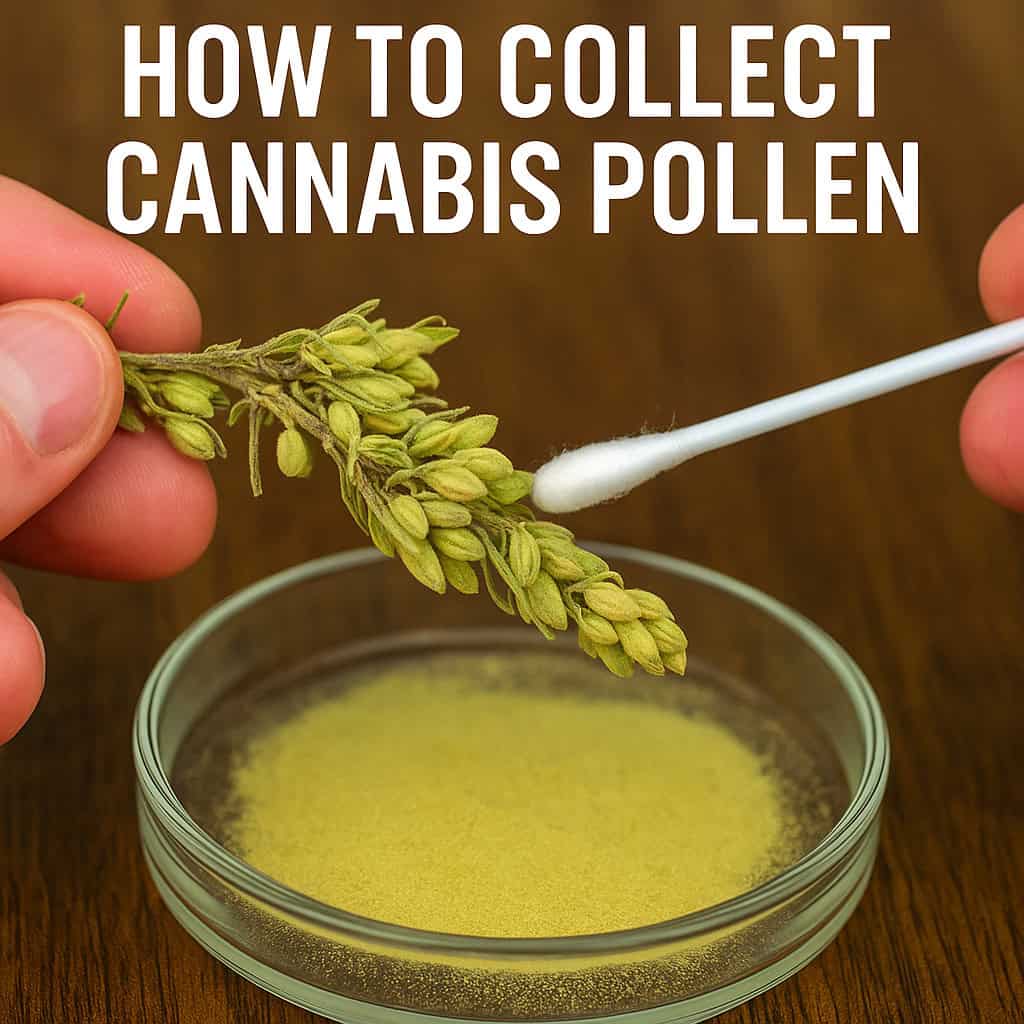
Storing Your Cannabis Pollen
Some growers prefer to let their pollen dry for up to 48 hours before storing it for long-term use.
If you plan to dry your pollen, use a small brush to spread it evenly on parchment paper, then place it in a dark, still room with temperatures between 65–75°F and humidity between 30–60%.
This controlled environment helps preserve the pollen’s viability for future breeding.
How to Pollinate a Female Cannabis Plant
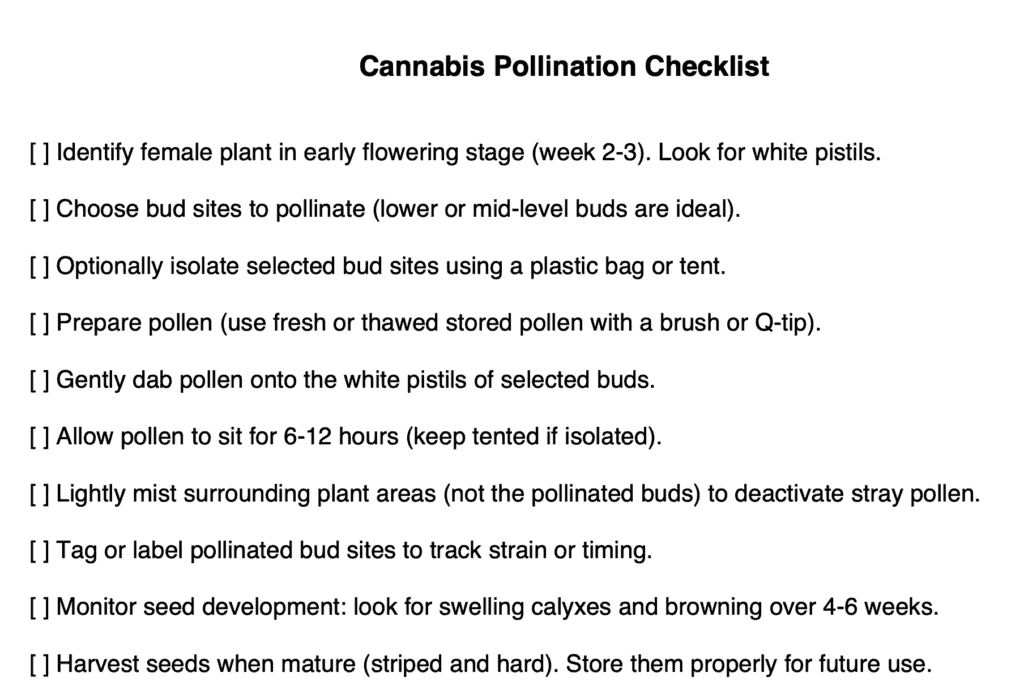
Pollinate when the female cannabis plant is in early flowering, usually 2-3 weeks after switching to a 12/12 light cycle.
Look for white pistils (hairs) coming from the female's flower sites. This is when the plant is most receptive.
If you only want to pollinate a few buds, isolate a branch with white pistils or tent it off with a plastic bag.
Using a paintbrush or q-tip apply the pollen by gently dabbing it onto the white pistils of a few buds.
You can apply cannabis pollen from multiple male strains on the same plant at individual flower sites. Make sure to label each branch with the cannabis pollen type you applied to document its unique traits and keep a comprehensive record of the parents.
Leave the pollen on the pistils for 6-12 hours.
What Happens Next
- Seeds will begin forming in about 7–14 days.
- Harvest seeds 4–6 weeks later (usually at the end of the plant’s flower cycle).
- Look for browned, swollen calyxes and striped mature seeds.
Throughout the entire process, your pollinated female cannabis plant should be isolated from the rest of the non-pollinated plants while the seeds are growing to avoid accidental cross-pollination.
Advanced Cannabis Pollen Techniques
Why Cannabis Pollen Matters in Breeding
Cannabis pollen is the cornerstone of intentional breeding, enabling growers to craft new strains with desired traits, whether it's potency, terpene profile, growth pattern, or resilience. Effective pollen collection and use can help:
- Preserve unique phenotypes by controlling pollination timing.
- Develop stability through selective breeding over generations.
- Create hybrids that combine beneficial traits from different parents.
- Conserve viable genetics by storing pollen long-term.
Understanding pollen biology and breeding goals elevates your grower’s skill and allows you to innovate in your garden.
How to Maximize Pollen Viability
Best Practices for Harvest Timing
To ensure top-quality pollen:
- Harvest when pollen sacs are fully swollen and ready to burst open.
- Ideal collection time is early morning—just after humidity drops and before pollen disperses.
- Use cotton swabs or fine brushes to collect pollen gently and avoid contamination.
Drying Methods for Longevity
Proper drying is essential:
- Spread pollen on parchment paper in a clean, dry area.
- Maintain 65–75 °F and 30–40% humidity to gently reduce moisture without degrading viability.
- Dry for 24–48 hours, then quickly transfer into airtight containers.
Storage Strategies for Extended Viability
- Use airtight jars or vacuum-sealed pouches with desiccant packets.
- Label each container clearly with strain name, date, and phenotype notes.
- Store in the freezer to preserve activity for up to 18–24 months (longer in ultra-cold freezers).
- Keep pollen isolated—avoid cross-contamination at all costs by changing gloves and clothes when moving between cultivation areas.
Breeding with Cannabis Pollen
Timing Pollination for Best Results
- Pollinate 2–3 weeks into flowering, when pistils first emerge.
- Target early flowers or specific branches to limit seed development—this is known as “spot pollination”.
- Use a clean brush and apply pollen gently to avoid damaging delicate reproductive structures.
Label and Track Crosses Precisely
- Use tags to record male and female pairing on each pollinated branch.
- Note date of pollination, phenotype goals (e.g., resin production, terpene profile), and environmental factors.
- Maintain a breeding journal including seed formation, germination, and characteristics—this documentation is invaluable for future breeding cycles.
From Pollination to Seed Harvest
- Seeds typically begin forming 7–14 days after pollination, maturing over the final 4–6 weeks of flowering.
- Watch for dark, striped seeds with hardened shells and brown calyxes, indicating maturity.
- Use a solvent-free drying method—hang seed-laden buds in a screened, dry environment until calyxes crack open under gentle pressure.
- Store mature seeds in cool, dark, and dry conditions. Properly dried seeds can remain viable for years.
Common Challenges Handling Cannabis Pollen
Cross-Pollination Prevention
- Always isolate male plants, ideally in separate rooms or using physical barriers.
- Wear dedicated grow clothes, gloves, and even a hairnet when moving between male and female zones.
- Set up airflow direction to minimize accidental airborne pollen reaching unintended flowers.
Avoiding Hermaphroditism
Over-pollination or stress can trigger hermaphrodite development:
- Limit exposure—dust only select flowers or branches when pollen is ready.
- Maintain consistent light schedules and low-stress environments.
- Strong genetic lines are less prone to hermaphroditism; always base breeding stocks on reliable, stable parents.
Advanced Applications of Cannabis Pollen
Producing F1 Hybrids
- Cross two stabilized but genetically diverse parent strains to create F1 hybrids with hybrid vigor.
- The first generation often manifests enhanced potency, vigor, or disease resistance—ideal for commercial production.
Developing Auto-Flowering Hybrids
- Cross photoperiod females with auto-flowering males, then backcross to stabilize the autoflower trait.
- Pollen enables you to combine advantages of both types, potentially creating unique, early-yielding strains with consistent traits.
CBD & Micro-Breeding
- Use pollen from low THC/high CBD males to pollinate high THC females for generating F1s with balanced cannabinoid ratios.
- Excellent for medical growers targeting personalized therapeutic ratios without relying solely on lab-produced cannabis products.
Grower Testimonials & Insights
- “Pollen harvesting was a game-changer—I boosted yield and diversity across my crop. Documenting every pollination gave me clarity in my breeding goals.”
- “Freezing pollen kept it viable for my next season. Even after almost two years, I had germination rates above 80%.”
- “Spot pollination with pollen brushes allowed me to keep seed count low and bud quality high. Seeds had glassy shells and germinated beautifully.”
- “Making my own F1 hybrids helped me develop a balanced high: potent yet relaxed. Using pollen allowed me to define my grow without hybrids from dispensaries.”
FAQs for Cannabis Pollinating
What is cannabis pollen used for?
It’s used for breeding and seed production, enabling growers to create new strains or preserve genetics.
How long does cannabis pollen stay viable?
Properly stored, pollen remains viable for 18–24 months, especially when kept in airtight containers in freezers.
Can I freeze cannabis pollen and still use it?
Yes, nearly all growers report that freezing maintains high pollen viability when stored correctly.
What's spot pollination?
Applying pollen to a single branch or flower to control seed development, allowing for both seed production and bud preservation.
How do I prevent cross-pollination?
Isolate male plants, use dedicated grow clothes, separate rooms, and control airflow during pollen collection and use.
How do I know if cannabis seeds are viable?
Look for dark, striped, hard seeds. Perform a germination test: soak seeds and check if they sprout within 3–7 days.
To learn more about pollinating and harvesting cannabis seeds, enroll in Cannabis Training University's marijuana classes today.

Luis Cordova
Luis Cordova is a distinguished author, and renowned expert in cannabis cultivation, who possesses a Master's degree in Plant Biotechnology and Pharmaceutical Science. As a valued contributor to highly esteemed publications such as Cannabis Training University and Maximum Yield Magazine, Luis has emerged as a trusted source of guidance and knowledge in the cannabis industry. Having written thousands of informative articles, Luis is widely recognized for his comprehensive expertise on cultivating cannabis, both indoors and outdoors.

 Jeff was involved in an accident where he endured a traumatic brain injury. He had a week-long stay in ICU where brain surgeons
  100% risk free money back guarantee within 48 hours after purchase if student has not completed any of the courses or exams.
