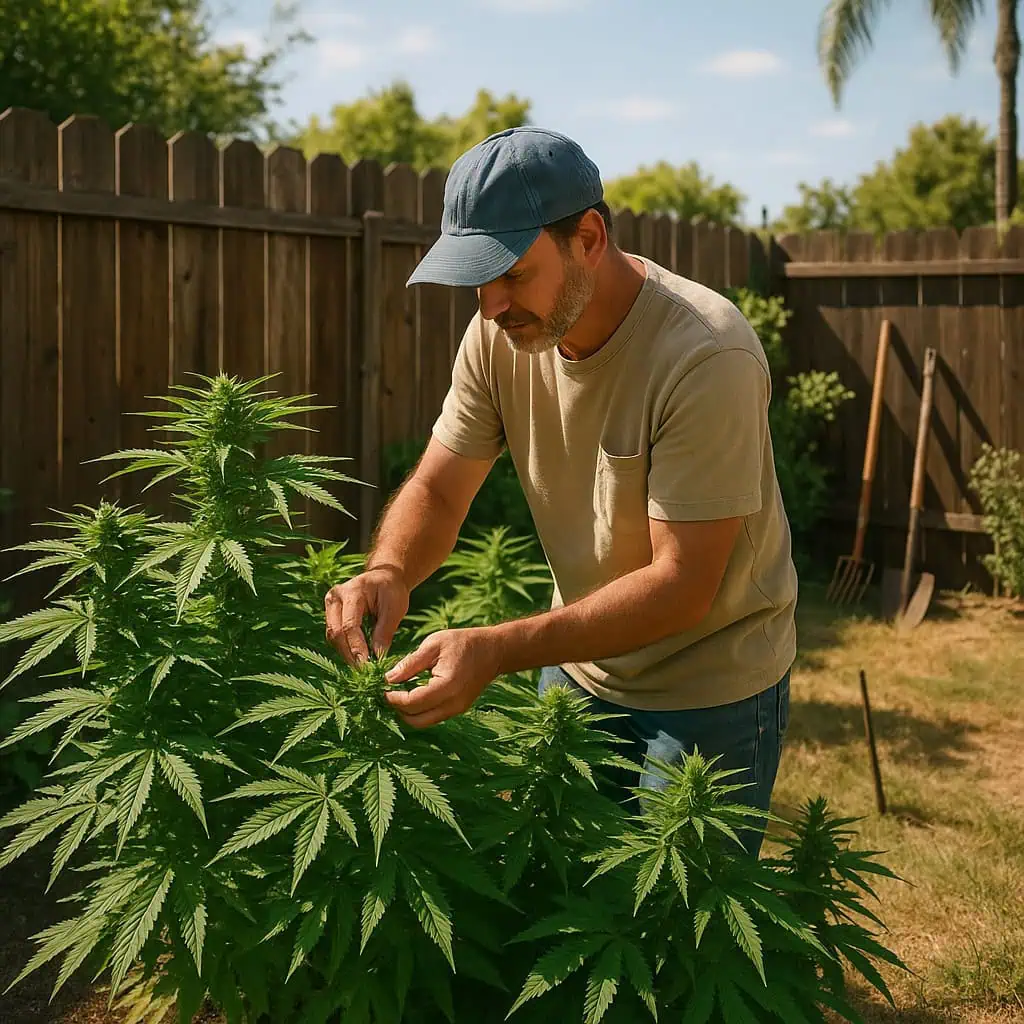
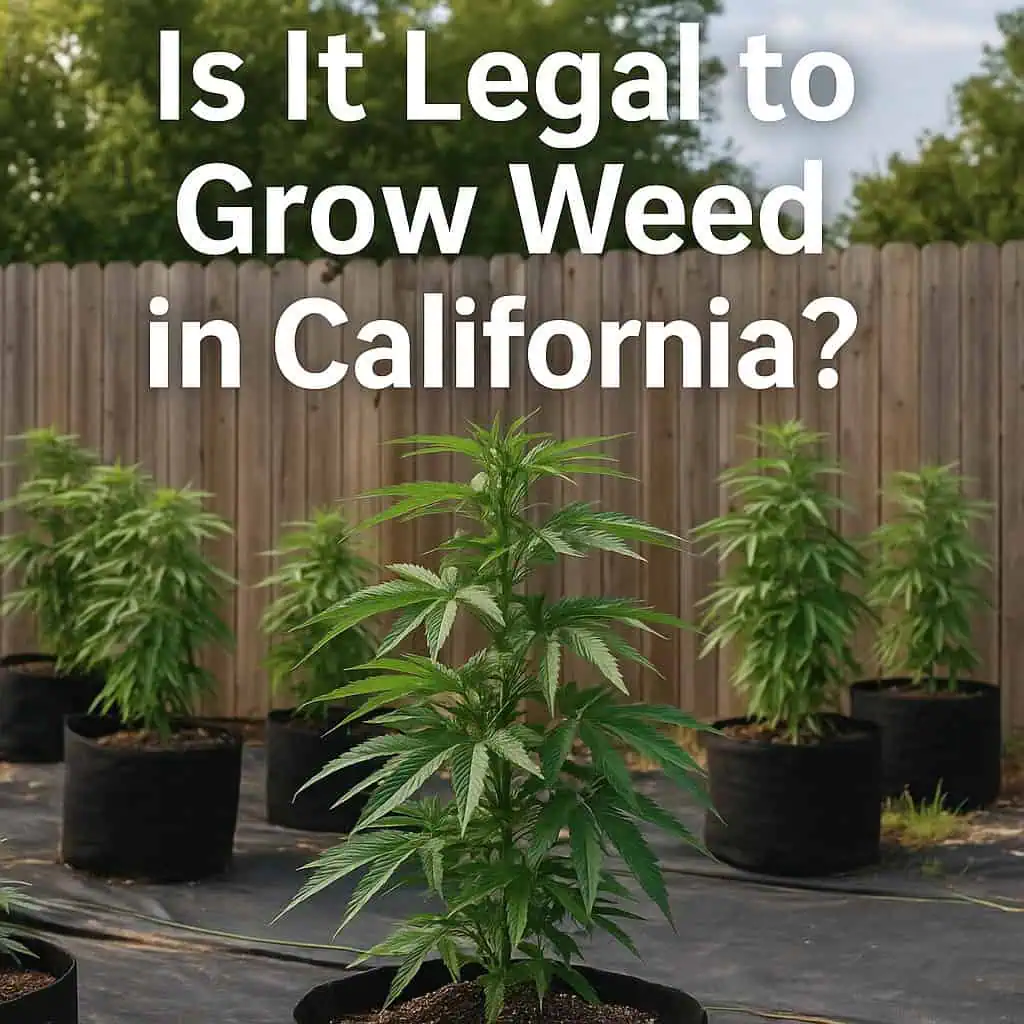
Is it legal to grow weed in California? The answer is yes, but with limits, restrictions, and city-by-city variations. Understanding the California weed growing laws, plant limits, and how cultivation is regulated will help you grow safely and legally.
This guide covers updated laws, city and county plant limits, how to grow weed in California, climate considerations, reviews from growers, and answers to the most common questions. Is it legal to grow weed in California? Let’s take deeper dive.
Grow it right the first time
Stop guessing. Learn to grow from seed to harvest.
The Indoor & Outdoor Cannabis Growing Certificate covers nutrients, pH, lighting, pests and harvest, with video lessons and a certificate when you finish.
See the Growing Certificate →Free Cultivation Guide (ebook)IACET-accredited · 7-day money-back guarantee
Under Proposition 64, also known as the Adult Use of Marijuana Act:
Possession limits include one ounce of dried marijuana or eight grams of concentrated cannabis. Having an open container of cannabis in a vehicle is illegal; cannabis must be sealed or stored in the trunk to comply with the law.
You cannot use cannabis in public places; it is only allowed on private property with the property owner’s permission.
While the state law sets the six-plant standard, local counties and cities can add their own restrictions, especially when it comes to outdoor grows and plant canopy size.
It is important to note that under federal law, cannabis remains illegal. The federal government prohibits possession or use of cannabis on federal lands, including national parks, regardless of state or local laws.
There are legal distinctions between those who grow cannabis or grow marijuana for recreational purposes and those cultivating for medical use. Medical patients must follow specific guidelines and obtain a doctor’s recommendation to exceed standard plant limits.
Here’s where things get complicated: California counties and cities, known as local jurisdictions, can set stricter rules than the state under California law. Local jurisdictions have the authority to implement their own regulations, which may differ from state law, and can also restrict or ban commercial cannabis activities and cannabis businesses.
Below are updated plant limits for some of the major jurisdictions:
County/City | Recreational Limit | Medical Limit | Notes |
|---|---|---|---|
Statewide (California) | 6 plants per residence | More than 6 if medically necessary | Must be in locked, private space |
Butte County | 6 plants indoors if parcel <5 acres | 150 sq ft canopy allowed | Outdoor restricted by parcel size |
Sonoma County | 6 plants | Up to 100 sq ft canopy | Canopy limits instead of plant count |
San Francisco | 6 plants | More with doctor recommendation | Must be locked, enclosed, not visible |
San Diego | 6 plants indoors only | More with doctor recommendation | Outdoor prohibited |
Los Angeles | 6 plants | More with medical authorization | Locked greenhouses allowed |
San Bernardino | 6 plants | Up to 24 medical (30 total) | Combined household maximum |
Yuba County | 6 plants | Same as recreational | Requires secure indoor or greenhouse |
Humboldt County | 6 plants | Up to 99 with medical need | Enforcement varies by location |
Once you know how many weed plants you can legally grow in California, the next step is learning how to grow them properly.
While indoor growing is legal, keep in mind that to vape cannabis indoors is subject to the same legal restrictions as smoking, and may be prohibited in certain multi-unit residences.
California has an ideal climate for cannabis cultivation in many regions, but conditions vary:
The key to success is choosing strains suited to your climate and carefully monitoring water, nutrients, and pH levels.
For anyone looking to grow more than six plants or sell cannabis, a cultivation license and a state license are required. These licenses are managed by the Department of Cannabis Control and broken into categories such as:
A state license is necessary for any commercial cultivation activity, and the cannabis industry is highly regulated with strict licensing and compliance requirements. To buy cannabis legally, you must purchase from a licensed retailer; you can verify a retailer’s state license through official channels.
Medical marijuana patients with a Medical Marijuana ID card are exempt from paying sales tax on cannabis purchases. It is important to securely store cannabis products to prevent access by children and pets. The use of volatile solvents for processing cannabis at home is prohibited under the health and safety code.
You’ll also need local permits, zoning approval, and compliance with environmental regulations.
Yes, adults 21 and over may grow up to six plants per household.
Medical patients can grow more than six plants if necessary for their treatment, but the exact number depends on local county rules.
It depends on your city or county. Some areas allow outdoor cultivation in locked greenhouses, while others require strictly indoor growing.
No, a license is not required for personal grows of six or fewer plants. A license is only needed for commercial growing.
Growing more than six plants without a license is considered unlawful cultivation under California marijuana cultivation laws. Unlawful cultivation can result in penalties including fines, misdemeanor or felony charges, and possible imprisonment in county jail for up to three years, depending on the severity of the offense.
In both cities, six plants are allowed per residence, but they must be locked and not visible to the public. San Diego is stricter, requiring indoor-only cultivation.
Absolutely, but only within the limits. The statewide law allows six plants per household for recreational use, but counties and cities set additional restrictions. Medical patients can often grow more, but again, local laws apply.
For anyone interested in larger-scale cannabis cultivation, commercial licensing is required, and the rules are complex.
Whether you live in Humboldt County, Los Angeles, San Diego, or anywhere else in the state, always check your local ordinances before planting any cannabis.
By following the laws, securing your grow, and respecting plant limits, you can legally enjoy the benefits of cultivating your own cannabis in California.
More in Growing

Check your state's cannabis laws

Indoor + outdoor growing careers
 IACET Accredited Provider · online cannabis education
Since 2009 • 50,000+ students trained worldwide



Copyright Cannabis Training University, a subsidiary of Online Training Providers. © 2026. All Rights Reserved.
Medical Disclaimer: The information on this website is for informational purposes only and is not intended to be a substitute for professional medical advice, diagnosis, or treatment.
Always seek the advice of a physician or other qualified health provider with any questions you may have regarding a medical condition.
Legal Compliance: Cannabis remains federally illegal. Products and information are intended only for jurisdictions where cannabis use and possession is legal.
By using this site, you affirm that you are of legal age (21+) and responsible for understanding your local laws.