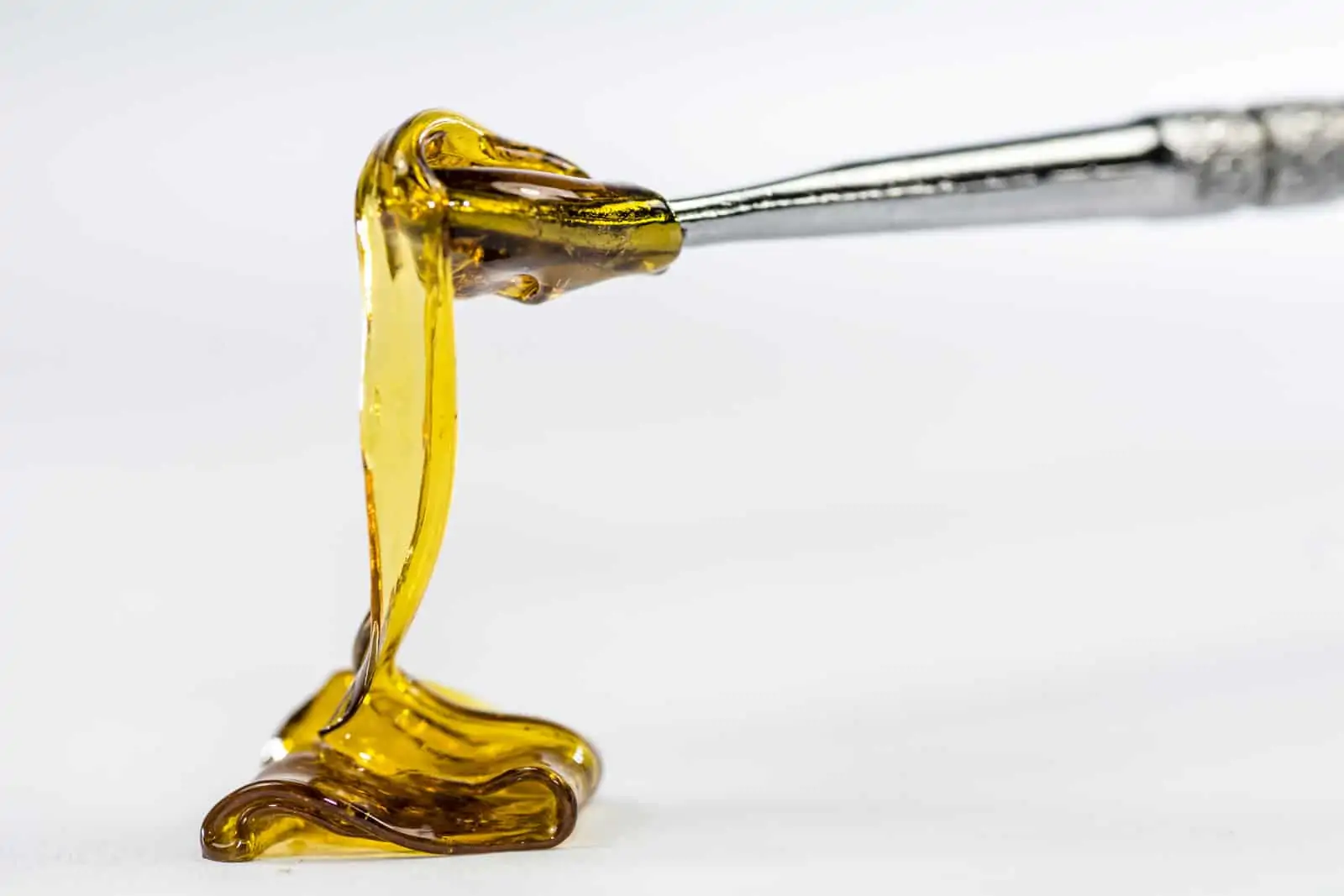
Cannabis concentrates (achieved through cannabis extraction) are among the most popular cannabis products on the market today.
This robust segment of cannabis-product lines commonly found in dispensaries include a number of specific products that are created using a variety of methods.
Potent concentrates can be made in a variety of ways, and often the names given to these products relate to their consistency and appearance.
The following products are commonly found in the cannabis market today.
Concentrates that are made through the use of one of a variety of solvents include:
Cannabis edibles, topicals, and teas also incorporate concentrates as a key ingredient. Cannabis cooking oils and butters also contain rich amounts of concentrated tetrahydrocannabinol (THC).
Most concentrates are consumed by either smoking them or using a vaporizer device like a vape pen for cannabis oil or a dab rig for wax, shatter, crumble, oil, and taffy.

Cold cannabis extractions refer to methods of extracting cannabinoids and terpenes from cannabis plants using cold temperatures to preserve the delicate compounds that can be degraded or lost when exposed to heat.
There are several methods of cold extractions.
CO2 is considered one of the cleanest extraction methods.
In this process, CO2 is pressurized and cooled in a supercritical state, where it acts as a solvent to extract cannabinoids and terpenes.
The CO2 is then separated from the extract, leaving high-purity concentrate.
Supercritical CO2 extraction can be performed at lower temperatures to preserve sensitive cannabinoids and terpenes.
The method is expensive and intricate but it is worth it in the end to have a non-toxic, high-quality product.
On the opposite side of clean and non-toxic is the ethanol extraction method. Ethanol is a color-less, flammable liquid.
Cold ethanol is used to extract the cannabinoids and terpenes. The plant material is soaked in cold ethanol which dissolves the desired compounds.
The solution is then filtered and the ethanol is evaporated to leave behind a concentrated extract.
In ice water extraction cannabis buds or trim are mixed with ice water, and the mixture is agitated to separate trichomes from the plant material.
The trichomes, which contain cannabinoids and terpenes are then filtered through a series of mesh screens of bags, resulting in a concentrate known as bubble hash.
Fresh or dried cannabis flower or hash is placed between parchment paper and subjected to pressure and low heat using a rosin press.
The pressure forces the cannabinoids and terpenes out of the plant material, producing a solvent less extract known as rosin.
These cold extraction methods are popular because they help maintain the integrity of the cannabinoids and terpenes, resulting in a more flavorful and potent final product.
Hot cannabis extraction methods involve using heat to extract cannabinoids and terpenes from cannabis plants.
These methods can be more efficient and faster but may also risk degrading some of the more sensitive compounds.
Crushed cannabis material is soaked in a chemical like ethanol or naphtha. The material gets stirred for about 2-3 minutes. The solvent will dissolve the cannabinoids and terpenes.
After the material has been thoroughly soaked it gets strained through mesh or a cheesecloth.
The process is repeated again. Then the solvent mixture is heated to evaporate the solvent.
What’s left is a thick, dark oil known as Rick Simpson Oil.

Butane hash oil is a relatively new extraction method.
Cannabis material is packed into a tube and butane is passed through it, dissolving the cannabinoids and terpenes.
The butane and extract mixture is then heated to evaporate the butane, leaving behind a concentrated oil.
Similar to cold ethanol extraction but this process involves heating the ethanol to speed up the extraction process.
The cannabis plant material is soaked in hot ethanol, which dissolves the cannabinoids and terpenes.
The ethanol is then evaporated to leave behind the concentrated extract.
This method is typically used to create cannabis-infused products like teas or broths.
While not as common or efficient as other extraction methods, it can be useful for making mild infusions.
The infusion will have a distinct herbal flavor that may be influenced by the strain of cannabis used.
Adding a lipid source, such as butter or coconut oil, can significantly improve the extraction of cannabinoids, making the infusion more potent.
| Method | Type | Solvent/Tools Used | Pros | Cons | Skill Level |
|---|---|---|---|---|---|
| Ice Water (Bubble Hash) | Cold | Ice, water, mesh bags | Solventless, safe, preserves terpenes | Labor-intensive, lower yield | Beginner |
| Dry Sift (Kief) | Cold | Screens or sifters | Simple, inexpensive | Can contain plant material | Beginner |
| Rosin Press | Hot | Heat, pressure, parchment paper | Solventless, high quality, terpene-rich | Requires press, small yields per press | Intermediate |
| Ethanol Extraction | Cold/Hot | Food-grade ethanol | Effective, scales well | Flammable, needs purging, expensive equipment | Expert |
| Butane Hash Oil (BHO) | Cold | Butane, closed-loop system | High potency, popular concentrates (shatter, wax) | Highly flammable, requires professional equipment | Expert |
| CO₂ Extraction | Cold | Supercritical CO₂ machine | Very clean, scalable, safe when controlled | Expensive, requires specialized equipment | Expert |
Working with cannabis extraction can be rewarding but also dangerous if not done properly. Always remember:
These methods are generally safer for beginners because they avoid volatile solvents.
Adding images or video tutorials of extraction processes can help readers understand the differences more clearly. Visual step-by-step demonstrations are especially useful for beginners learning home-friendly methods like rosin pressing or ice water extraction.
Cannabis extraction laws vary greatly by state, province, and country. Always check your local regulations before attempting any form of cannabis extraction. Some methods may be illegal to perform at home, even for personal use.
Cannabis concentrates provide a powerful cannabis experience. There are a wide variety of concentrates, and each has its following of loyal devotees.
Some concentrates are best left to experts with professional extraction equipment, while others can be made safely at home.
Enroll in CTU today to learn how to make cannabis concentrates like a pro!
More in Cannabis cooking

Check your state's cannabis laws

Edibles, infused products, cannabis kitchens
 IACET Accredited Provider · online cannabis education
Since 2009 • 50,000+ students trained worldwide



Copyright Cannabis Training University, a subsidiary of Online Training Providers. © 2026. All Rights Reserved.
Medical Disclaimer: The information on this website is for informational purposes only and is not intended to be a substitute for professional medical advice, diagnosis, or treatment.
Always seek the advice of a physician or other qualified health provider with any questions you may have regarding a medical condition.
Legal Compliance: Cannabis remains federally illegal. Products and information are intended only for jurisdictions where cannabis use and possession is legal.
By using this site, you affirm that you are of legal age (21+) and responsible for understanding your local laws.