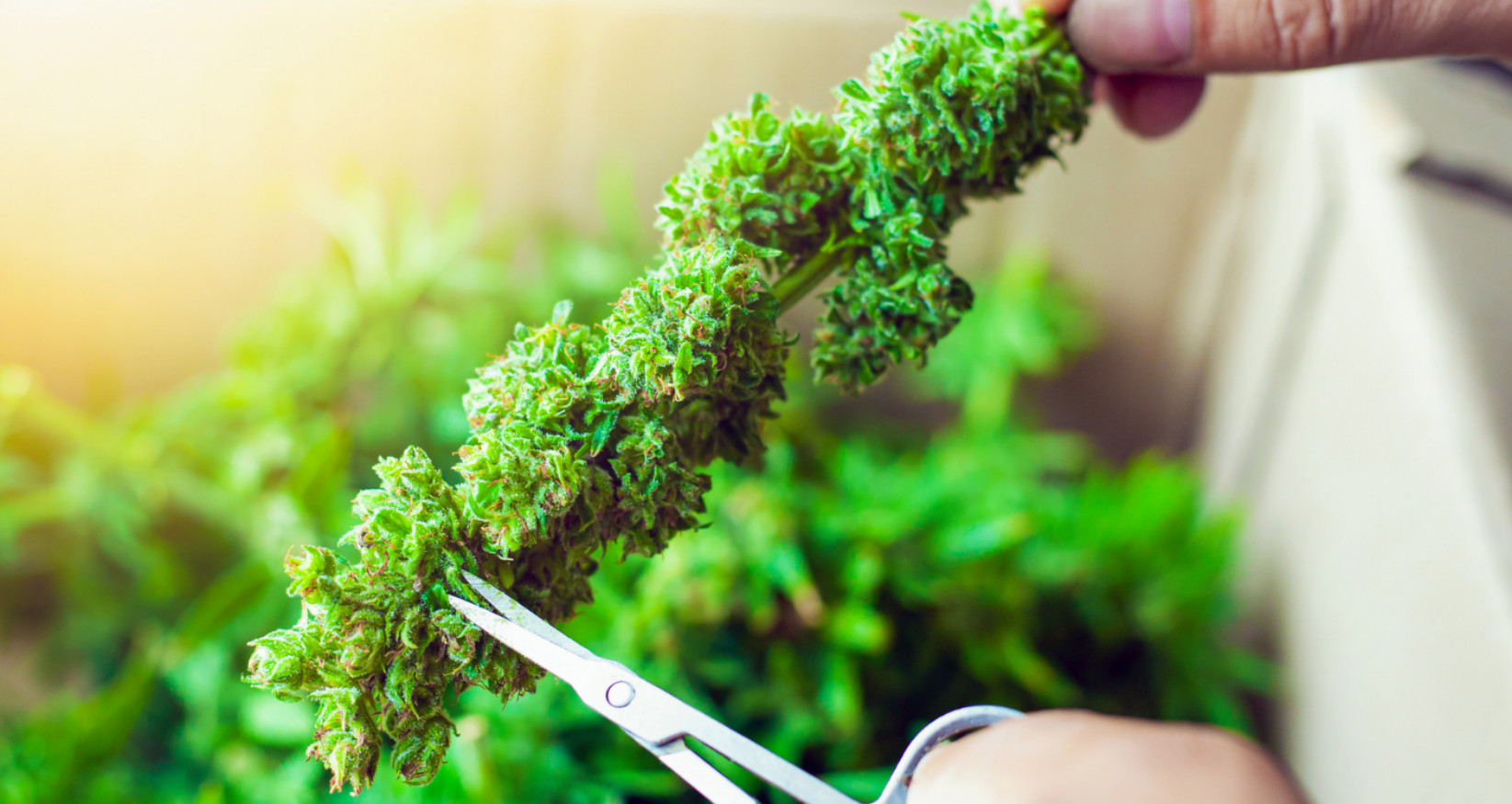
Training marijuana plants involves physically manipulating the plant to encourage more bud production, potentially doubling yields without requiring significant investment.
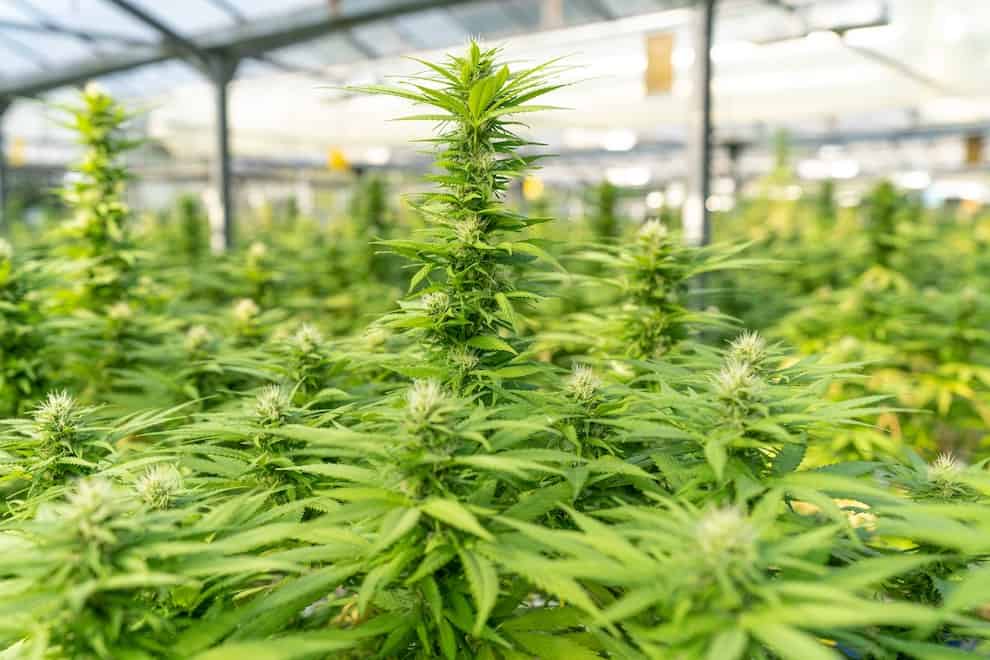
If you’re growing your cannabis plants indoors, your plants’ normal Christmas tree growth and stationary lighting produces big buds on top and smaller buds on the bottom.
In our plant training guide, you’ll learn seven ways to produce multiple bud sites with dense bud growth.
Grow it right the first time
Stop guessing. Learn to grow from seed to harvest.
The Indoor & Outdoor Cannabis Growing Certificate covers nutrients, pH, lighting, pests and harvest, with video lessons and a certificate when you finish.
See the Growing Certificate →Free Cannabis Cultivation Guide (ebook)IACET-accredited · 7-day money-back guarantee
Low-stress training (LST) is one of the easiest and most common ways to improve your indoor cannabis yields.
Generally, LST involves bending the plant stems and securing them to expose the middle of the plant to light and create an even canopy.
Growers can use a variety of securing devices such as pipe cleaners or soft-coated wire to keep the stems in place. Avoid using any sharp devices that can cut into the plant and damage its stems.
The no-technique plant training method is ideal for beginner growers who want a quick and easy way to improve their yields.
In this easy method, growers can bend the main stem 90 degrees when the plant is in its vegetative stage and its stems are easier to bend.
Essentially, moving the main stem out of the way allows the lower branches to receive a sufficient amount of light and develop main colas.
And, that’s really it. It’s a super simple technique that can yield incredible results.
Super cropping is a slightly more aggressive form of plant training that involves bending the vegetative stems horizontally to expose the lower buds to more lights. Technically, this can be considered a high-stress training technique.
In this technique, growers gently crush the plant stem making it easier to bend. Keep in mind, you aren’t trying to completely snap or break the exterior plant tissue.
You are simply crushing the inside making it easier to bend and you can also tie it down.
Don’t worry. The plant can recover with new tissue growth and begin growing in this horizontal direction.
SCROG is a technique where growers install a screen on top of the plants. Then, they gently weave be stems through the screen throughout the growth process to create a more even canopy where all bud sites are exposed to light and air.
High-stress training (HST) is a more aggressive approach to using the plant’s natural growth pattern to your advantage.
With these techniques, growers must prune the plants to encourage new growth and improve yields as a result.
Topping refers to the technique in which growers literally remove the top of the main stem in vegetative plants.
By cutting off the top, you are breaking the apical dominance that causes the plant to grow like a Christmas tree with a single main cola on top.
When topped, the plant begins to grow two main stems instead of one.
FIMing is a very similar technique to topping. FIM stands for “f*ck, I missed!” Instead of completely removing the top of the plant, this technique removes the growth tip at the top of the stem or branch.
By cutting most of the tip, the rest of the buds can get more light. This technique does not stress the plant as much as topping, but it may also not as effectively break apical dominance.
Manifolding, also known as mainlining, refers to the process of topping a plant twice while it is young so that it can form a wide canopy at the base of the plant.
Many growers consider this one of the best ways to grow bigger buds.
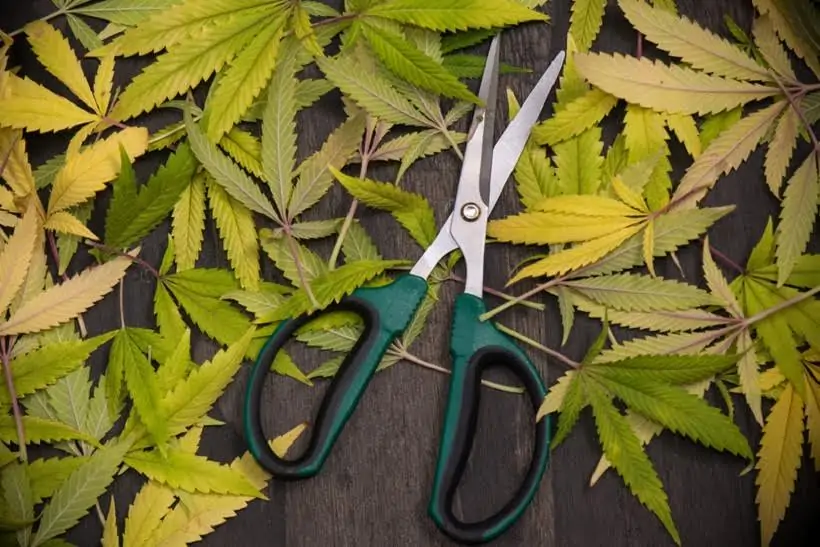
Defoliation refers to the removal of plant leaves, particularly the large fan leaves during the vegetative stage. Some growers choose to defoliate during the first month of the flowering stage to encourage bud growth.
Cannabis plants can be defoliated right before growers switch their plants to the flowering stage and then a few times during the transitional phase where the flowering plant nearly doubles in height.
By defoliating the flowering plants, the forming buds sites can receive sufficient air and light to develop into large and dense buds.
A successful grower doesn’t just bend or tie branches — they understand the biological science behind how a plant reacts to training. This deeper knowledge is what separates hobby growers from professional cultivators.
Every training technique manipulates hormones like auxins, gibberellins, and cytokinins inside the cannabis plant.
This physiological dance is the reason training boosts yield — it redirects hormonal traffic to where you want flower development.
The principle of hormesis means mild stress actually stimulates stronger growth.
A small wound (from topping or bending) sends repair signals, boosts lignin production in stems, and thickens cell walls.
The result: stronger, more resilient branches that hold heavier buds later in flowering.
Without training, most light hits only the top buds.
Training spreads the canopy so light, CO₂, and airflow reach every cola, producing even growth and preventing lower “popcorn buds.”
Uniform light exposure is one of the biggest differentiators between an average and a professional harvest.
These techniques build upon your existing seven, allowing experienced growers to push yield and quality further.
This method alternates low-stress training (LST) with selective topping:
Benefits: reduced stress lag, improved node spacing, balanced energy distribution.
This hybrid approach maintains vigor and can raise yield up to 25-35 % in controlled grows.
A professional technique where growers leave a few lower branches alive after harvest.
With proper light and nutrients, the plant re-vegetates and produces another cycle without replanting.
Ratooning saves time, preserves genetics, and can shorten the next veg period by up to 50 %.
However, it requires impeccable hygiene and pest management — any leftover contamination carries forward.
Also called “Stack & Bust”, this method uses sequential topping and bending to create multiple “floors” of buds.
Imagine a skyscraper canopy: each level catches equal light.
Growers use trellis nets between levels for structure.
This can triple bud sites but demands patience, monitoring, and excellent airflow.
Instead of large-scale leaf stripping, micro-defoliation removes only individual fan leaves shading specific bud sites.
This minimizes stress and maintains energy production.
In climates where humidity fluctuates or light angles shift seasonally, training schedules adjust.
Outdoor or greenhouse growers adapt bending angles and pruning frequency to maintain canopy efficiency year-round.
Documenting these environment-specific adaptations builds authoritativeness for readers in varying climates
“Our hybrid topping and LST setup gave us 1.3 g per watt after six harvests. The canopy looked like a solar panel — even, consistent, beautiful. It took time, but the yield and quality proved worth it.”
— Sierra Gardens, Head Cultivator, California
“We kept the plants below 5 feet but spread them 4×4 under a trellis frame. The airflow prevented mold, and every branch turned into a top bud. It’s the most efficient use of outdoor space we’ve ever achieved.”
— Morgan Reed, Rogue Valley Organics
“Plant training redistributes internal energy, much like pruning in fruit trees. It’s a controlled re-engineering of a plant’s resource network.”
— Dr. L. Fitzpatrick, University Horticulture Researcher
| Week | Stage | Recommended Training | Notes |
|---|---|---|---|
| 1–2 | Early veg | Begin light LST; tie outer branches | Avoid topping yet |
| 3 | Late veg | Top main stem (4th–5th node) | Resume training after 5–7 days recovery |
| 4 | Transition to flower | Introduce trellis or SCROG | Spread canopy evenly |
| 5 | Early flower | Micro-defoliate shading leaves | Increase airflow |
| 6 | Mid flower | Re-position branches as needed | Do not cut aggressively |
| 7 | Late flower | Stop all stress training | Allow maturation |
| 8 | Final phase | Optional minor leaf cleanup | Maintain environmental balance |
Professional cultivators record every action.
A training log should include:
To build trustworthiness and professional credibility:
| Category | Product Example | Why It Matters |
|---|---|---|
| Soft Plant Ties | Stretchable silicone or Velcro ties | Gentle control for LST without breaking stems |
| Trellis Netting | 4×4 heavy nylon mesh | Ideal for SCROG and multi-layer stacking |
| Pruning Shears | Curved stainless trimming scissors | Makes clean cuts and reduces infection risk |
| Sterilization Kit | Isopropyl alcohol + wipes | Ensures clean cuts and healthy recovery |
| Training Clips & Hooks | Adjustable stem benders | Perfect for micro-adjustments mid-growth |
| Light Mover Rail | Motorized track system | Keeps canopy evenly lit as plants grow |
| pH Meter / EC Meter | Precision digital tester | Monitors nutrient balance for faster recovery |
When multiple colas develop, sugars and starches redistribute to “sink” regions.
Training multiplies these sinks, encouraging balanced development.
The grower’s task: maintain even nutrient flow and avoid “bud starvation.”
After super cropping, the inner xylem rebuilds thicker, forming a knuckle at the bend site.
This lignified tissue becomes stronger than before, enabling higher bud load without stem collapse.
This phenomenon visually proves the science of controlled stress.
Trained canopies flatten airflow paths.
Proper spacing reduces microclimates that lead to powdery mildew or bud rot.
Highlighting this teaches practical prevention and showcases real expertise.
| Problem | Likely Cause | Solution |
|---|---|---|
| Branch snapped during training | Stem too woody or bent too far | Tape with garden tape; support with stake |
| Slow recovery after topping | Overfeeding or insufficient light | Reduce nutrients, ensure 18-20 hr light cycle |
| Uneven canopy after training | Some branches recovered faster | Re-tie slower ones lower, promote equal exposure |
| Burned leaf edges | Light too close post-LST | Raise lights 6–8 inches temporarily |
| Hermaphroditism signs | Excessive HST during flower | Stop training; stabilize conditions |
Start when plants have at least 3–5 nodes and stems are still flexible. Early training minimizes risk and shapes growth naturally.
Only once or twice per plant cycle. Too much can reduce yield or trigger hermaphroditism. Combine one topping session with ongoing LST for best balance.
FIM (“F*** I Missed”) removes about 75% of the tip, potentially creating four new tops with less shock.
Use FIM when you want to preserve more vertical growth.
Topping completely removes the main tip, producing two new tops.
Ensure airflow beneath and through the canopy with oscillating fans.
Avoid watering late in the dark cycle, and prune selectively to maintain light penetration.
Not if done correctly. Removing only the largest blocking leaves can improve yield by allowing deeper light penetration. Over-defoliation, however, can slow growth.
Yes — techniques like flushing or mild underfeeding at specific stages can pair with training, but only once plants recover fully. Combining too many stressors simultaneously risks damage.
No. Always verify local cultivation laws. Some regions limit plant modification or canopy size even for home grows.
Yes, by managing vertical growth efficiently and improving light use. Trained plants often finish faster because they spend less energy competing for light.
Autoflowers have fixed lifespans. Use gentle LST only; avoid topping or heavy defoliation. Stress during the short veg window can reduce yield.
Overtraining too early or too late.
Wait until the plant can handle bending, and stop manipulation two weeks into flowering to avoid stunted buds.
“Every tie, cut, and bend teaches you something about plant behavior. Cannabis plant training is not just a method — it’s communication between grower and plant.”
— Jeff Zorn, Cannabis Training University
Do you want to learn the training techniques used by the world’s best cannabis growers? Enroll in Cannabis Training University’s cannabis growing school to learn the ins and outs of improving your yields indoors and outdoors.
Ready to Train Like a Pro?
Learn everything about cannabis cultivation, from seed to sale. Enroll in the Master of Cannabis Certification Program and start applying these training strategies with expert guidance.
More in Growing

Check your state's cannabis laws

Indoor + outdoor growing careers
 IACET Accredited Provider · online cannabis education
Since 2009 • 50,000+ students trained worldwide
IACET Accredited Provider · online cannabis education
Since 2009 • 50,000+ students trained worldwide



Copyright Cannabis Training University, a subsidiary of Online Training Providers. © 2026. All Rights Reserved.
Medical Disclaimer: The information on this website is for informational purposes only and is not intended to be a substitute for professional medical advice, diagnosis, or treatment.
Always seek the advice of a physician or other qualified health provider with any questions you may have regarding a medical condition.
Legal Compliance: Cannabis remains federally illegal. Products and information are intended only for jurisdictions where cannabis use and possession is legal.
By using this site, you affirm that you are of legal age (21+) and responsible for understanding your local laws.