



Growing cannabis successfully starts with understanding the unique needs of cannabis plants, especially when it comes to soil pH and nutrient availability. The ideal pH range for cannabis cultivation is typically between 6.0 and 7.0, which is crucial for optimal nutrient uptake and healthy plant growth.
When soil pH levels fall outside this range, essential nutrients become less available, leading to stunted growth and potential nutrient deficiencies.
In commercial cannabis cultivation, maintaining the right pH is a foundational practice. Adjusting soil pH ensures that your plants can access all the nutrients they need for vigorous growth and high-quality yields.
Whether you’re growing cannabis at home or on a larger scale, regularly monitoring and adjusting pH levels is key to preventing problems before they start.
By understanding how pH affects plant growth and learning how to manage soil pH, you set the stage for a thriving cannabis garden and successful harvests.
Understanding Cannabis Water pH Beyond the Basics
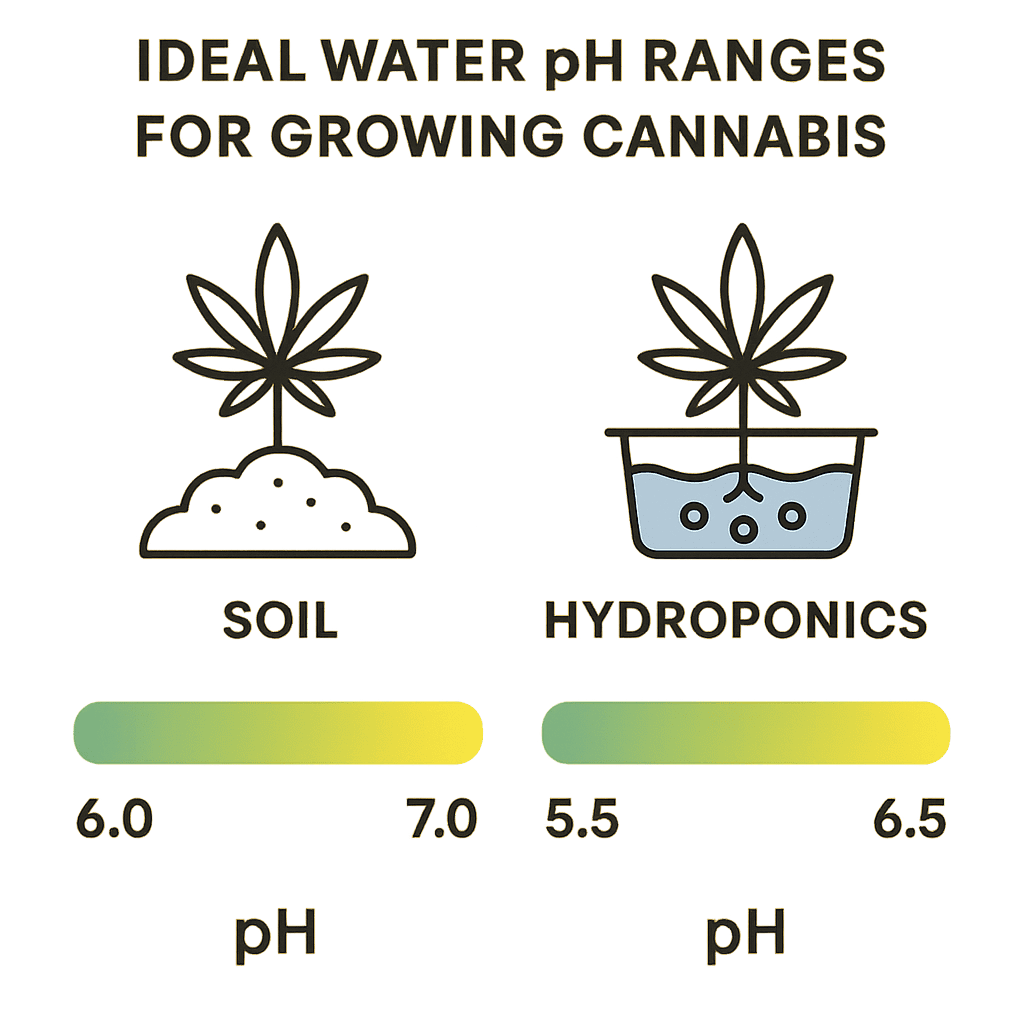
Most weed growers know that pH is a number from 0 to 14 that measures acidity or alkalinity. But to master cannabis cultivation, you should understand why it matters on a chemical and biological level
- Root Chemistry: The root zone is where all nutrient exchange happens. Hydrogen ions (H+) in the soil solution directly affect how nutrients bond, dissolve, and move into root hairs.
- Cation Exchange Capacity (CEC): Soil and coco coir hold onto positively charged nutrients (cations) like calcium, magnesium, and potassium. The pH influences how tightly these ions cling and whether plants can absorb them. Taking soil samples and measuring soil pH are essential steps to understand nutrient availability and make informed adjustments.
- Microbial Activity: Beneficial fungi and bacteria thrive in specific pH ranges. Too acidic or too alkaline conditions weaken microbial life, slowing organic nutrient breakdown and hurting long-term soil health.
Using a digital pH meter when measuring soil pH can provide a more accurate pH reading, which is essential for making informed adjustments to optimize plant health.
In short, the wrong pH doesn’t just “lock out” nutrients — it reshapes the entire root environment. Regular pH readings and measuring soil pH are critical steps for maintaining a healthy root environment.
Ideal Cannabis Water pH for Different Stages of Growth
pH needs can shift slightly depending on whether your plant is a seedling, in veg, or in flower, and these needs vary between the vegetative and flowering phases:
- Seedlings & Clones: More delicate roots, often thrive around 5.8 – 6.2 (in soil) or 5.5 – 5.8 (in hydro). Keeping things slightly acidic helps maximize phosphorus uptake for root development.
- Vegetative Stage: Plants crave nitrogen, magnesium, and calcium. In soil, 6.2 – 6.5 is ideal. In hydro, 5.7 – 6.0 keeps those nutrients most available. During the vegetative and flowering phases, adjusting to the optimal pH range for each stage is essential for healthy growth.
- Flowering Stage: Potassium and phosphorus demand rise. Soil-grown cannabis does well around 6.3 – 6.8, while hydro growers may favor 5.8 – 6.2. Maintaining the optimal pH range during the flowering phases is crucial for proper flower development and maximizing yield.
Many professional growers intentionally “swing” their pH slightly within the range, allowing different nutrients to absorb at different times. Maintaining the appropriate pH level for each stage supports optimal cannabis growth.
How Different Nutrients React to pH
Here’s a simplified look at how nutrients are affected by pH:
- Nitrogen: Absorbed best at 6.0 – 7.0. Too acidic (< 5.5) reduces availability.
- Phosphorus: Peaks around 6.0 – 6.5. Very high pH (> 7.5) causes phosphorus lockout, stunting flowers.
- Potassium: Best between 5.5 – 7.0. Less sensitive than phosphorus but still reduced in very alkaline water.
- Calcium & Magnesium: Both suffer when pH is below 6.0, leading to common deficiencies.
- Iron & Manganese: Best absorbed below 6.5. Alkaline conditions often trigger iron deficiency chlorosis (yellowing young leaves).
Maintaining the correct pH is essential for the plant's ability to absorb necessary and vital nutrients, ensuring efficient nutrient absorption and supporting healthy growth.
This is why precision matters — pH doesn’t just affect one nutrient; it changes the entire feeding balance.
Water Sources and How They Affect pH
We touched on tap, well, RO, and rainwater, but let’s expand with practical grower tips: Growers may need to use a nutrient solution, pH raising solutions, or add pH lowering agents to maintain the correct water pH for cannabis.
Tap Water
- Test both pH and EC (electrical conductivity) using a pH test kit or pH meters for accurate measurement. A high EC means lots of dissolved salts (hard water).
- In some cities, tap water is 8.0 or higher. If left uncorrected, plants suffer nutrient lockout.
- Pro tip: A simple activated carbon filter (like a garden hose filter) can drastically improve tap water by removing chlorine/chloramine.
Well Water
- Often “alkaline hard water” with calcium carbonate.
- May naturally keep pH around 7.5+, which requires frequent use of pH down; a pH down solution is commonly used to lower well water pH.
- Can be excellent for growers if balanced properly — the calcium and magnesium reduce the need for Cal-Mag supplements.
Reverse Osmosis (RO) Water
- Strips nearly all minerals out, leaving water at ~0 PPM.
- Pros: Clean slate for precision feeding.
- Cons: Very unstable pH, requiring buffering agents (silica or Cal-Mag are common). Using laboratory equipment such as advanced pH meters with built-in data logging can help monitor and maintain pH stability in RO water systems.
Rainwater
- Free, slightly acidic (often 5.5 – 6.5), and chlorine-free.
- But risk of contamination from roofs, gutters, and pollution. Always filter before use.
- Rainwater can also be used to create a soil suspension for accurate pH testing, as mixing soil with rainwater provides a reliable solution for measuring soil pH.
How to Measure pH and Measuring Soil pH Like a Pro
pH Strips/Paper: Cheap but not precise enough for serious grows.
Drop Test Kits: Better, but still less accurate than digital.
Digital pH Pens: Standard for growers. Brands like Bluelab and Hanna are reliable. Ohaus pH meters are also popular among commercial cannabis growers for their ability to provide an accurate pH reading, ensuring optimal nutrient uptake and healthy plant growth.
Inline Meters: For hydro systems, these continuously monitor pH in reservoirs.
Calibration Tip: Always calibrate pH pens at least once a week. Regular calibration ensures each pH reading is accurate and reliable. A $5 bottle of calibration solution saves thousands in crop damage.
Adjusting pH Safely
- pH Down Options:
- Phosphoric acid (most common, doubles as phosphorus source).
- Citric acid (organic, but unstable in storage).
- pH Up Options:
- Potassium hydroxide (adds potassium).
- Silica supplements (raise pH and strengthen plant cell walls).
Note: Organic growers often use natural pH adjusters to balance soil acidity or alkalinity, helping to create an optimal environment for cannabis cultivation.
Rule of thumb: Adjust slowly. Add small amounts, stir thoroughly, and re-test. Over-correction is a top mistake.
Adjusting Soil pH for Cannabis Plants
To achieve optimal growth and prevent nutrient deficiencies, it’s essential to keep the soil pH within the ideal range for cannabis plants—between 6.0 and 7.0. Adjusting soil pH is a straightforward process, but it requires careful attention and regular monitoring.
If your soil pH is too low (acidic), you can raise it by incorporating dolomite lime or agricultural lime into your growing medium.
These amendments gradually increase pH and provide essential calcium and magnesium for healthier plants. On the other hand, if your soil pH is too high (alkaline), adding elemental sulfur or specialized pH-lowering solutions can help bring it back into the optimal range.
Always adjust pH levels slowly and in small increments to avoid shocking your cannabis plants. After making any adjustments, use a reliable pH meter or test kit to check the new pH level.
Regularly testing your soil ensures you catch any imbalances early, allowing you to maintain the perfect environment for nutrient uptake and robust plant growth.
By staying proactive with soil pH management, you’ll support healthier plants, prevent common nutrient issues, and set yourself up for optimal cannabis yields.
Common Cannabis Water pH Problems, Nutrient Deficiencies & How to Fix Them
pH problems and pH imbalances are common causes of nutrient deficiencies and plant stress in cannabis. Regular monitoring and adjustment of soil or water pH is essential to maintain healthy growth.
- Yellowing new growth → Possible iron lockout from high pH (> 7).
- Fix: Lower pH to 6.0 – 6.3 and consider adding chelated iron.
- Brown spots on leaves → Calcium or magnesium deficiency due to low pH (< 5.8).
- Fix: Raise pH and add Cal-Mag supplement.
- Slow growth, droopy leaves → Multiple nutrient lockouts caused by a pH imbalance.
- Fix: Flush with pH-balanced water, then resume feeding.
- pH Drift in Hydro → Reservoir water tends to climb in pH as plants absorb nutrients.
- Fix: Check daily, adjust back into range.
The Role of Buffering
One overlooked factor is buffering capacity:
- Soil: Acts like a sponge for pH, resisting drastic swings. This is why soil grows are more forgiving.
- Coco & Hydro: Minimal buffering — any imbalance shows up quickly. That's why hydro growers often adjust pH multiple times per week.
Advanced Techniques: pH & Watering Strategy
- Staggering Feedings: Some growers feed at pH 6.3 one day, then 6.6 the next, ensuring a broad nutrient spectrum is absorbed.
- Foliar Sprays: Bypass soil entirely. Foliar pH should be between 5.8 – 6.2 to avoid leaf burn.
- Living Soil Systems: Rely less on pH adjustments since microbes and organic matter stabilize the environment. The focus shifts toward microbial health instead of water chemistry.
Troubleshooting Case Studies For Cannabis Water pH
Case 1: Hydro Grower with Yellow Tips
- Problem: Hydroponic reservoir at pH 7.2. Nitrogen and iron unavailable.
- Fix: Lowered pH to 5.8, added chelated micronutrients. Recovery within one week.
Case 2: Soil Grower with Brown Spots
- Problem: pH dropped to 5.2 from overuse of acidic fertilizers. Calcium deficiency appeared.
- Fix: Flushed soil with pH-adjusted 6.5 water, supplemented with Cal-Mag.
Frequently Asked Questions About Cannabis Water pH
Can I just use bottled spring water instead of adjusting tap water?
You can, but it's costly. Even bottled water varies in pH and minerals — always test before using.
Do organic grows need pH adjustment?
Sometimes no. Living soils are self-buffering, but pH still matters if your water source is extreme (e.g., 8.5 well water).
Is it bad to let my pH swing?
A slight swing (within the safe range) is good. Extreme swings cause stress.
How often should I check pH?
Hydro = daily. Soil = once or twice per week. Anytime plants show deficiency symptoms, check immediately.
Long-Term Best Practices For Cannabis Water pH
- Keep a Grow Log: Record pH, EC, and plant health for every watering. Patterns emerge that help you fine-tune.
- Use Quality Nutrients: Cheaper fertilizers often fluctuate pH wildly.
- Invest in a Reliable Meter: A $100 Bluelab pen is worth more than losing a crop.
- Clean Your Tools: Old nutrient residues skew pH readings. Rinse everything regularly.
- Balance With Microbes: Adding mycorrhizae and beneficial bacteria helps buffer pH naturally.
Getting cannabis water pH right isn’t just about avoiding problems — it’s about maximizing growth, yield, and flavor. Whether you grow in soil, coco, or hydro, understanding pH gives you control over nutrient availability and plant health.
With consistent testing, careful adjustment, and awareness of your water source, you’ll unlock healthier plants and heavier harvests. Maintaining the perfect pH is essential for producing quality cannabis, as it ensures optimal nutrient uptake and supports robust plant development.
Interesting Facts on Cannabis Water pH
-During the flowering stage, the optimal pH range for cannabis plants increases to between 6.5 and 7.5.
-pH can be measured with a test kit or pH meter, which are readily available at local gardening stores.
-In hydroponic systems, cannabis plants require a slightly lower pH range of 5.5-6.5 for optimal growth.
-A high pH in the growing medium makes it difficult for cannabis plants to access important nutrients like iron and zinc.
-During the flowering stage, the optimal pH range increases slightly to between 6.5 and 7.5.
Marijuana College For Cannabis Water pH and More Cultivation Tips
There is much more to learn about the growing of this amazing plant in our cannabis cultivation courses.
Conclusion
Mastering pH management is one of the most important skills in cannabis cultivation. By understanding the ideal pH range for cannabis plants and learning how to measure and adjust soil pH, you empower your plants to absorb all the nutrients they need for healthy growth and abundant harvests.
Regularly testing and fine-tuning pH levels helps prevent nutrient deficiencies, supports vigorous plant development, and maximizes the quality and yield of your cannabis garden.
Whether you’re a hobbyist or a commercial grower, prioritizing pH will lead to healthier, more productive plants and a more rewarding growing experience.

Luis Cordova
Luis Cordova is a distinguished author, and renowned expert in cannabis cultivation, who possesses a Master's degree in Plant Biotechnology and Pharmaceutical Science. As a valued contributor to highly esteemed publications such as Cannabis Training University and Maximum Yield Magazine, Luis has emerged as a trusted source of guidance and knowledge in the cannabis industry. Having written thousands of informative articles, Luis is widely recognized for his comprehensive expertise on cultivating cannabis, both indoors and outdoors.






 Jeff was involved in an accident where he endured a traumatic brain injury. He had a week-long stay in ICU where brain surgeons
  100% risk free money back guarantee within 48 hours after purchase if student has not completed any of the courses or exams.
