Learning how to grow one weed plant is a great way to learn the basics of cannabis cultivation on a small scale. It allows you to improve your skills on a budget and have a nice reward when it’s time to harvest.
Our grow guide covers all the supplies you need and takes you through every step of the plant’s life cycle so you can grow like a pro.
Grow it right the first time
Stop guessing. Learn to grow from seed to harvest.
The Indoor & Outdoor Cannabis Growing Certificate covers nutrients, pH, lighting, pests and harvest, with video lessons and a certificate when you finish.
See the Growing Certificate →Free Cannabis Cultivation Guide (ebook)IACET-accredited · 7-day money-back guarantee
There are a handful of important items that are needed to learn how to grow one weed plant. Cannabis can be grown indoors or outdoors, depending on your state and local laws.
While both environments can produce great cannabis flowers, indoor cannabis production requires certain equipment to maintain optimal lighting, temperature, and humidity for your plant.
Here is what you will need to grow one weed plant like a pro.
Once you have got your grow space and supplies prepared, it is time to care for your plant throughout every stage of its life, from germination to harvest.

If starting from a cannabis seed, the germination process is the first step of how to grow one weed plant. Germination can be performed in a variety of ways but one of the most simple and effective techniques is using the paper towel method. Temperatures should be between 70 and 80º F and have a relative humidity of 100%.
Germination can take anywhere from 24 hours to several days, depending on your germination method. Keep in mind, we recommend starting off with feminized cannabis seeds that only grow female flowering plants. If using feminized seeds, germinate at least 2 seeds in case one does not fully germinate.
Regular cannabis seeds have a 50-50 chance of growing male or female plants. Autoflowering seeds are another alternative that can grow fast-flowering plants that do not need a change in the light cycle to begin flowering.
Germination is successful if at least one of your healthy seeds cracks and has a root popping through. Once it is germinated, you can plant it in your grow media, and ensure the medium remains moist. As your seedlings grow, they need temperatures between 68 and 75º F and 100% relative humidity.
During its vegetative stage, the young cannabis plant will focus on growing its foliage including its leaves and branches. Your plant will need about 18 hours of light during the stage. Keep temperatures between 72 and 77º F and relative humidity between 60 and 70%. Watering frequency depends on the dryness of the soil and the size of the container.
During this stage, your plant will need a variety of macronutrients, especially a high concentration of nitrogen and lower levels of potassium and phosphorus. Prune your plant as needed to ensure that the plant has proper airflow and light penetration.
When the days grow shorter outside or when your plant receives 12 hours of light and 12 hours of darkness, your plant will begin its flowering stage.
Flowering periods depend on the strain genetics and growing environment. At this stage, you can keep temperatures at about 75º F and relative humidity of about 45%.
Cannabis plants can double in size during this stage. You may need to remove fan leaves to ensure the plant has proper airflow and the lower buds in the canopy get plenty of light. Your plant will need a higher concentration of phosphorus and potassium and low levels of nitrogen during this stage.
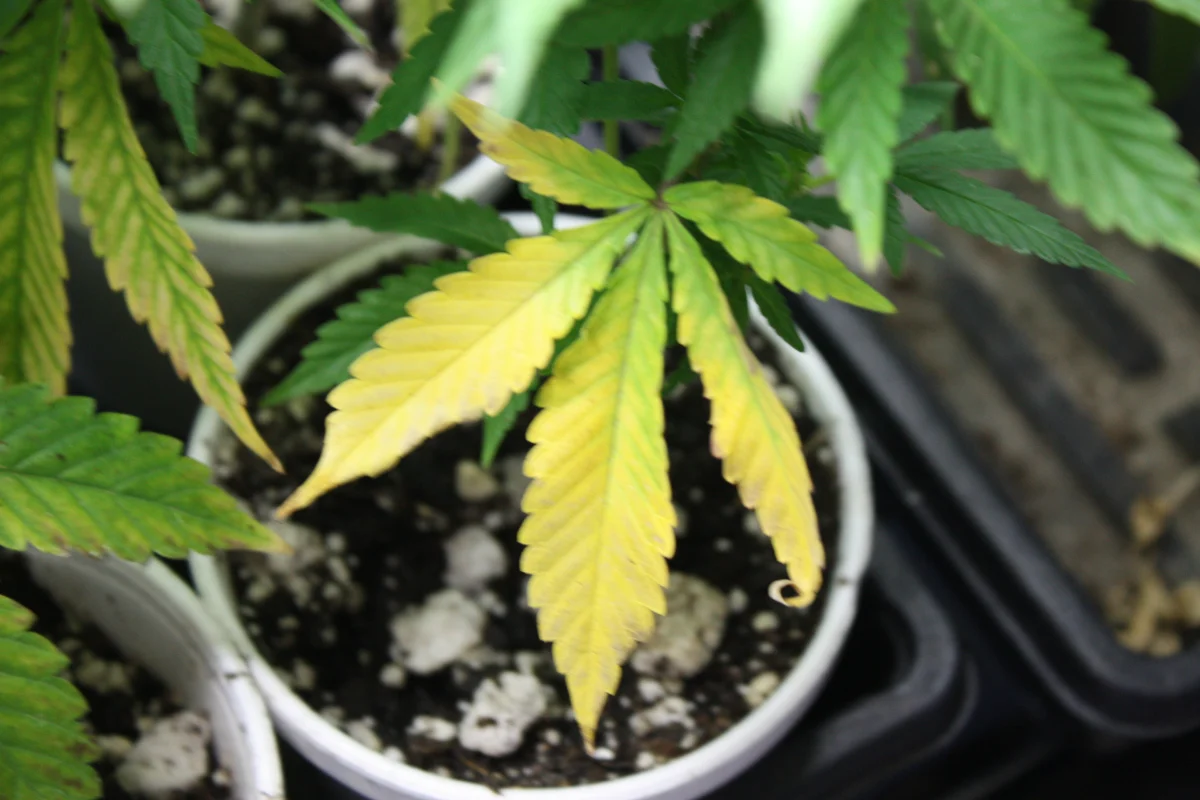
During the final week or so of the plant’s flowering stage, many growers choose to flush out their nutrients salts from their growing medium. To do so, you will only feed your plant only water to remove its excess nutrients. Your plant’s leaves may begin to turn yellow which is a normal occurrence. Flushing is not required if you have organic living soil.

Harvesting requires careful timing. Harvesting too early can result in a weaker potency, flavor, and aroma of your plant. However, harvesting too late will result in your THC converting into CBN, a cannabinoid known for its sedative effects. This sleep-inducing compound can be beneficial for some users.
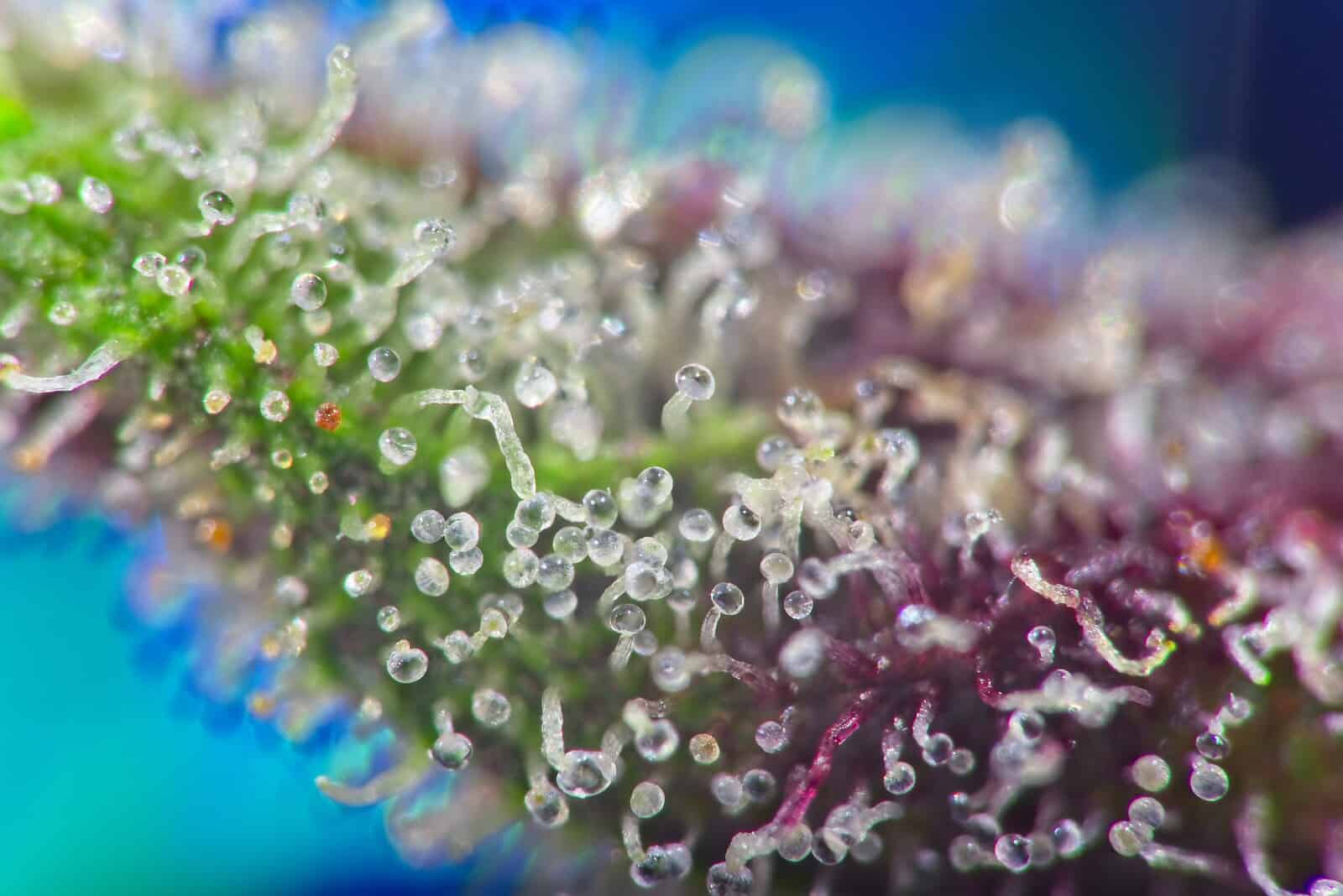
One of the most effective ways to determine when your flowers are mature enough is to look at their trichome colors. When half of the trichomes have turned from a milky white color to an amber color, you can begin to harvest your plant. A magnifying glass or a jeweler’s loupe can give you a better look at these tiny resin glands.
Harvesting your buds is easy. Start by removing the larger fan leaves and then, using sharp pruners, cut the plant at the base of the main stem. Then, cut the plant into smaller pieces between 2 to 3 feet long. Make sure to cut the sugar leaves and prepare your branches to be dried.
Once you cut down your cannabis branches, it is time to remove the moisture through the drying process. You can hang them up or use a screen to dry them in a cool and dry space. Avoid rooms with excessive humidity which can increase the risk of mold and mildew.
The temperature should be between 65 and 75º F with a relative humidity of 40 to 55%. Ensure your space has proper ventilation to remove stale air and bring in fresh air. Generally, a plant branch is properly dry when the stems produce an audible snap when broken instead of just bending.
After your flower buds have sufficiently dried, it is time to fill an airtight container, commonly, glass mason jars, three-quarters full and allow them to dry more and reveal their flavor and aroma. How long you cure your buds depends on the strain you have and your personal preference.
Cannabis curing can take a few weeks or months but, generally, the longer you leave it to cure, the better. Keep in mind, you will need to release the CO2 and moisture from the sealed container a couple of times a day during the first week and then every other day until you think your flower buds are ready to consume.
Curing is the last step in learning how to grow one weed plant.
It’s not always legal to grow weed at home in different countries, states, and even neighborhoods. In places where it is allowed, there are often rules about how many plants you can grow, how to keep them safe, and whether the plants can be grown outside or inside. Always look at the rules in your area before you start.
Cannabis seeds or clones: Pick a strain that does well in the settings you have and that you like.
Potting mix: high-quality soil that drains well or a soilless mix made just for cannabis plants.
A Pot : a container that lets water drain well. Pots can be anywhere from 5 to 15 gallons in size, based on how big you want your plant to get.
Light source: LED or HID lamps work best for home grows. Pick a sunny place to grow things outside.
Water: Cannabis plants need to be watered regularly, but they can’t handle too much water.
Nutrients: A balanced fertilizer made just for weed can help your plant grow well.
Ventilation: For indoor growth, plants need lots of air flow to stay healthy.
From planting to harvesting, the time varies depending on the strain and the growing conditions, but it usually takes between 3 and 8 months. Although photoperiod strains may take longer, autoflowering strains are often ready to harvest in just two to three months.
Ready to take your cannabis garden to the next level and step it up from learning more than just how to grow one weed plant? Enroll in Cannabis Training University’s online cannabis college to learn basic and advanced cultivation techniques from the pros.
Our curriculum covers every step of the cultivation process, from sourcing your seeds and growing supplies to creating a wide range of cannabis extracts and infusions with your harvested bud.
More in Growing

Check your state's cannabis laws

Indoor + outdoor growing careers
 IACET Accredited Provider · online cannabis education
Since 2009 • 50,000+ students trained worldwide



Copyright Cannabis Training University, a subsidiary of Online Training Providers. © 2026. All Rights Reserved.
Medical Disclaimer: The information on this website is for informational purposes only and is not intended to be a substitute for professional medical advice, diagnosis, or treatment.
Always seek the advice of a physician or other qualified health provider with any questions you may have regarding a medical condition.
Legal Compliance: Cannabis remains federally illegal. Products and information are intended only for jurisdictions where cannabis use and possession is legal.
By using this site, you affirm that you are of legal age (21+) and responsible for understanding your local laws.