



If you want to preserve your favorite strain, create a new hybrid, or build a long-term seed stock, learning how to grow cannabis for seeds is an essential skill. This is known as seed breeding.
Growing cannabis for seeds indoors offers greater control over pollination and environmental conditions, making it easier to manage the process and maintain privacy.
While most growers focus on producing seedless buds (sinsemilla), growing for seeds allows you to stabilize genetics and ensure future harvests.
In this guide, we’ll cover everything you need to know about cannabis seed production, from selecting parent plants to harvesting and storing seeds.
Cannabis Seed Breeding FAQ's
How many generations does it take to stabilize a strain?
It depends on how stable your parent plants are, how consistent you want traits to be, and how large your pheno-selection batch is. Many breeders find that by the F3 to F5 generation, the majority of plants in the line are reliably expressing the desired traits (flower time, flavor, yield, etc.). Backcrossing (breeding an offspring back to a parent) helps speed this up.
Can I use regular seeds or should I always use feminized seeds for breeding?
For breeding, regular seeds are useful because you need both male and female plants. Feminized seeds are great if you want only females, but you won’t get male plants from them (unless there’s hermaphroditism). If your goal is seed production, having reliable male plants from regular genetics is essential.
What’s the optimal environment for seed development (after pollination)?
Once pollination happens, conditions should be stable: moderate temperature (~70-80°F / 21-27°C), stable humidity around 50-60% (dropping slightly toward the end), good air circulation so pollen doesn’t spread everywhere prematurely, and strong, consistent light. Avoid major fluctuations in temperature, humidity or stress, which can lead to aborted seeds or low seed set.
How do I know when cannabis seeds are mature and ready for harvest?
Mature seeds usually have hardened outer shells, sometimes with stripes or marbling (depending on strain). They should feel firm—not soft or green—and separate easily from the calyx without too much struggle. If seeds remain soft or stay stuck in the flower, they likely need more development time.
How long can seeds be stored, and what conditions preserve high germination rates?
With good storage, seeds can stay viable for many years—often 5-10 years or more. Key factors are low light, cool temperature (e.g. refrigeration or a climate that stays stable around 40-45°F / 4-7°C), low humidity (6-9%), airtight containers, ideally with desiccants. Proper labeling helps you track age and strain so you know what to expect.
What causes hermaphrodite plants, and what should I do if one appears?
Hermaphroditism in cannabis can be triggered by stress (too much heat, light leaks, nutrient imbalance), genetics predisposed to it, or damage. If a plant shows both male pollen sacs and female pistils, it can self-pollinate and seed the females unintentionally. At that point, remove the plant immediately (if your goal is clean seed production or sinsemilla), and avoid using it in future breeding unless you want herm traits.
How do breeders choose “keeper” phenotypes?
Keeper phenotypes are chosen by growing many plants from the same strain and observing differences—flower time, resin, flavor/terpene profile, structure, potency, resistance to stress/pests, etc. You compare these traits, note which ones perform best under your grow conditions, then use those individual plants to breed further to preserve the desirable combination.
What tools or methods help with controlling pollination?
Isolation is key. Use separate rooms, tents, or cages for breeding. Manual pollination (collecting pollen and applying it only to selected branches) allows you to limit which parts of the female plant are seeded. Also, always clean tools/clothing to avoid accidental pollen transfer. Ventilation systems should be arranged so pollen doesn’t drift into unwanted areas.
Can I freeze seeds for longer-term storage?
Yes, freezing (or deep cold storage) can extend seed life significantly, provided seeds are well-dried and stored in airtight containers with moisture control (desiccants). However, freezing and thawing multiple times can damage seeds, so keep seeds cold in stable conditions and avoid temperature shock.
How much variation can I expect in F2 seeds vs F1?
F1 seeds tend to be more uniform since they are direct crosses of two parent lines. F2 seeds often show more variation—some plants may revert to recessive traits not visible in the parents, variations in vigor, size, flowering time, and aroma. If you want consistency, stick with F1 or heavily backcrossed lines; if you want to explore new traits or discover rare phenotypes, produce F2s.
What are the biggest seed production mistakes to avoid?
Some of the most common mistakes include: using weak or diseased parent plants; allowing uncontrolled pollination; harvesting seeds too early; improper drying or storing; overwatering or under-feeding during seed development; neglecting sanitary conditions (pollen spread, cross-contamination).
Introduction to Cannabis Cultivation
Cannabis cultivation is both an art and a science, requiring careful planning and attention to detail at every stage. Whether you’re growing cannabis for personal use or seed production, starting with high-quality cannabis seeds and understanding the basics of germinating cannabis seeds is crucial.
The process of growing cannabis begins with selecting the right seeds and creating an environment that supports healthy development.
Choosing the right growing medium, maintaining proper moisture, and monitoring the cultivation process all play a vital role in the success of your grow.
By mastering these fundamentals, you’ll set a strong foundation for a thriving cannabis garden and a successful harvest.
Why Grow Cannabis for Seeds?
Growing cannabis for seeds is a practice that goes beyond simple cultivation.
Here are the main reasons growers pursue it:
- Preserve genetics: Keep a reliable supply of your favorite strain for future grows. Maintaining a healthy mother plant allows you to take cuttings for cloning, ensuring genetic consistency and quality in future crops.
- Create new hybrids: Combine traits from two different strains to develop unique flavors, aromas, and effects.
- Secure future harvests: Stockpile seeds for long-term self-sufficiency.
- Commercial seed breeding: Where legal, breeders grow cannabis specifically to sell stable, high-quality seeds.
1. Planning and Setup

First, you’ll want to decide your goal for growing for seeds.
Do you want to preserve genetics from a favorite strain, create new hybrids by crossing two strains or produce bulk seeds for storage or sale.
Choose healthy, vigorous plants with desirable traits like potency, taste, aroma, and effects. When starting seeds, it's important to select the right container, such as a seed tray or shallow container, to provide optimal conditions for germination and early growth. You will need one male and female plant.
If you are growing indoors, providing adequate lights is crucial for healthy seedling development.
Using grow lights, such as fluorescent or LED, ensures your plants receive the right spectrum and intensity for strong growth during the seedling stage.
After germination, seedlings can be transplanted into pots to support further root development before moving them to their final location.
2. Germinating the Seeds
To ensure your seeds germinate successfully, it’s important to create an environment that encourages strong, healthy growth from the very start.
Begin by maintaining a consistent temperature between 70-80°F (21-27°C), as this range is ideal for the germination process.
Moisture is key—using the paper towel method is a popular and effective way to germinate seeds.
Simply place your cannabis seeds between two damp paper towels or wet paper towels, then keep them in a dark place to protect them from light, which can disrupt germination.
Make sure the paper towels stay moist but not soaking wet, and check them daily. Good air circulation will help prevent mold and keep the environment fresh.
After a few weeks, you’ll notice the seeds sprout and develop a small tap root. At this point, gently transfer each sprouted seed into a small pot filled with potting soil, where it can continue its growth journey.
You will want to germinate a handful of seeds. Make sure they are regular and not feminized, so you can get both sexes.
Cannabis seeds need to be kept in a warm environment, ideally between 70°F to 80°F, for successful germination.
3. Using the Right Growing Medium
Selecting the right growing medium is essential for healthy cannabis plants and successful cannabis cultivation.
Potting soil is a favorite among growers because it offers excellent drainage and aeration, helping roots develop strong and healthy. However, other growing mediums like coco coir or hydroponic systems can also be used, depending on your preferences and experience level.
When choosing a cannabis growing medium, make sure it’s formulated for cannabis cultivation and has the correct pH balance to support nutrient uptake.
You can enhance your medium by adding nutrients, but be careful not to overdo it—too many nutrients can harm your plants.
The right medium will provide your cannabis plants with the support and nourishment they need for vigorous growth and abundant yields.
4. Watering and Humidity Control
Proper watering and humidity control are vital for the health and development of your cannabis plants. Overwatering can lead to problems like root rot, while underwatering can stress your plants and stunt their growth.
To strike the right balance, use a measuring cup to provide just enough moisture—your soil should be moist but never soaking wet. During the germination and seedling stages, cannabis plants thrive in a humid environment, which helps the roots establish and supports early growth.
You can use a humidifier or cover your seedlings with a cloche to maintain optimal humidity levels. Regularly check the soil and adjust your watering routine as needed to keep your plants healthy and strong throughout the cultivation process.
Grow them into the vegetative stage with 18-24 hours of light until they show their sex.
Around 4-6 weeks into vegetative their sex should start to show. Male plants have small pollen sacs at the nodes. Female plants will have white pistils (hairs) at the nodes.

5. Isolation and Control Pollination
To produce seeds, you must ensure controlled pollination.
Keep male plants far from unseeded grows, since pollen can travel on clothes, tools, or even through ventilation systems. For controlled pollination, growers may need to move the entire plant to a separate room or area to prevent accidental cross-pollination.
Pollination methods:
- Natural pollination – Place a male and female together in the same room and let nature take its course.
- Manual pollination – Collect pollen from a male in a bag or jar and gently brush it onto selected buds of a female plant. This allows you to seed only certain branches while keeping the rest seedless for smoking.
6. Seed Development Timeline
After pollination, cannabis seeds typically take 4–6 weeks to fully mature.
Signs that seeds are ready to harvest:
- Hard outer shells with tiger-like stripes or mottled coloring.
- Seeds separate easily from the calyx.
- Seeds feel firm, not soft or green.
7. Harvesting and Drying
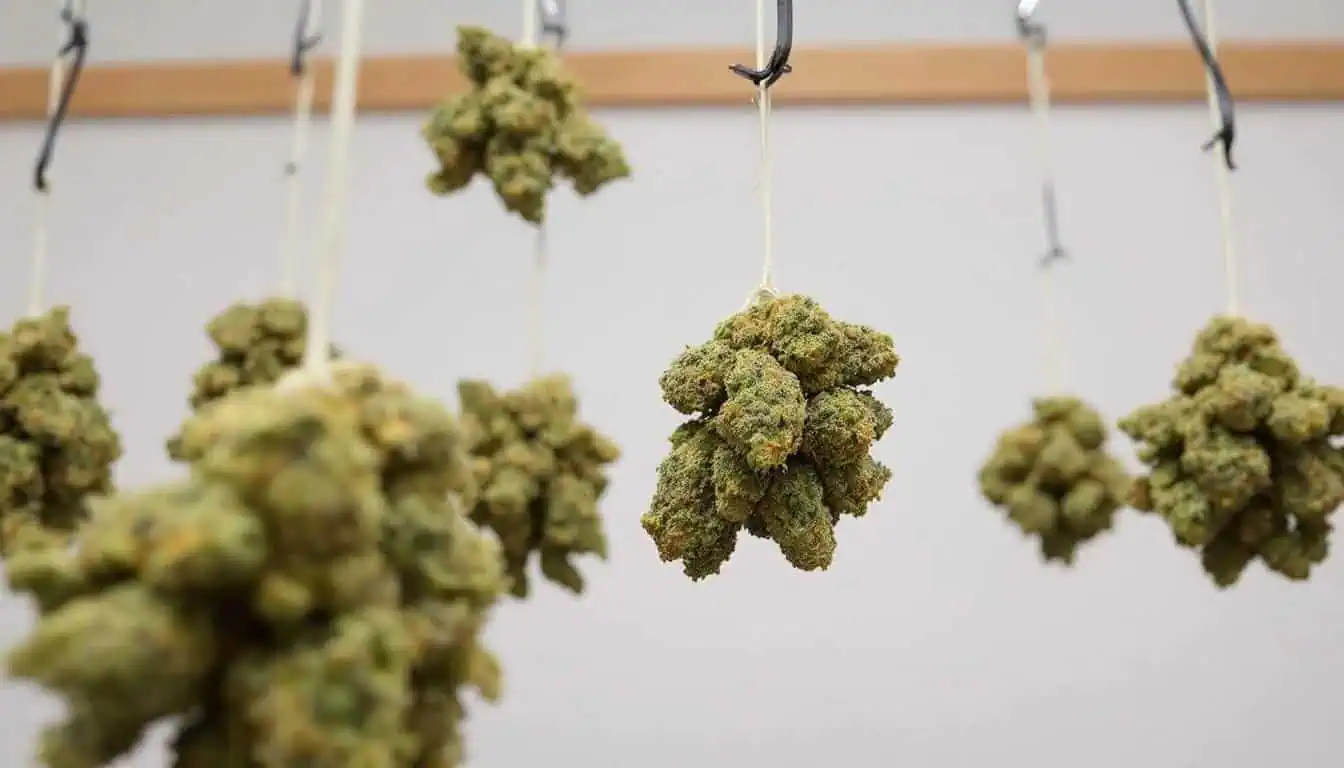
When the seeds appear mature cut the seeded branches. Hang them in a cool, dark and ventilated place for about a week.
Once the seeded buds are dry, break apart the buds carefully on a level surface, separating the weed from the seeds, and collect the seeds.
8. Storing the Seeds
To maintain high germination rates, cannabis seeds must be stored in the right conditions. Make sure they are in a dark environment as light can trigger premature germination. Refrigeration is ideal for long-term storage.
Use airtight containers to keep humidity at bay.
Properly stored seeds can remain viable for 5–10 years or more.
Avoid rinsing seeds with tap water before storage, as it may contain chlorine or other contaminants that can affect seed viability. Use filtered or distilled water instead.
Tips for Breeding Cannabis Seeds
- Stability takes generations: To create a true, stable strain, breeders often grow multiple generations (F1, F2, backcrossing).
- Keep detailed notes: Track phenotypes, yields, terpene profiles, and effects for selective breeding.
- Use the vegetative state for cloning: Take cuttings and maintain healthy parent plants during the vegetative state to ensure strong genetics and successful breeding.
- Avoid hermaphrodites: Stress-induced hermies can pass unstable traits to future generations.
Common Seed Breeding Mistakes to Avoid
- Allowing uncontrolled pollination – This can ruin nearby sinsemilla crops.
- Using weak parent plants – Low-quality traits will pass to the next generation.
- Improper seed storage – Poor storage reduces viability and germination rates.
- Making the mistake of overcomplicating pH adjustment – Carefully manage pH levels and avoid the common mistake of adding too many pH adjusters, as poor pH management can cause plant problems.
Advanced Topics in Cannabis Seed Breeding
While beginners often focus on the basics of pollination and germination, serious breeders benefit from a deeper understanding of genetics, seed handling, and troubleshooting. The following sections expand on the fundamentals to provide a more advanced, practical, and expert-level approach to cannabis seed breeding.
Advanced Seed Breeding Techniques
Backcrossing (BX):
Backcrossing is used to stabilize desirable traits by breeding a hybrid offspring back with one of its parent plants. This process helps “lock in” characteristics such as aroma, yield, or disease resistance, creating more consistent seeds over generations.
Phenotype Hunting (Pheno-Hunting):
Every strain has multiple phenotypes, or genetic expressions. Pheno-hunting involves growing a large number of plants from the same strain, observing their traits (flavor, bud density, flowering time), and selecting the best-performing individuals for future breeding. This is how breeders discover “keeper” plants with exceptional qualities.
F1 and F2 Generations:
- F1 Generation: The first generation of a cross between two distinct parents. These plants are typically vigorous and uniform.
- F2 Generation: Seeds produced when F1 plants are bred together. These often show greater variation, helping breeders uncover recessive traits. Understanding the differences between F1 and F2 is key to anticipating genetic stability and variation in offspring.
Seed Viability and Storage Guide
Producing seeds is only half the process. Preserving their viability for future use is equally important.
- Viability Testing: Use the paper towel method to germinate a small sample of seeds. Seeds that sprout strong taproots are viable.
- Drying and Curing: After harvest, seeds should be air-dried for at least 2–3 weeks in a cool, dark, and dry environment. Proper curing prevents mold and ensures longevity.
- Long-Term Storage: Store seeds in an airtight container in a cool, dark place. Ideal storage conditions are 6–9% humidity and temperatures around 40–45°F (4–7°C). Some breeders refrigerate or freeze seeds with desiccant packs for multi-year preservation.
- Packaging and Labeling: Always label seeds with strain name, generation (F1, F2, BX), and harvest date. This prevents confusion and maintains a professional breeding archive.
Troubleshooting Cannabis Seed Production
Even experienced breeders face challenges when producing seeds. Here are common problems and solutions:
- No Seeds Forming: May be due to weak pollen, poor timing of pollination, or sterile male plants.
- Pests and Diseases: Seeded plants can be more vulnerable to spider mites, powdery mildew, and bud rot. Regular inspection and integrated pest management (IPM) are crucial.
- Male Pollen Contamination: If pollen spreads to non-breeding plants in the grow room, unwanted seeds can form. Use isolation tents, HEPA filters, or separate breeding chambers.
- Nutrient Deficiencies: Seeded plants require more phosphorus and potassium during reproduction. A lack of these nutrients can cause poor seed development.
Visual Guide to Plant Sexing
Identifying plant sex early is critical for controlled breeding. A visual guide with clear, high-resolution images or step-by-step video tutorials makes the process foolproof.
- Male Pre-Flowers: Small, round pollen sacs appear at nodes. These often cluster in groups.
- Female Pre-Flowers: Wispy white pistils emerge from calyxes at the nodes. These later develop into flowers and, if pollinated, seed pods.
- Seed Pods vs. Calyxes: Seed pods swell significantly, whereas calyxes remain smaller and tighter.
- Hermaphrodites: Plants that develop both male pollen sacs and female pistils. These should be removed immediately to prevent self-pollination and unintended genetics.
Why This Matters for CTU Students and Growers
Adding these advanced breeding practices—backcrossing, pheno-hunting, and F1/F2 analysis—plus proper seed storage, troubleshooting, and plant sexing visuals, elevates your knowledge from beginner to professional level. For CTU students, these skills provide a foundation for working as breeders, consultants, or cultivation managers in a rapidly growing industry.
Final Thoughts: Growing Cannabis for Seeds
Learning how to grow cannabis for seeds allows you to control your own genetics, preserve your favorite strains, and even start your own breeding projects.
With proper selection, pollination, and storage techniques, you can produce high-quality cannabis seeds that last for years.
If you want to enjoy the benefits of home-grown cannabis, now is the perfect time to start growing weed for seeds.
Growing weed at home is accessible and straightforward, giving you privacy, self-sufficiency, and the satisfaction of cultivating your own grown cannabis.
Whether you’re a hobbyist grower or an aspiring breeder, seed production is one of the most rewarding aspects of cannabis cultivation. Start growing cannabis today and experience the advantages of growing for yourself.

Luis Cordova
Luis Cordova is a distinguished author, and renowned expert in cannabis cultivation, who possesses a Master's degree in Plant Biotechnology and Pharmaceutical Science. As a valued contributor to highly esteemed publications such as Cannabis Training University and Maximum Yield Magazine, Luis has emerged as a trusted source of guidance and knowledge in the cannabis industry. Having written thousands of informative articles, Luis is widely recognized for his comprehensive expertise on cultivating cannabis, both indoors and outdoors.



 Jeff was involved in an accident where he endured a traumatic brain injury. He had a week-long stay in ICU where brain surgeons
  100% risk free money back guarantee within 48 hours after purchase if student has not completed any of the courses or exams.
