Growing cannabis can be a rewarding and fulfilling experience, but it can also be a challenging one.
In this article, we will walk you through the entire process of cannabis cultivation, from the beginning with seeds or clones to all the growing stages and finish with how to cure the harvested buds.
Grow it right the first time
Stop guessing. Learn to grow from seed to harvest.
The Indoor & Outdoor Cannabis Growing Certificate covers nutrients, pH, lighting, pests and harvest, with video lessons and a certificate when you finish.
See the Growing Certificate →Free Cannabis Cultivation Guide (ebook)IACET-accredited · 7-day money-back guarantee
Here’s what you’ll need to grow indoor marijuana.
Will you be starting your garden with seeds or clones?
For beginners, feminized seeds are a great choice because they only produce flowering (female) plants, eliminating the risk of male pollinators.
Autoflowering strains can also be a good option, as they’re easier to grow and don’t rely on light cycles to start flowering.
Cannabis seeds are small, oval-shaped, and typically about the size of a peppercorn (2–5 mm in length).
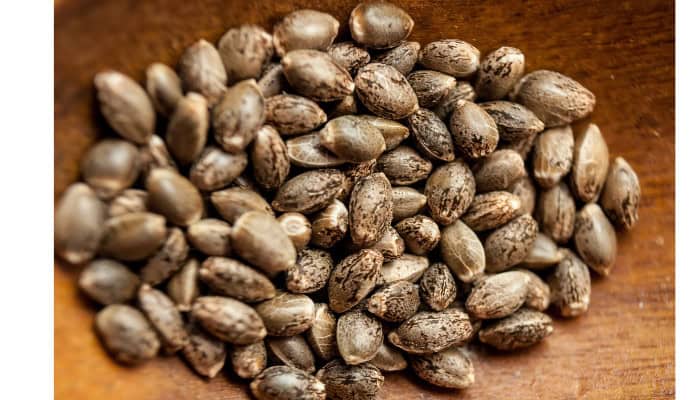
Signs of Healthy Cannabis Seeds
If you’d rather skip the germination phase, you can start your garden with a cannabis clone derived from a healthy, vegetative mother plant.
Cannabis clones are branch cuttings that feature the same genetics as their mother plant.
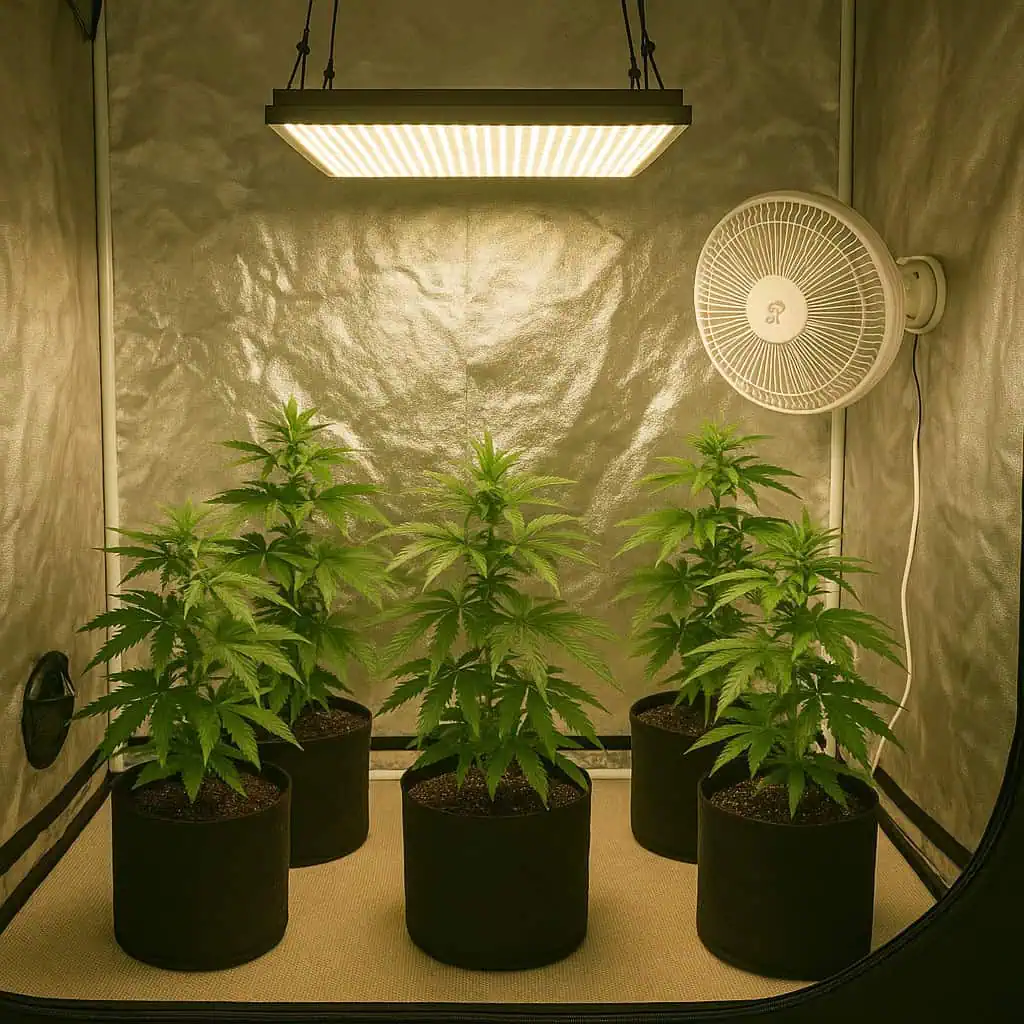
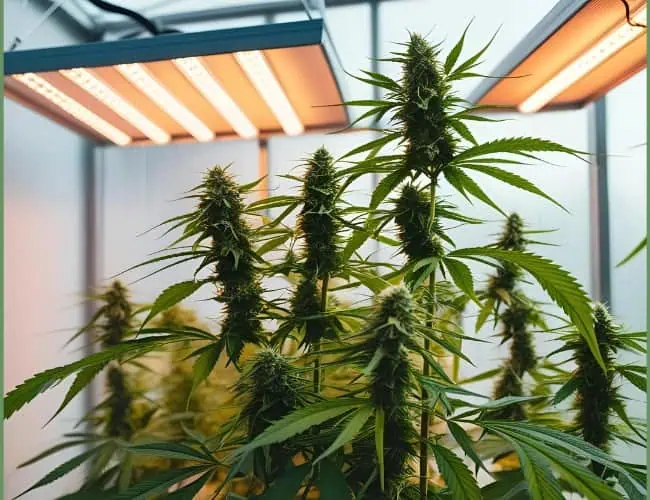
Cannabis plants can be grown in any free space in your home. We recommend investing in a small grow tent to provide your plants with a climate-controlled grow space to thrive.
Grow tents come in various shapes to accommodate small or large gardens.
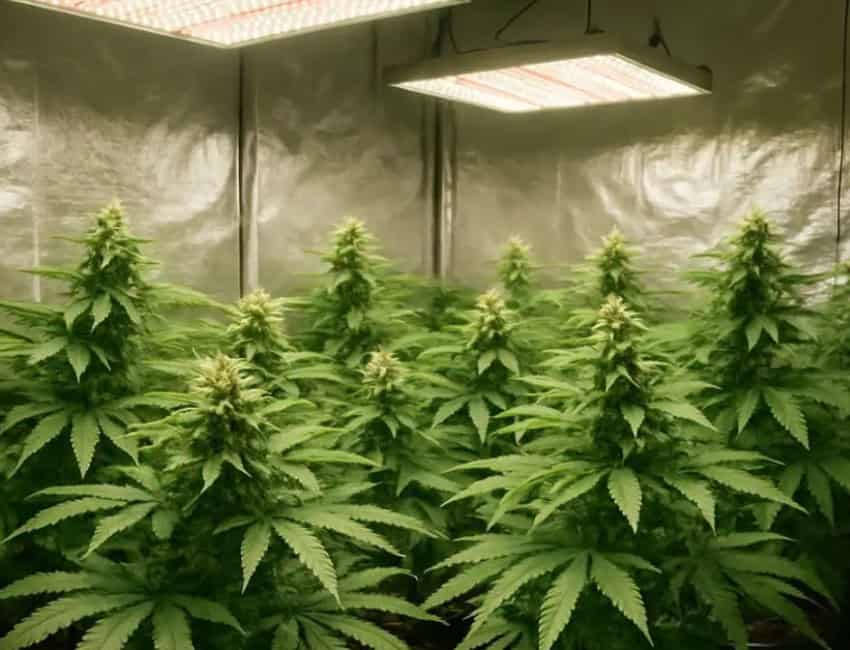
To grow cannabis indoors successfully, you need full-spectrum lighting that mimics the sun, delivering the right intensity and wavelengths for all growth stages.
Modern full-spectrum LEDs are the gold standard for home growers.
They are highly energy-efficient and produce minimal heat, making them ideal for indoor cannabis cultivation.
Providing full-spectrum lighting is essential during both the vegetative and flowering stages to ensure healthy growth and optimal yields.
Quality LEDs also offer impressive longevity, often lasting over 50,000 hours of use.
While LEDs may have a slightly higher upfront cost, they run cool, use less heat, provide energy savings, and have a higher light intensity.
A small oscillating fan in your grow tent or grow room can provide your plants with the right amount of air flow to reduce humidity and strengthen their structure.
Use 1–2 oscillating fans per grow tent or room.
Place the fans above canopy level, not directly blasting plants. The fans should be on 24/7.
Air circulation and an intake and exhaust fan can bring in the fresh air and take out stale air.
Without proper air flow you risk:
Cannabis containers should provide proper drainage, space for roots, and air circulation.
The best container to grow indoor cannabis depends on your grow setup, goals, and budget, but here are the top options ranked by effectiveness, with pros and cons.
Fabric Pots (Smart Pots or similar) – Best Overall
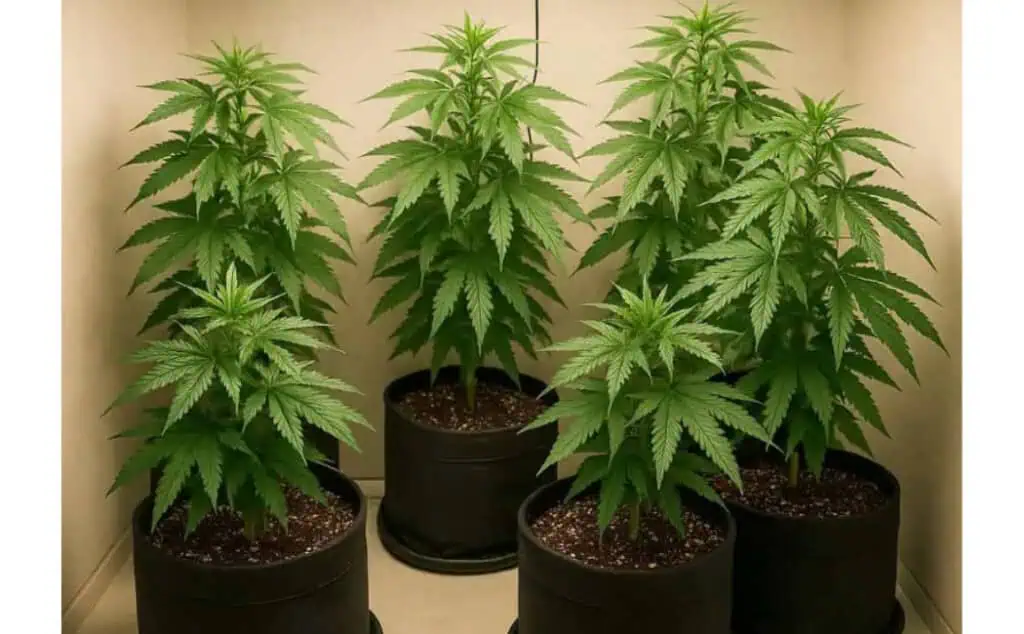
Why: Excellent drainage, aeration, and root pruning.
Fabric pots are great options for beginners.
Plastic Pots with Drainage Holes – Budget-Friendly
Why: Cheap, easy to find, and reusable.
Use with perlite-rich soil and add extra holes for better airflow.
Air Pots – Premium Option for Root Health
Why: Advanced plastic containers with side holes for superior aeration.
Great for hydro or advanced soil/coco growers aiming for max growth.
Avoid:
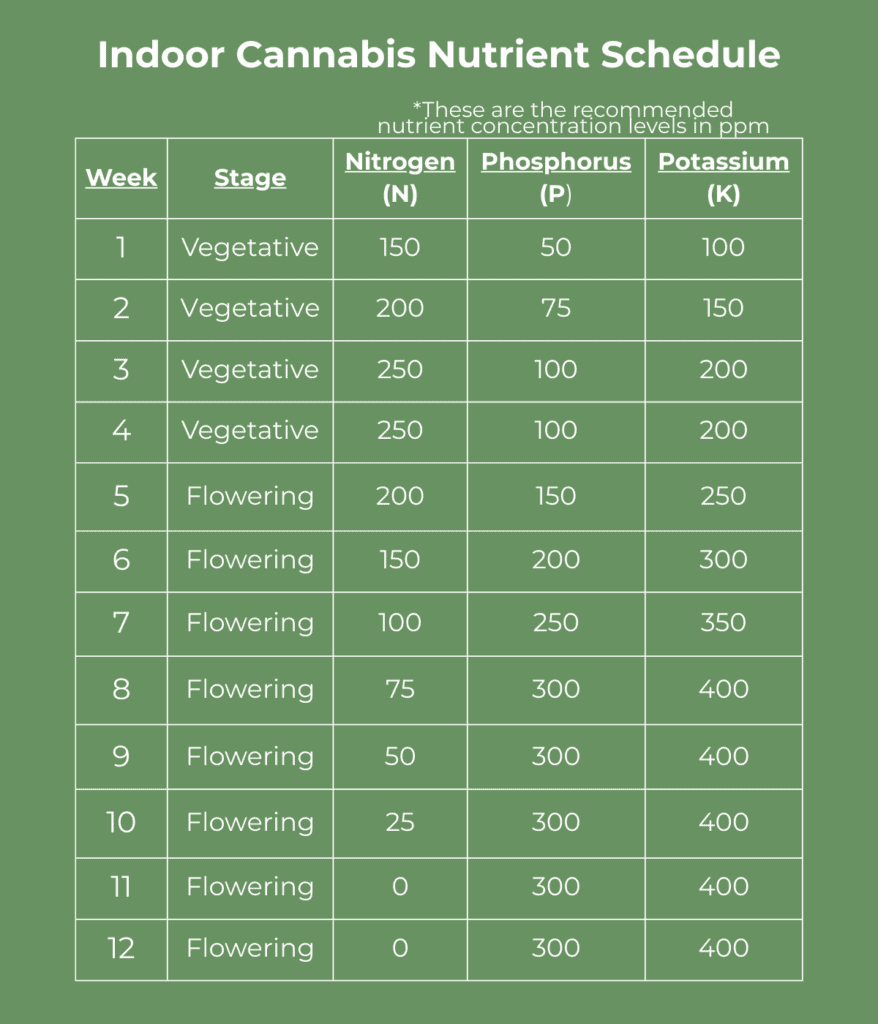
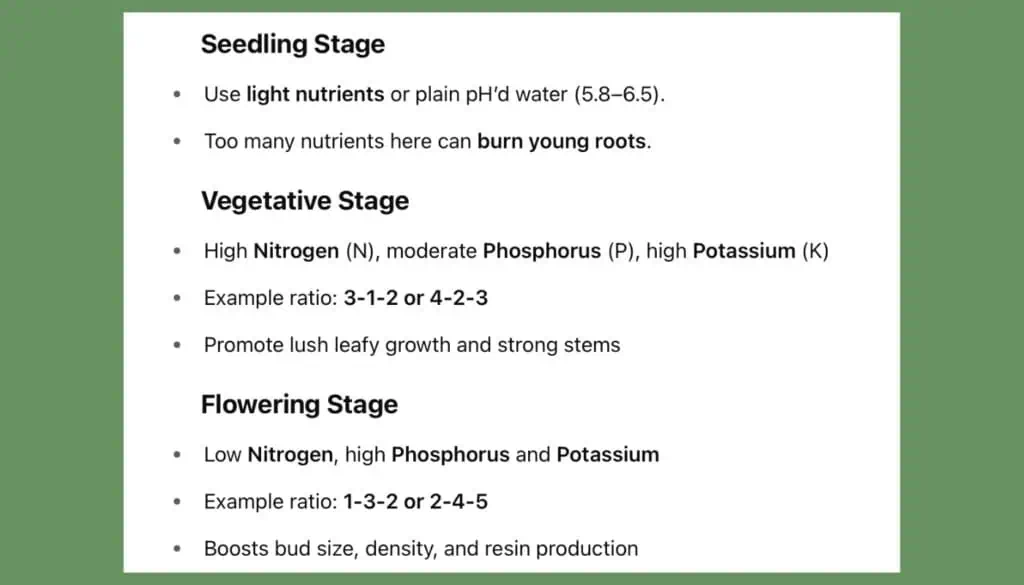
To grow healthy cannabis plants indoors, you need essential nutrients in the right ratios at each stage of growth.
Cannabis requires both macronutrients and micronutrients, typically provided through soil amendments, liquid nutrients, or hydroponic solutions.
Macronutrients
These are the primary nutrients every cannabis plant needs in large amounts.
Nitrogen is used for leaf and stem growth and is particularly important in the vegetative stage.
Phosphorous is important for root, flower, and bud development. You will use more phosphorous in the flowering stage.
Potassium is essential for the over all health of your plants during all stages.
Micronutrients
There are a handful of other nutrients that are needed in smaller amounts but are still very important:
Growing weed indoors successfully requires understanding the plant’s different growth stages.
Here is what to expect during its life cycle.
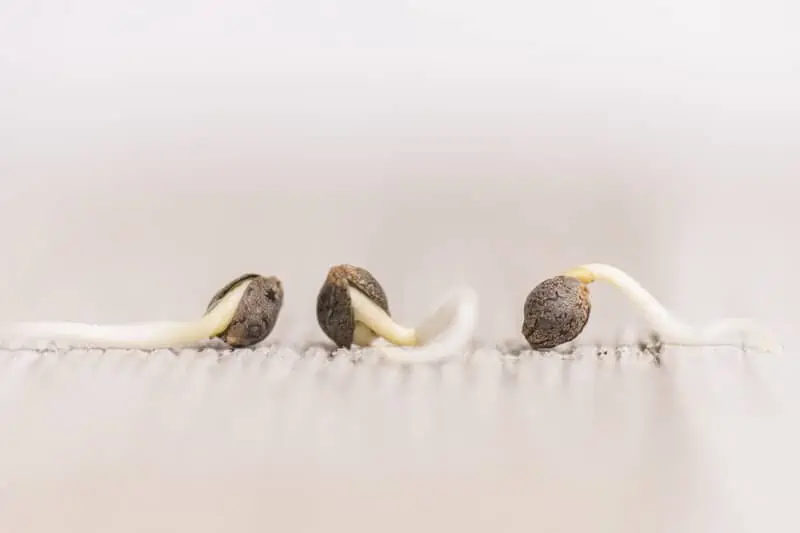
During the seedling stage of cannabis growing, the plant is in its earliest and most delicate phase of life. This stage typically lasts 1 to 3 weeks after germination.
Germination can be accomplished using the paper towel method.
Cannabis seeds can be placed between two plates and moist paper towels. Seeds begin to sprout within a few days in this environment.
A healthy seedling will develop a vibrant green color, sturdy stem, and multiple sets of true leaves before transitioning into the vegetative stage.
During the germination phase, it’s important to avoid overwatering, adding nutrients too early, or transplanting prematurely.
Most seeds contain everything they need to sprout and do not require any added nutrients at this stage.
During the vegetative phase of growing cannabis indoors, the plant focuses entirely on growth and development, not flowering.
This is a crucial stage where the foundation is laid for a high-yield harvest. It typically lasts 2 to 8 weeks, depending on your grow goals and strain.
Plants need 18-24 hours of light per day with full spectrum LEDs. Maintain a consistent light schedule to avoid flowering too early. A timer can help you keep track of light cycles.
Temperatures should be between 70 and 85º F. Plants should be watered when the top inch or two of the soil feels dry. Humidity should be at 50-70%.
Common mistakes to avoid:
A healthy vegetative phase results in strong stems, bushy foliage, and a well-developed root system, all critical for supporting heavy buds during flowering.
The flowering stage is triggered by changing the lighting schedule to 12 hours on 12 hours off.
Keep in mind if you are using auto-flowering strains they will trigger due to age not light.
During the flowering stage, plants will develop flower buds and require 12 hours of light and 12 hours of darkness.
Regularly prune the plants to ensure every bud site gets enough light to grow.
Weeks 1-3 you will start to see continued leaf and stem growth, some plants may double in height. Pistils will begin to appear at bud sites.
Weeks 3-7 you can expect calyx and bud clusters to form at the nodes. As time goes on the buds will get larger. You may see some yellowing in the leafs as the plant focuses on bud production.
This is when trichome production starts, the resin glands containing THC, CBD, terpenes, etc.
During the final weeks trichomes reach peak potency. This is when you start monitoring your trichomes for harvest timing.
Growers may flush the nutrients from their plants by only feeding them water.
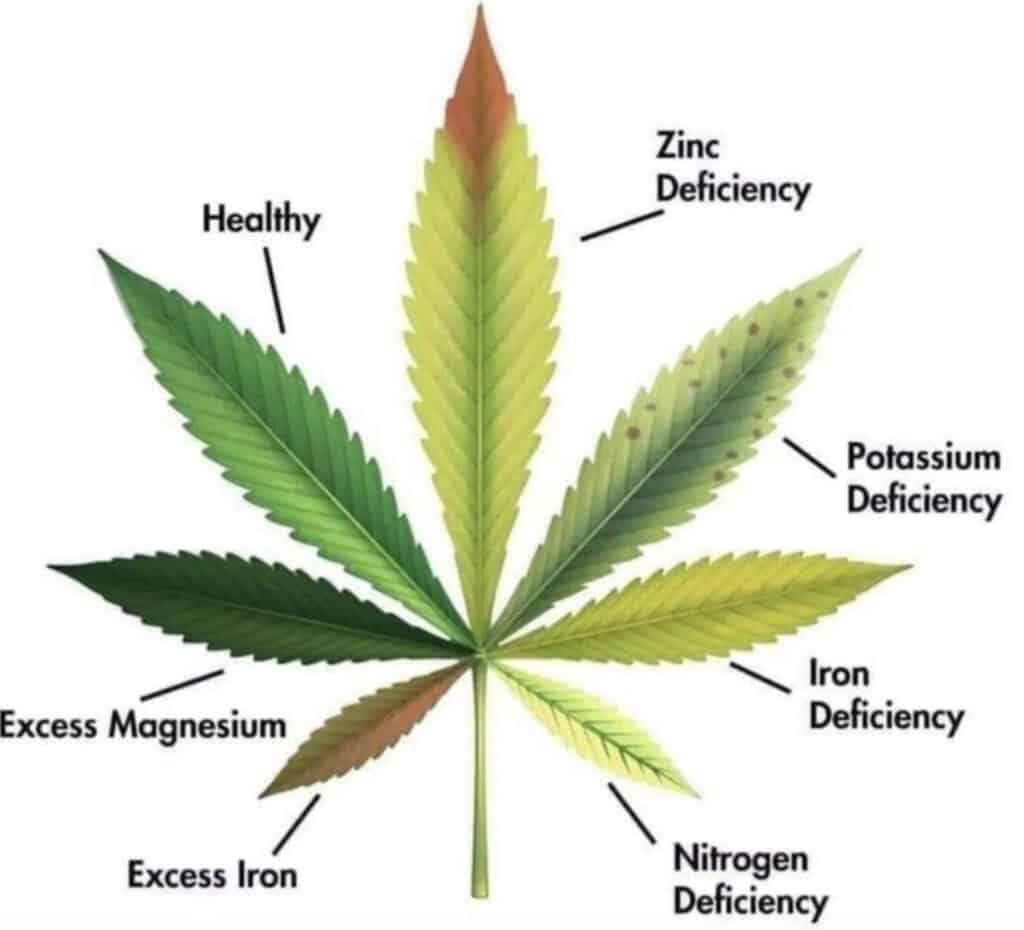
Look for these nutrient deficiencies:
Things to avoid during flowering:
Your ideal temperature for the flowering stage is 68–78°F. Keep humidity to 40-50% and make sure you have full spectrum lighting.
The harvesting stage of indoor cannabis growing is the final and most rewarding phase, when you finally cut, dry, and cure your buds for use or sale.
Timing and technique during this stage directly affect potency, flavor, aroma, and smoothness of the final product.
The perfect time to harvest your plants is when about 50 percent of the trichomes have turned an amber color.
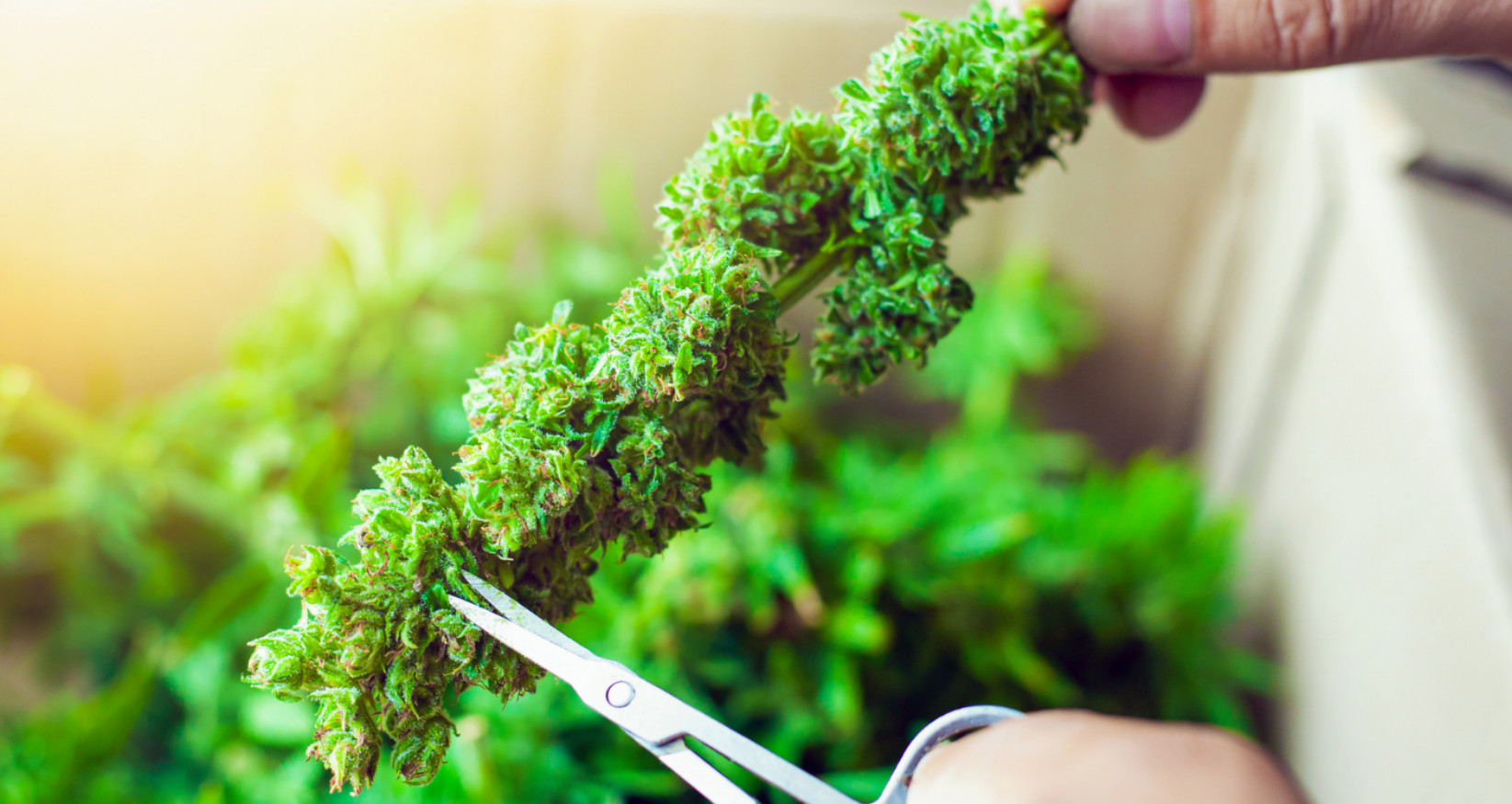
When it’s time to harvest, remove the branches from the main stem using sharp shears and prune the fan leaves.
Drying the cannabis bud branches usually occurs in a dark and cool area with temperatures between 60 and 70º F and relative humidity (RH) of 50%.
Branches can be hung from a wire or string to dry. When the branch breaks off with an audible snap, the buds have dried properly.
Once your buds have dried, it’s time to place them in an airtight glass jar and cure cannabis buds for a few weeks or months.
Open the jar’s lid every day for about 10 minutes to release stale air and introduce fresh air into the jar. Curing times depend on your individual preference.
It all starts with the right cannabis strain. However, there are thousands available with different cannabinoid and terpene profiles.
Always start off with the highest quality cannabis seeds or clones from reputable suppliers. Cannabis seeds should be hard and dark in color, while clones should be free of pests or mold, have strong white roots, and have a solid green color throughout.
Ask yourself the following questions about your desired strain: Do you want a sativa, indica, or hybrid? Are you looking for feminized seeds that produce female plants or regular seeds that have a 50-50 chance of producing a male or female? Do you prefer photoperiod or autoflowering varieties that grow faster?
Here’s a quick guide to the many different terms you will come across when choosing your cannabis genetics:
Research your desired strains thoroughly so you can provide them with their optimal growing environment and understand their growth timeline.
When it comes to choosing strains to grow, there are many different factors to consider. For beginner home growers, it’s best to start with strains that are easy to grow, have a relatively short flowering time, and are resistant to common pests and diseases.
Here are some of the best strains for beginner home growers:
The answer can vary from a few months to most of the year. It can depend on the latitude and climate of your area.
On average, cannabis plants can fully mature in about 3 to 4 months. Ultimately, the time it takes to grow your plant will depend on its strain genetics, grow environment, and growing practices.
Here is a breakdown of the cultivation timeline from acquiring supplies to harvesting your buds:
Your indoor grow success depends on carefully selected tools and gear:
“Starting with a 600W LED and a 4×4 tent transformed my grows. Consistent light and air control gave me frosty buds without overheating the space.”
“A simple oscillating fan during veg made stems thicker and helped prevent mold later in flowering.”
“Switching from plastic containers to fabric pots improved root health and made watering more forgiving.”
Run a high-quality carbon filter connected to your exhaust. Add a small oscillating fan to keep air circulating inside the tent, which helps avoid stale pockets.
Symptoms include drooping leaves, yellowing, slow growth, and damp soil lacking airflow. Let the soil dry before watering again to avoid root rot.
Yes. They simplify the grow process by reducing the risk of male plants and maximize bud-growing space and resources.
Not strictly for beginners. CO₂ can boost yields, but it’s most useful for advanced growers who already mastered lighting and airflow.
Start at half strength with nutrient mixes, gradually increasing based on plant response. Watch leaf tips; signs of burn, brown, crispy edges, mean you should dilute the mix or flush with clean water.
-Cannabis plants need a minimum of 6 months of warm, sunny weather for outdoor growth.
-Indoor growers need to control the temperature and humidity to ensure healthy cannabis plants.
-Cannabis plants prefer a humidity level of 40-60% during their growth stages.
-The flowering stage begins when the light cycle is reduced to 12 hours on and 12 hours off, triggering bud formation in female plants.
-To differentiate male and female cannabis plants, growers need to look for the presence of pollen sacs in males and the formation of pistils in females.
-After harvesting, cannabis buds must be dried and cured to enhance their flavor and potency, with curing typically lasting 2-4 weeks.
-In the seedling stage, plants grow embryonic leaves followed by the first set of true cannabis leaves, requiring high humidity of 65-70% and light exposure for 18 hours a day.
-The light cycle during the vegetative stage is kept at 18 hours on and 6 hours off, using vegetative nutrients rich in nitrogen.
-Harvest should occur when 50-75% of pistils have changed color, indicating ripeness, and this timing impacts the potency of buds.
-Growing cannabis indoors allows for year-round cultivation regardless of external weather conditions.
The journey into indoor cannabis cultivation is rewarding when built on a strong foundation: well-chosen gear, controlled environment, smart training, and stage-specific care.
By following the above advice, new growers are set for success—producing healthy, potent buds even on their first try.
Growing marijuana indoors for the first time takes time, patience, and practice. Enrolling in online expert training at Cannabis Training University, an IACET Accredited Provider, can give you the skills and knowledge you need to start your own cannabis garden at home.
Learn everything about growing indoors, from germinating cannabis seeds to harvesting marijuana plants at the right time. Our curriculum provides you with HD videos, ebooks, quizzes, and more to help you grow your own weed from home.
More in Growing

Check your state's cannabis laws

Indoor + outdoor growing careers
 IACET Accredited Provider · online cannabis education
Since 2009 • 50,000+ students trained worldwide
IACET Accredited Provider · online cannabis education
Since 2009 • 50,000+ students trained worldwide



Copyright Cannabis Training University, a subsidiary of Online Training Providers. © 2026. All Rights Reserved.
Medical Disclaimer: The information on this website is for informational purposes only and is not intended to be a substitute for professional medical advice, diagnosis, or treatment.
Always seek the advice of a physician or other qualified health provider with any questions you may have regarding a medical condition.
Legal Compliance: Cannabis remains federally illegal. Products and information are intended only for jurisdictions where cannabis use and possession is legal.
By using this site, you affirm that you are of legal age (21+) and responsible for understanding your local laws.