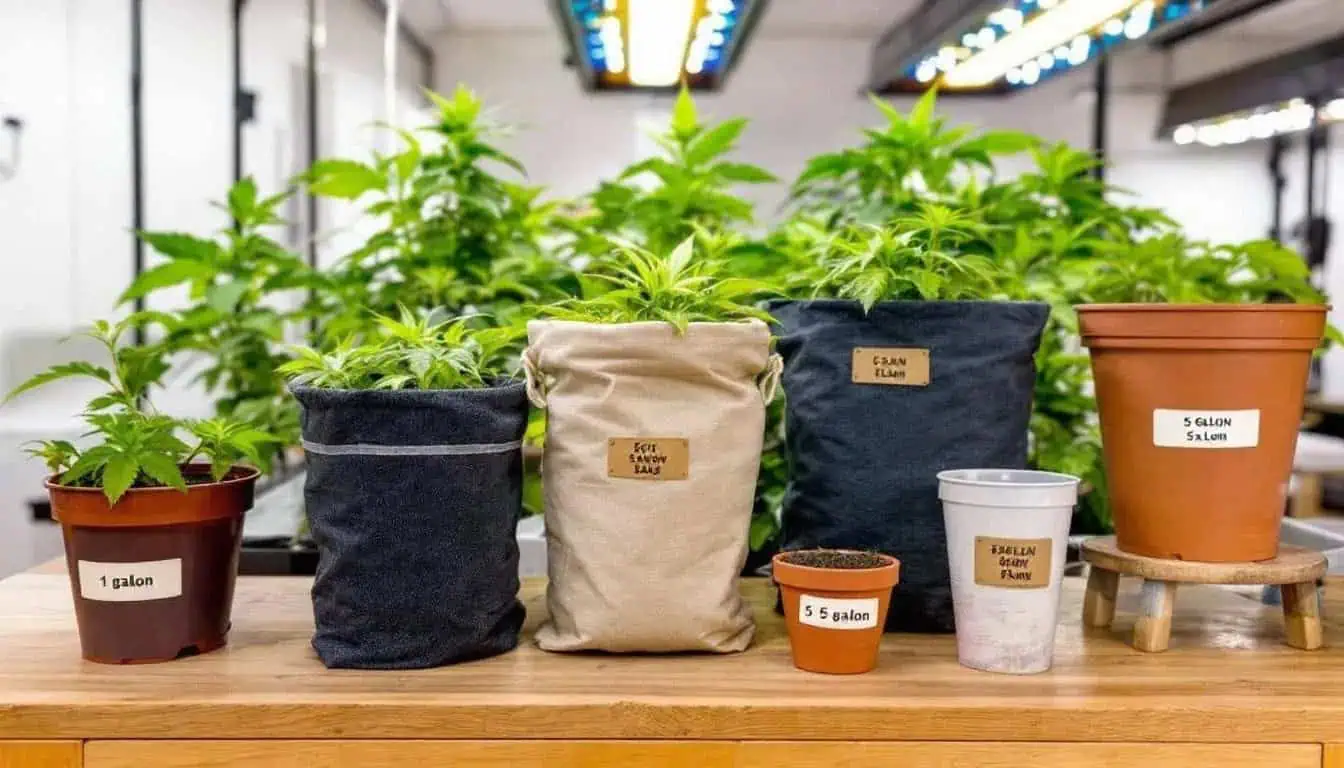
The pot size you choose for growing your weed plants in is one of the most overlooked but most important factors in growing success.
Autoflowers do best when planted in their final pot. Our free autoflower grow guide explains why.
Pot size determines how much root mass can develop, how often you’ll water, how resilient the plant becomes, and ultimately how much yield you can produce.
In addition to pot size, using different containers—such as plastic, fabric, and air pots—can significantly influence plant growth and yield when growing weed, as each type affects root development, watering practices, and overall plant health.
Choose a pot that’s too small, and you’ll get root-bound plants, nutrient lockout, and stunted growth. Choose a pot that’s too large, and you risk overwatering, root rot, wasted soil, and resource inefficiency.
Whether you’re a hobbyist growing autoflowers on your balcony or a commercial cultivator scaling 500 plants in a Minnesota greenhouse, the same principles apply, but the choice of pot should be matched to the specific growing environment—indoor, outdoor, or greenhouse—to optimize results.
Grow it right the first time
Stop guessing. Learn to grow from seed to harvest.
The Indoor & Outdoor Cannabis Growing Certificate covers nutrients, pH, lighting, pests and harvest, with video lessons and a certificate when you finish.
See the Growing Certificate →Free Cannabis Cultivation Guide (ebook)IACET-accredited · 7-day money-back guarantee
Pot size impacts root health, which in turn influences:
Think of the pot as the “engine bay” of your cannabis plant: too small and it chokes, too large and it wastes energy. The goal is balance.
Stage | Pot Size Recommendation | Why It Works |
|---|---|---|
Seedlings / Clones | 0.25–0.5 gallons | Easy moisture control, prevents overwatering. |
Early Vegetative | 1–3 gallons | Supports rapid root expansion without overwhelming the plant. |
Full Veg (Indoor) | 3–5 gallons | Ideal for most photoperiod indoor grows. |
Flowering (Indoor) | 5–7 gallons | Enough soil to buffer water/nutrients, supports final swell. |
Extended Veg / Large Photoperiod | 10–15 gallons | Great for growers training big plants (SCROG or LST). |
Outdoor Photoperiod | 20–30+ gallons (or in-ground) | Maximizes yield potential for season-long grows. |
Autoflowers | 3–5 gallons (direct sow) | Best balance; avoids transplant shock with autos. |
A simple rule of thumb:
Reference chart:
Plant Height | Pot Size Needed |
|---|---|
6–12 inches | 1 gallon |
12–24 inches | 2–3 gallons |
24–36 inches | 5 gallons |
36–48 inches | 7–10 gallons |
48–60+ inches | 10–15 gallons |
Using deeper or narrower pots can result in taller plants, while wider or shallower pots may encourage bushier, more compact growth.
Plastic Pots
Fabric Pots (Smart Pots)
Air Pots
Clay / Ceramic Pots
Grow Bags (Disposable)
Grower used 15-gallon fabric pots outdoors. Results:
Grower used 7-gallon plastic pots indoors. Results:
Grower used 5-gallon fabric pots in a 4×4 tent. Results:
Grower used 20-gallon air pots in light-dep greenhouse. Results:
Problem: Plant wilting daily
Problem: Yellowing leaves + slow growth
Problem: Root-bound at harvest
Problem: Weak stems
Managing larger pots or more plants can require more work in terms of watering, monitoring, and maintenance.
3–5 gallons. Plant directly into final pot to avoid transplant shock. Growers tend to avoid transplanting autos and prefer to plant them straight into their final container.
Not always. Bigger pots allow potential for bigger plants, but yield also depends on genetics, training, light intensity, and environment.
Yes. Clean thoroughly with diluted hydrogen peroxide to prevent pathogen buildup.
Hydro systems skip pots; net cups or hydro buckets replace soil containers. Pot size rules don’t apply the same way.
If you start in a final-sized pot, plants may struggle early with excess moisture, but they can adapt. Many growers prefer progressive transplants for faster growth early.
Water when the top inch of soil feels dry. Proper feed schedules, including both water and nutrients, are essential for healthy root development and maximizing yield.
If growing Indoors, under 1000-watt HPS lights, with an average of 4-weeks of vegetative time in a 5-gallon buckets, the plant yield should be approximately one quarter of a pound (112 grams) of dry cannabis flowers per plant if all other factors are set up correctly. This of course also depends on the strain chosen.
Soil dries slowly in too large of pots which will make the plants more susceptible to root rot. Too large of pots also tend to tip over easily in wind.
Yes. Doubling plant pot size makes plants grow over 40 percent larger on average.
Ideally, cannabis plants should have 5 gallons (19 liters) of plant container space for every 12 inches of growth. If cultivating cannabis in 3 gallon pots, switch the plants to flowering phase (12 hours of darkness, 12 hours of light) or transplant when the plant is 2 feet tall.
Some common signs that a cannabis plant needs more space are: -Roots busting out the bottom of the pot -Soil level has dropped or appears dry and hardened
The average yield per cannabis plant grown indoors using 600W – 1000W lights is 150 to 300 grams (up to 600 grams for more experienced growers). And an average of 250 to 500 grams (1000 grams for more experienced cannabis growers) with a 1000-watt HPS light.
Fabric pots allow extra oxygen to make it to the plant roots from all sides, not just from the top, which helps soil to thrive.
The size of the pot matters because it dictates how much space the roots have to spread out. Greater root development in larger pots might result in a healthier and more fruitful plant. On the other hand, too-small pots can impede root development and cause problems including stunted growth and nutrient shortages.
Smaller pots (about 1-2 liters or 0.25-0.5 gallons) work best for seedlings. In preparation for transplanting, this helps sustain proper moisture levels and promotes a robust root system.
The plant has to be transplanted when its roots completely fill the pot; this is frequently apparent when roots begin to show through the drainage holes. Usually, a few weeks have passed since germination.
Sure, too big of a pot can retain too much moisture, which can cause root rot. As the plant grows, it’s recommended to gradually increase container size.
Five to ten gallon pots are typically used for a fully established indoor cannabis plant. Plants can grow in even bigger pots outside—up to 15 gallons or more—depending on the type and growth environment.
In general, a larger pot gives more room for roots, which means that a larger plant may be supported and perhaps yield more. However, other elements like diet, lighting, and heredity all affect the final output.
The benefits of fabric pots include better drainage and increased air circulation to the roots, both of which help promote healthier root systems. Although plastic pots are more resilient and hold moisture longer, they can cause problems such as poor drainage and overheating.
Smaller pots may need to be watered more frequently since they dry out more quickly. Larger pots hold moisture longer, allowing for less regular watering. It’s important to monitor soil moisture levels and apply water when the top inch of soil appears dry.
While smaller indica strains can frequently be cultivated in smaller pots, larger sativa kinds, marijuana particular, may benefit from larger pots to match their potential growth.
For most cannabis plants, the suggested depth is at least 10 to 12 inches. This depth offers sufficient soil to hold moisture and nutrients while promoting proper root development.
Pot size is a cornerstone of cannabis cultivation success. It influences every aspect of plant growth, from root health to flower density. By understanding the relationship between container size, plant stage, and environment, growers can avoid common mistakes and maximize yields.
The most successful cultivators don’t just copy charts—they adjust pot size to match their strain, climate, and grow method. With this guide, you have the blueprint to make those informed choices.
Choosing the right type of pot for cannabis is just as important as choosing the right size. Different pots affect root aeration, moisture retention, nutrient uptake, and ultimately potency, terpene expression, and yield. Below is a breakdown of the most popular pot types, when to use them, and recommended brands trusted by growers.
For those interested in alternative growing mediums, consider growing cannabis in coco coir perlite mix.
Stage | Best Pot Type | Reason & Benefit |
|---|---|---|
Seedling/Clone | Plastic nursery pot or solo cup | Holds moisture, protects fragile roots |
Early Veg | 1–3 gallon plastic or fabric pots | Easy transplanting, controlled growth |
Full Veg Indoor | 3–5 gallon fabric pots | Air pruning and root oxygenation |
Flowering Indoor | 5–7 gallon fabric or air pots | Supports bloom size, maximizes resin |
Outdoor Large | 15–30 gallon fabric or grow bags | Large root zones for maximum yield |
Autoflowers | 3–5 gallon self-watering fabric pots | Prevents transplant stress, consistent hydration |
Choosing the right pot type for each stage is as critical as choosing the right size. Roots are the foundation of every cannabis plant—investing in the right container means investing in higher yields, stronger potency, and healthier plants.
-Cannabis grow bags are essentially fabric pots designed specifically for cannabis cultivation.
-Terracotta pots have been used for cannabis cultivation for centuries due to their resilience and functionality.
-Air Pots feature spikes on the exterior, allowing for improved air exchange and root pruning.
–Hempy buckets utilize a hydroponic system and manual watering to nourish cannabis plants effectively.
-The size of the container solely depends on the goal of the grower during a particular cultivation cycle.
-Plastic containers promote root growth because they encompass the entire shape of the container.
-Plastic pots were invented to provide a cheaper and more durable alternative to terracotta pots.
-Using biodegradable or disposable pots can simplify cleanup and maintenance for cannabis growers.
More in Growing

Check your state's cannabis laws

Indoor + outdoor growing careers
 IACET Accredited Provider · online cannabis education
Since 2009 • 50,000+ students trained worldwide
IACET Accredited Provider · online cannabis education
Since 2009 • 50,000+ students trained worldwide



Copyright Cannabis Training University, a subsidiary of Online Training Providers. © 2026. All Rights Reserved.
Medical Disclaimer: The information on this website is for informational purposes only and is not intended to be a substitute for professional medical advice, diagnosis, or treatment.
Always seek the advice of a physician or other qualified health provider with any questions you may have regarding a medical condition.
Legal Compliance: Cannabis remains federally illegal. Products and information are intended only for jurisdictions where cannabis use and possession is legal.
By using this site, you affirm that you are of legal age (21+) and responsible for understanding your local laws.