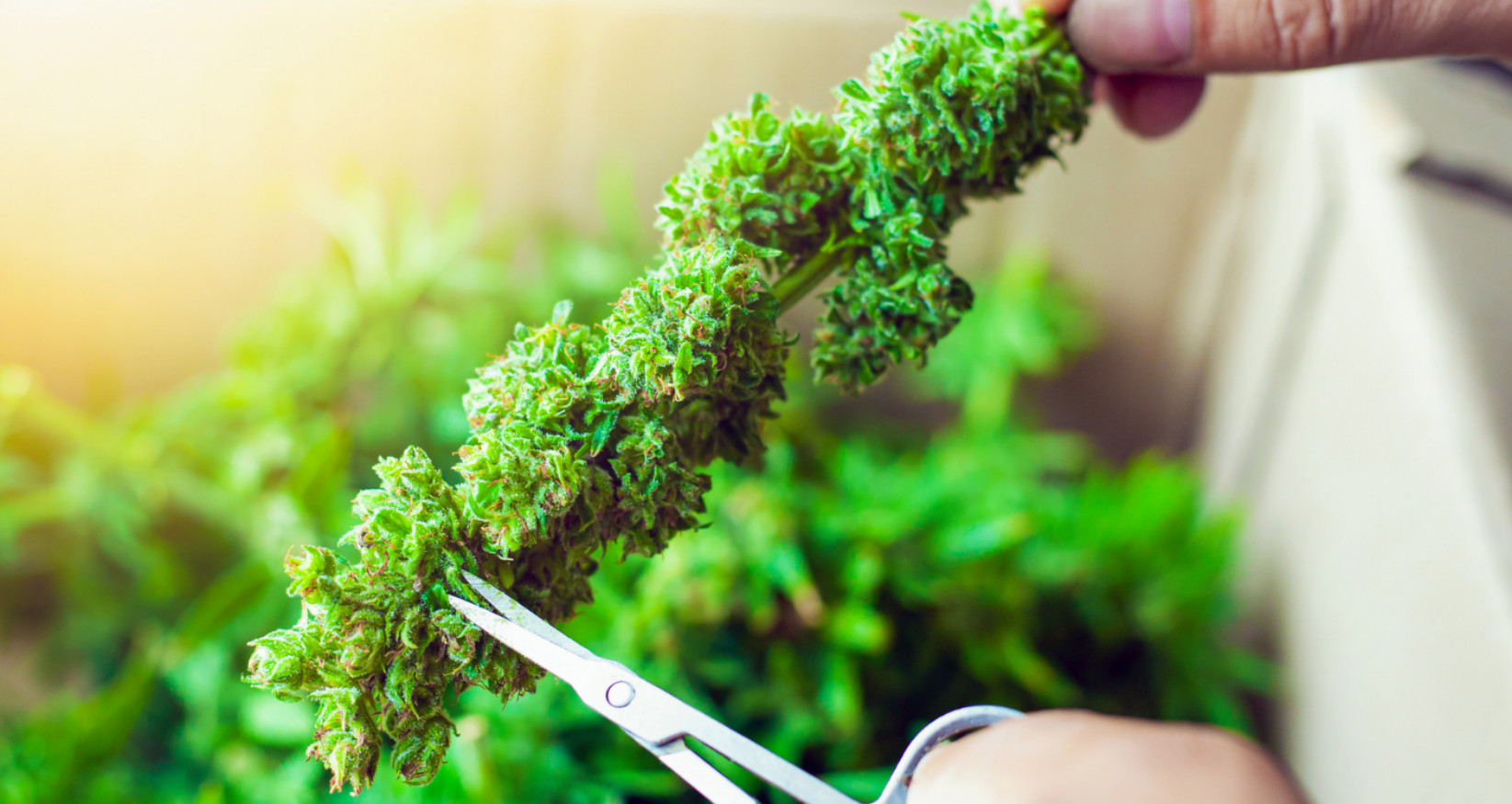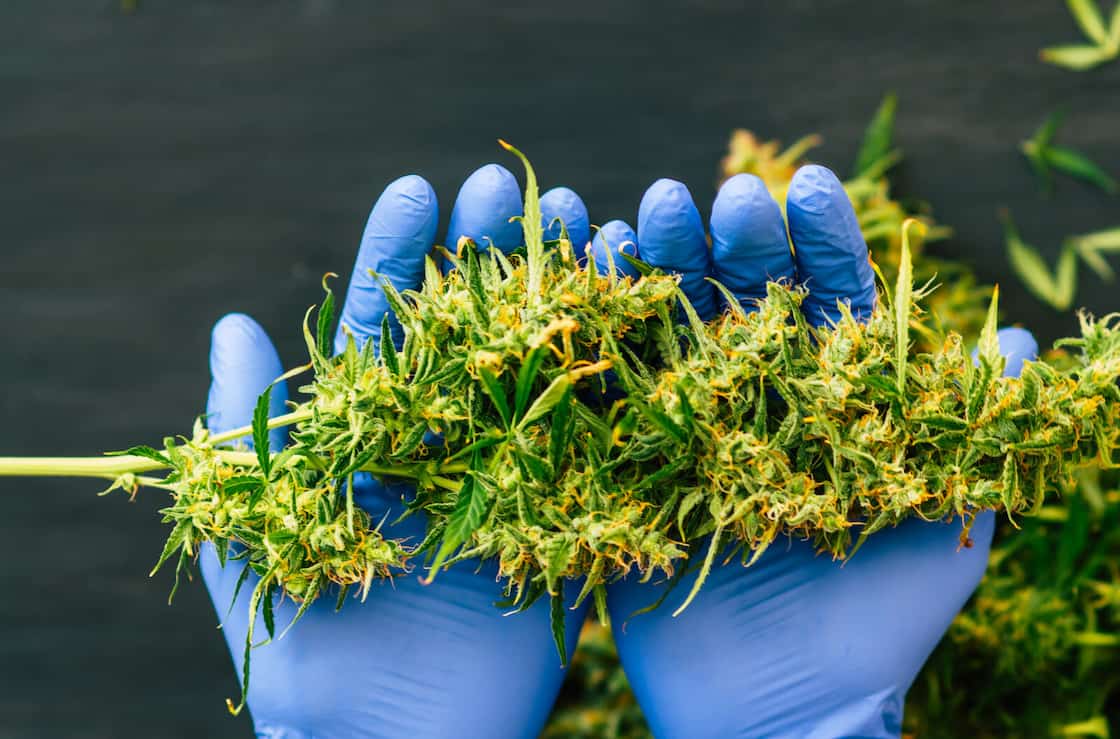
Need to know about harvesting cannabis so you get the timing right? As the days get shorter and your plants get bigger, you need to prepare to harvest your mature flower buds.
But how do you know when they are at their peak freshness? There is a short time window when cannabis flowers should be harvested.
The experience and knowledge gained from growing cannabis all lead up to this crucial harvest stage, making it essential to understand the entire cultivation journey.
Harvesting weed too early can produce buds with a weaker potency, flavor, and aroma. Harvesting too late can lead to reduced THC potency and buds that induce sedation.
Our cannabis harvest guide shows you exactly how to get your harvesting timing right.
Grow it right the first time
Stop guessing. Learn to grow from seed to harvest.
The Indoor & Outdoor Cannabis Growing Certificate covers nutrients, pH, lighting, pests and harvest, with video lessons and a certificate when you finish.
See the Growing Certificate →Free Cannabis Cultivation Guide (ebook)IACET-accredited · 7-day money-back guarantee
Harvesting cannabis is one of the most crucial steps in the cannabis cultivation journey, directly impacting the quality, potency, and overall experience of your final product.
The cannabis harvest method you choose, along with the timing of your harvest, can make the difference between average and exceptional cannabis buds.
Many growers rely on a combination of visual cues and scientific techniques—such as monitoring trichome production and observing pistil color—to pinpoint the perfect time to harvest their cannabis plants.
By understanding the optimal harvest window, you can ensure your cannabis buds reach peak potency and deliver the best possible flavor and aroma.
Whether you’re cultivating cannabis for personal use or as a commercial grower, mastering the art of harvesting is essential for maximizing the rewards of your hard work.
How long do you have to wait to harvest after you planted your cannabis seed? It depends on a variety of factors including the strains genetics and growing environment.
These elements can determine the rate of flower bud maturation. As cannabis plants mature, different parts of the plant may ripen at different times, requiring careful observation.
In addition, the buds may mature all at once, from top to bottom, or outside the canopy and then within.
Generally, buds that have the most exposure to light mature quicker than ones that do not, as more light accelerates bud maturation. Some growers harvest buds outside the canopy first and then allow the inner buds to mature for a couple of weeks.
In the last week before harvest, growers often perform final checks or flush the plants to ensure optimal quality.
Before you reach the final stage of harvesting, it’s essential to prepare your cannabis plants to ensure a smooth and successful harvest.
Pre-harvest preparation starts with flushing your plants—watering them with pure water to remove any lingering nutrients from the soil or growing medium. This step helps improve the taste and smoothness of your cannabis buds.
During the last weeks of the flowering stage, stop fertilization and focus on pruning away excess foliage to promote better air circulation and even bud development.
Keep a close eye on your plants in the final weeks, watching for key signs like cloudy trichomes and curled pistils, which signal that your buds are maturing and harvest time is approaching.
Proper pre-harvest preparation not only helps prevent issues like bud rot but also sets the stage for an optimal harvest, ensuring your cannabis buds are healthy, potent, and ready for the next steps in the harvesting process.
The flowering stage is a defining period in cannabis cultivation, as this is when your cannabis plants develop their prized buds and reach their full potential in terms of potency and flavor.
Different strains have unique flowering timelines—some indica strains may be ready for harvest in as little as six weeks, while other varieties, especially sativas, can take up to twelve weeks or more.
Understanding the specific flowering stage requirements of your chosen strains is key to achieving peak potency and the best possible harvest.
Many growers use techniques like topping and training to shape their plants, ensuring even light distribution and maximizing bud production.
By closely monitoring your plants throughout the flowering stage and tailoring your approach to the needs of different strains, you can ensure your cannabis buds mature perfectly and are harvested at the optimal time for maximum quality.
Knowing when to harvest weed can make or break your yield. Examining the condition and maturity of each cannabis bud is essential for determining readiness.
There are a few different ways that you can tell if your marijuana plants are ready to be harvested.

Trichomes are the small and bulbous resin glands that primarily grow on flower buds’ bracts but can also be found in lower concentrations on its leaves and stems.
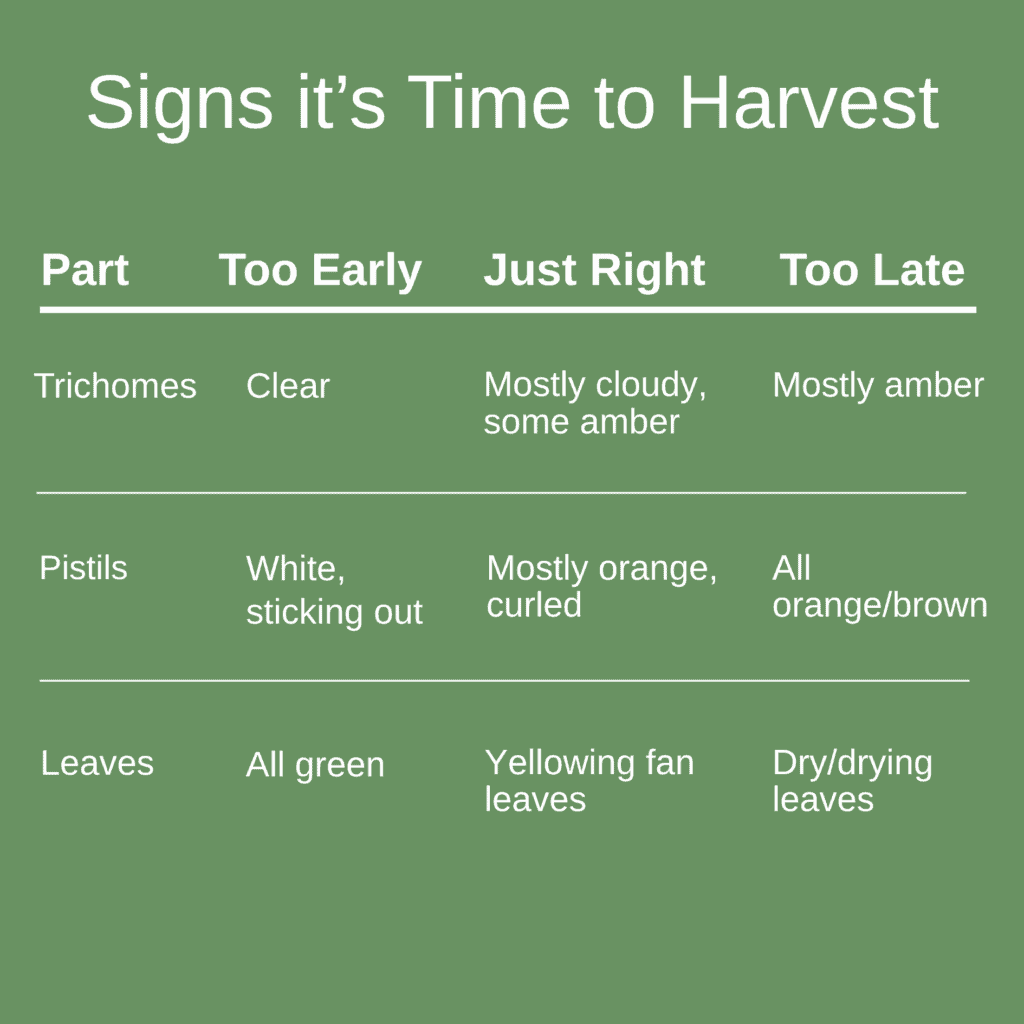
When your cannabis plants are ready to be harvested, about half of the trichomes should have a milky white color while the other half should have a vibrant amber color.
Trichomes start off clear and are at their weakest potency. As they gradually mature, they change in color, going from a milky and cloudy white to, eventually, an amber hue.
Since these resin glands are difficult to see with the naked eye, you can use a magnifying glass or a jeweler’s loupe to get a closer look.
For even clearer and larger images of trichomes, a digital microscope can be used, which makes it easier to determine the optimal harvest time.
In some cases, especially when the plant has been flushed of its nutrients as it gets close to the harvest, the color of its leaves can transition from vivid green to a dull yellow. Why? Nitrogen gives the leaves their green hue.
As the plant’s nitrogen content decreases toward the end of its life cycle, the leaves can begin to turn yellow and fall off.
Worried that the change in color and vigor of your plant’s leaves are a sign of poor health? Check out our blog resource: Evaluating cannabis leaves for health problems.
Similar to a change in leaf color, its leaves may begin to curl at its tips toward the end of its life. Don’t worry. This is normal.
Since the plants may not be getting as much water as they were during the flowering period, the leaves may begin to dry off and wither away.
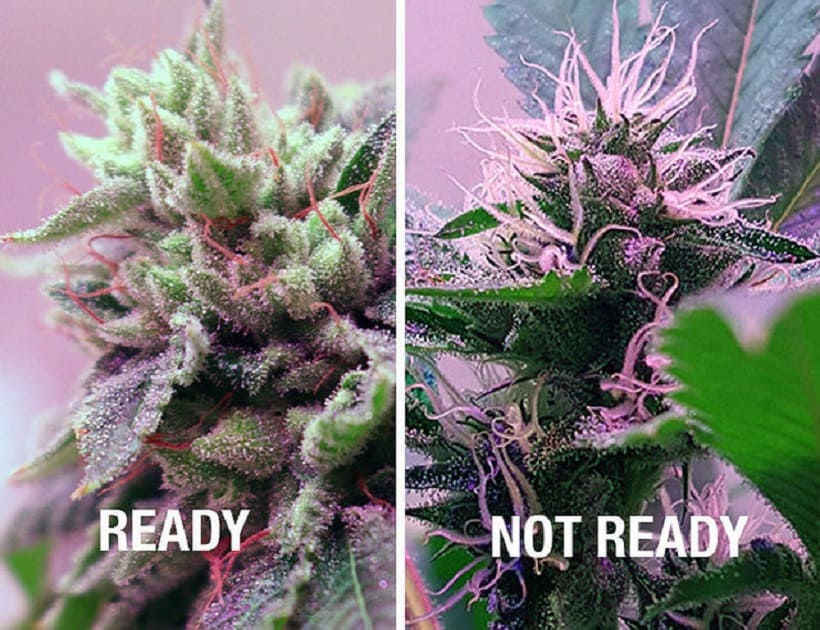
In photoperiod marijuana plants, their pistils, their female sex organs that look like small hairs, can begin to change in color to a brown, orange, or reddish hue.
The timing of harvest based on pistil and trichome color can influence the psychoactive effects of the cannabis, as these visual cues often correspond to changes in THC levels and the overall experience.
Keep in mind, this method is not the most effective for determining your flower buds’ ripeness.
When it comes to harvesting cannabis, growers have several methods to choose from, each with its own advantages. Some opt for a partial harvest, removing only the mature buds and allowing the lower buds to continue developing.
Others prefer a whole plant harvest, cutting down the entire plant at once for a more uniform drying process.
For those seeking maximum control, a bud-by-bud harvest allows for selective picking of the ripest buds. Many growers combine these methods to suit the unique needs of their cannabis plants.
After cutting, you can choose between wet trimming the buds immediately after harvest—or dry trimming, which involves trimming after the buds have dried. Using tools like magnifying glasses or digital microscopes helps ensure you harvest at the optimal time by closely examining trichome color and maturity.
Proper harvesting and drying techniques are essential to prevent mold and preserve the potency and flavor of your cannabis buds, setting the stage for a high-quality final product.
As mentioned above, it all depends on the color of your plant’s trichomes. If most of them are still clear, then it is way too early to harvest them. At this point, their cannabinoid and terpene production is just getting started.
While you may harvest your buds at this point, they will contain less THC, resulting in milder effects, weaker potency, flavor, and aroma compared to fully mature buds. When is the best time to harvest weed?
Worried that you might overshoot your harvest? Is it ever too late to harvest? Ultimately, it depends on the color of the plant’s trichomes. Harvesting at the final harvest window ensures the highest THC content; waiting too long can result in less THC and more sedative effects.
When most of the bud’s trichomes have turned an amber color that means that your buds are overripe. They can become brittle and break off when handled.
If you harvest your buds when they have gone past their peak maturity, you can still consume them. Keep in mind, the buds’ cannabinoids can degrade over time, and the overall quality of the buds can decline if the harvest is delayed.
In particular, THC converts to CBN, a cannabinoid known to produce more sedative and couch-locking effects. This means you will have less THC and a different effect profile than if you harvested at the optimal time for more THC.
Harvesting cannabis is an often overlooked aspect of cannabis cultivation, especially with homegrown cannabis. Growers often harvest when it is too early to harvest their weed, but improper timing and handling can also negatively affect the final quality of the cannabis.
When harvesting, start by cutting down each bud-laden branch from the main stalk or main stem, or remove the entire thing if you are harvesting the whole plant.
Your flower buds still need to undergo a trimming, drying, and curing process before they are ready for consumption. Trimming sugar leaves at this stage helps improve the drying and curing process and enhances the final quality of the buds. We have got you covered with our post-harvesting guides:
Instead of traditional hang drying, you can use a drying rack as a space-saving and convenient alternative. Make sure there is sufficient space between each bud-laden branch on the rack or line to allow for proper airflow and prevent issues like bud rot.
Drying should take place in a dedicated drying room where temperature, moisture levels, and relative humidity are carefully controlled to prevent mold and preserve bud quality.
After you have completed these essential post-harvesting tasks, you can store your cannabis buds in mason jars in a cool place to extend their freshness and potency.

Determining when your cannabis plant is ready to harvest is crucial to obtaining the best quality buds. Harvesting too early can result in a loss of potency, while harvesting too late can lead to overly sedative effects or a degradation of THC into CBN. Here are several indicators to help you determine the optimal harvest window:
Pistils: These are the hair-like structures on the buds. Early Stage: They will appear white and straight.
Mid Stage: As maturity approaches, they’ll start curling and changing color to reddish-brown or orange.
Late Stage: When about 60-70% of the pistils have turned dark, it’s a good time to harvest for a balanced THC level. If you prefer a more sedative effect, wait until 80-90% have changed.
Trichome Appearance: Trichomes are tiny, resin-secreting structures on the buds and leaves. A jeweler’s loupe or a magnifying glass is needed to inspect them closely.
Clear Trichomes: The plant is not yet ready for harvest; THC levels are still low.
Milky White Trichomes: This is often considered the optimal time to harvest as THC levels are at their peak.
Amber Trichomes: As trichomes turn amber, THC is degrading into CBN, leading to more sedative effects. Depending on your preference, harvesting when 20-30% of trichomes are amber can give a more relaxing high.
Leaf Color: As cannabis plants near maturity, the fan leaves might start to yellow and wilt, indicating that nutrients are being relocated to the buds. This yellowing, especially if widespread, can signal that harvest time is near.
Strain-specific Harvest Time: Refer to the seed breeder’s guidelines. Different strains have varying flowering times. For instance, Indicas might be ready to harvest after 8 weeks of flowering, while some Sativas can take up to 10-12 weeks.
Swelling of the Buds: Over the flowering period, you should notice your buds becoming denser and thicker. When the growth of new white hairs begins to slow down and the buds feel dense to the touch, it might be nearing harvest time.
Stem Thickness: Stems get thicker as the plant matures. If the stems of your main colas have notably thickened and become more robust, this can be an indicator of readiness.
Energy Transfer: As the plant reaches its end stages, the energy transfers from leaf and stem growth to the buds. This can be visually evident when you see a lot more growth in the buds compared to the rest of the plant.
If you harvest your cannabis buds too early, several things can happen:
Reduced Potency: The THC and other cannabinoids are not fully developed in premature buds. When you harvest early, the plant hasn’t had the chance to reach its maximum THC production potential. As a result, the effects of the consumed cannabis might be weaker or different than expected.
Diminished Yields: By cutting your buds early, you’re limiting the plant’s flowering potential. Buds tend to swell and gain a significant amount of their weight in the last weeks of flowering, so early harvesting can mean less overall product.
Less Developed Flavor and Aroma: Terpenes, which give cannabis its characteristic scent and flavor, continue to develop and evolve throughout the flowering stage. Early harvested buds may lack the full spectrum of terpenes, leading to a less aromatic and flavorful smoking or vaping experience.
Harsh Smoke: Early harvested buds can produce a harsher smoke. This is because the plant may still have high levels of chlorophyll, which has not yet broken down.
Different Effects: Early harvested cannabis tends to produce a more anxious and less refined effect when consumed. This is due to the imbalance in the cannabinoid and terpene profile, which hasn’t reached its peak. Some users report a more “racy” or “edgy” high with early-harvested buds.
Faster Drying and Curing: Since young buds have a higher water content, they might dry out faster. This might seem like a positive aspect, but a rapid drying process can degrade the quality of the bud and lead to a harsher taste.
Potential for Mold: Because early buds can be denser with higher moisture content, there’s a greater risk of mold development during the curing process if not dried properly. If you suspect you’ve harvested your cannabis too early, there’s no way to reverse the process.
However, proper drying and curing can still optimize what you have. For future grows, it’s a learning opportunity. Remember to be patient and observe the plant’s signs to determine the best harvest window.
No, not all hairs (pistils) need to be orange or amber before harvest. The color and curling of the pistils are just one of several indicators that growers use to gauge when a cannabis plant is ready for harvest, but it is not an absolute measure.
Yes, it is possible to harvest marijuana one bud at a time. This method is known as “selective harvesting” or “staggered harvesting.”
There are various factors that could influence a grower’s decision, including:
Different Buds Maturate at Different Rates: Cannabis plants produce buds that develop at various rates. The cola buds at the top of the plant, which get the most light, typically mature more quickly than the ones at the bottom. You can give the less developed buds more time to mature while gathering the mature ones by selectively harvesting.
Increase Yields: After the top buds are harvested, the lower buds might develop bigger and denser by being given additional time to receive direct light.
Effects of testing: You might wish to test the effects of the buds at various stages of development, especially if you’re a beginner or working with a novel strain. You can gather and sample buds at various stages of development thanks to selective harvesting.
Spreading Out Workload: Activities like harvesting, trimming, drying, and curing can be time-consuming. You can spread out the workload over a longer period of time by harvesting in stages.

Sharp scissors or pruning shears are needed to cut the branches, trimming scissors are used to shape the buds, gloves are worn to protect your hands from resin, and drying racks or lines are used to hang the buds to dry.
To figure out the best time to harvest cannabis, you also need a magnifying glass to check the color of the trichomes.
Some common mistakes are picking too early or too late, which can lower the quality and potency; not drying and curing properly, which can cause mold or mildew to grow; and trimming too roughly, which can damage the trichomes.
Also, problems can happen if there isn’t enough air flow while drying, so make sure there is plenty of it.
Do you want to learn more cannabis harvesting and post-harvesting tips? Are you ready to learn from the top weed growers in the industry?
Enroll in Cannabis Training University’s cannabis college courses to get a complete cannabis education on weed cultivation and so much more.
Now you know the plants when to harvest cannabis needs and it’s time for you to enroll and become a master cannabis grower!
More in Growing

Check your state's cannabis laws

Indoor + outdoor growing careers
 IACET Accredited Provider · online cannabis education
Since 2009 • 50,000+ students trained worldwide
IACET Accredited Provider · online cannabis education
Since 2009 • 50,000+ students trained worldwide



Copyright Cannabis Training University, a subsidiary of Online Training Providers. © 2026. All Rights Reserved.
Medical Disclaimer: The information on this website is for informational purposes only and is not intended to be a substitute for professional medical advice, diagnosis, or treatment.
Always seek the advice of a physician or other qualified health provider with any questions you may have regarding a medical condition.
Legal Compliance: Cannabis remains federally illegal. Products and information are intended only for jurisdictions where cannabis use and possession is legal.
By using this site, you affirm that you are of legal age (21+) and responsible for understanding your local laws.