Updated October 2026
Outdoors in the northern hemisphere, most photoperiod cannabis strains start flowering in late July or August, as the days shorten after the summer solstice. Indoors, flowering starts when you switch the lights to 12 hours on and 12 hours off. Exactly when your plants begin, and how long they take to finish, depends on genetics, latitude, environment, and growing practices.
Growing autos? See the flowering stage week by week in our free autoflower guide.
Our outdoor cannabis grow guide covers the plant’s growth timeline and the factors that can influence its speed of growth and flowering.
If you want to be prepared for the coming flowering season, our guide will help you time your outdoor cannabis garden planting and harvesting for best results.
Outdoor cannabis plants generally begin flowering around August, when the natural shift in daylight hours triggers the bloom phase. The trigger is the length of the uninterrupted night. Once the dark period gets long enough for a given strain, the plant stops putting most of its energy into leaves and stems and starts building flowers.
Photoperiod cannabis plants typically begin flowering after the summer solstice when daylight hours decrease. The solstice falls around June 20–21. In the southern hemisphere the calendar flips, and outdoor plants flower around February and March.
Latitude matters too. The farther you are from the equator, the longer your summer days are, and the later in the season the day length drops to the point that starts flowering. Northern growers also face an earlier frost, so fast-finishing strains are a safer choice up north.
During the plant’s vegetative stage, it focuses on growing stems and leaves. When the days get shorter outdoors, cannabis plants begin to make buds (around late summer).
After the switch, cannabis plants can stretch to nearly double their height.

Grow it right the first time
Stop guessing. Learn to grow from seed to harvest.
The Indoor & Outdoor Cannabis Growing Certificate covers nutrients, pH, lighting, pests and harvest, with video lessons and a certificate when you finish.
See the Growing Certificate →Free Cannabis Cultivation Guide (ebook)IACET-accredited · 7-day money-back guarantee
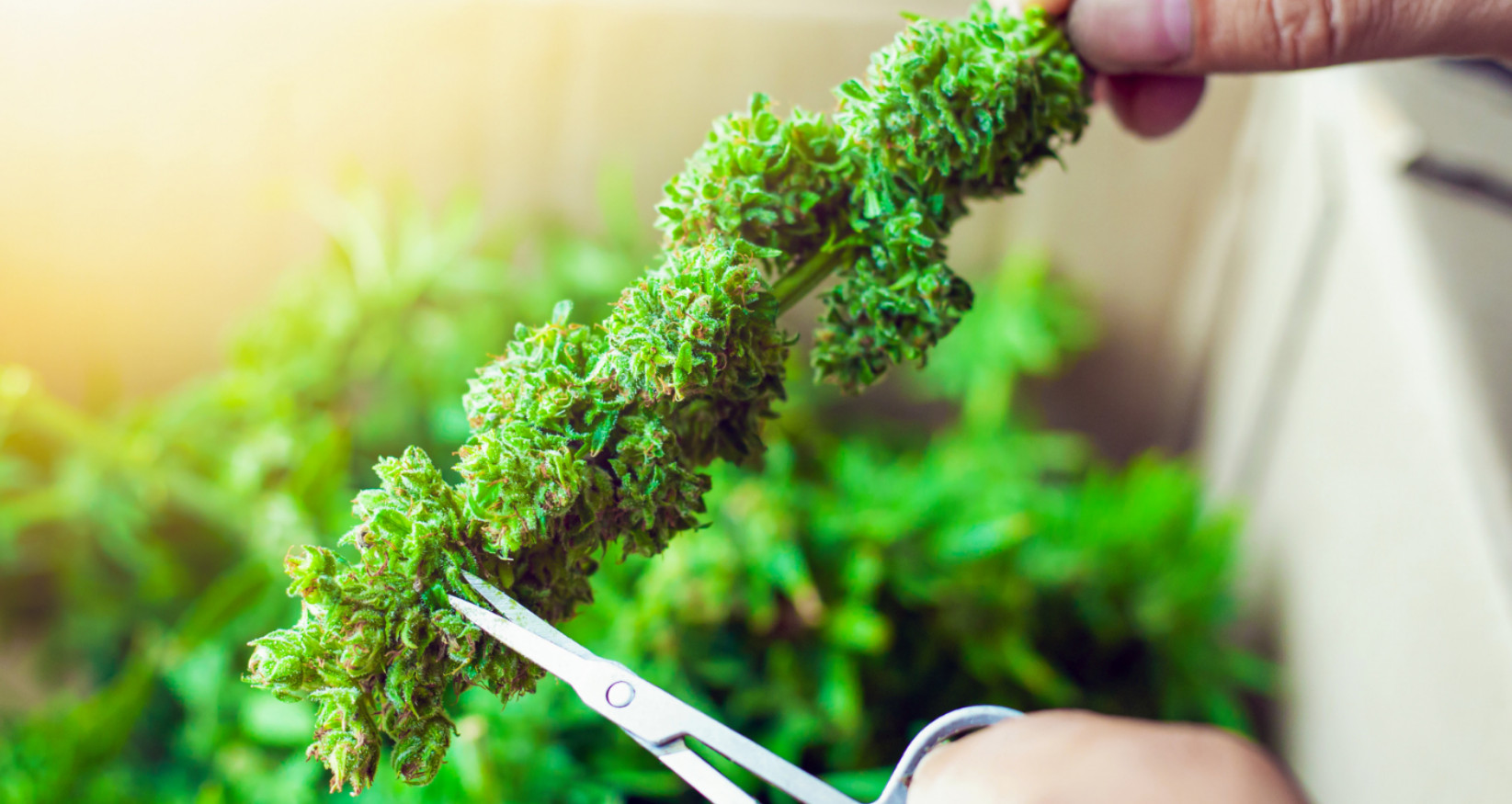
The cannabis flowering stage is the most important period in the life cycle of cannabis plants. This is when female cannabis plants shift their energy from vegetative growth to producing the resinous buds that growers want.
Indoors, growers start the flowering stage by giving plants about 12 hours of light and 12 hours of uninterrupted darkness each day. The 12/12 schedule is a reliable standard, not a hard rule. Studies on hemp cultivars found critical day lengths of about 13 hours 45 minutes to 14 hours, meaning plants began flowering once days were shorter than that (Zhang et al., Frontiers in Plant Science, 2021). A 2023 study of ten drug-type cultivars found that all of them started flowering under photoperiods up to 14 hours (Ahrens et al., Plants, 2023).
The length of the flowering stage varies by strain, from about 7 to 14 weeks. Understanding the timing and requirements of the flowering stage is essential for growers aiming to maximize both the quality and quantity of their harvest.
Genetics play a big part in the rate of growth and the time of flowering of your cannabis plant. For best results, check the breeder’s listed flowering time for your strain and plan your plant’s growth around it.
Fast flowering strains, such as certain indica-dominant varieties, can complete their flowering phase in as little as 7 weeks. They suit short outdoor seasons.
Indica plants, which are typically shorter and bushier, tend to finish earlier than sativa strains.
Indica strains commonly have a flowering stage of about 7 to 9 weeks. Sativa-leaning strains usually need 10 weeks or more, and some take 12 to 14 weeks. For hybrids, trust the breeder’s listed flowering time over the label.
Landrace and Haze strains can take considerably longer than most strains to flower. Landrace strains that are grown outside of their native environment tend to take longer to grow and may develop smaller flower buds.
Autoflowering strains have different growth timelines than photoperiod strains. Autoflowering strains do not need a change in light cycle to begin their flowering phase.
Instead, they begin to flower based on age. Autoflowering cannabis plants usually start flowering 3 to 5 weeks after germination, regardless of the light cycle. Indoors, many growers keep autos on 18/6 or 20/4 from seed to harvest.
The vegetative stage usually lasts 3 to 4 weeks. Most autoflowering strains finish their entire life cycle in about 8 to 12 weeks from seed.
Cannabis seeds can be planted outdoors between April and July, after your last frost date. Many growers choose to plant their cannabis seeds in early June. When you grow seeds, monitor temperature, moisture, and light so seedlings get a healthy start. The timing of your planting depends on your strain and how big you want it to get.
If you want to give your plants the most amount of vegetative time to grow, you should plant them earlier rather than later.
For instance, planting seeds in May can provide growers with about 2 to 3 months of vegetative time before the days get shorter and they start flowering.
Depending on your location some growers have the advantage of getting a long vegetative cycle if they want it. If you don’t want really tall plants, you can try pruning, low stress training (LST), or planting seeds later than normal.
For a short vegetative stage, you can plant your photoperiod cannabis seeds later in the planting season. This gives them a shorter time window to grow before the shorter daylight triggers flowering.
Outdoor plants can also be thrown off schedule by artificial light. A porch light, streetlight, or security light shining on plants at night can delay or interrupt flowering, so place your garden where nights stay dark.
During the plant’s pre-flowering stage in the vegetative period, cannabis plants will begin to develop their pre-flowers. If you do not know the sex of your plant by this point, monitoring the pre-flower formations can tell you if it is a male or female.
Male plants can be identified by the development of pollen sacs, which should be removed to prevent pollination of female plants. Female plants are the ones that will produce buds, so distinguishing them from male plants is crucial.
Proper preparation before the flowering stage is key to healthy bud development and a successful harvest.
Start by making sure your plants are robust and free from pests or diseases, as any issues during the vegetative stage can carry over and impact bud formation.
Provide a balanced nutrient profile that supports strong root systems and healthy foliage, without pushing so much leaf growth that the canopy blocks light from lower bud sites.
Many growers use pruning or training techniques, such as topping or low-stress training, to shape the canopy and promote even light distribution, which helps maximize bud growth.
For most cannabis strains, the transition to the flowering stage is initiated by changing the light cycle. Indoor growers can control this by switching from an 18/6 (18 hours of light, 6 hours of darkness) to a 12/12 light cycle, signaling to the plants that it’s time to start flowering.
Make sure your grow room can fit the stretch in height that often happens as plants begin to flower; many growers flip when plants reach about half the height the space allows. By preparing your plants properly and managing the light cycle, you set the stage for a productive flowering phase.

The cannabis flowering phase is the period when plants shift from vegetative growth to bud production. For a typical photoperiod strain in the northern U.S., the outdoor season looks roughly like this: pre-flowers in late July, visible bud sites in August, bulking buds in September, and harvest from late September through October.
As the marijuana flowering stage begins, plants grow rapidly and enter early flowering, which is characterized by a noticeable stretch in height and increased nutrient needs. This initial period, known as the flowering stretch, is when plants grow the fastest, so manage space and support stems as needed.
During mid flowering, you’ll notice significant changes: cannabis buds become denser, resin production increases, and pistils may start to change color. This is also when buds are developing quickly, and you should monitor for signs of healthy bud formation and maturing flowers.
As you approach the late flowering stage, typically the final 2 to 3 weeks before harvest, focus on monitoring trichome development, pistil color, and overall bud ripeness.
The final weeks are when you keep relative humidity in check, watch for bud rot, and prepare for harvest. Many growers also “flush,” feeding only plain water for the last week or two. The evidence for flushing is thin: a University of Guelph thesis study found flushing ineffective at removing any significant amount of nutrient from the dried bud (Stemeroff, University of Guelph).
In the final week, check for full maturity and readiness for harvest by examining trichomes and pistils closely.
Final harvest times for most cannabis strains indoors typically occur after 8 to 10 weeks of flowering.
Throughout the cannabis flowering phase, pay attention to how your plants grow and develop. Watch for the formation and ripening of cannabis buds, noting changes in size, density, and aroma.
Fan leaves play a vital role in photosynthesis, so manage them to optimize light exposure and airflow, which helps prevent mold and supports bigger buds. Heavy buds in flowering can require additional support to prevent branches from breaking under weight.
Use flowering nutrients and boosters to encourage bigger buds, but be careful to avoid nutrient burn by not overfeeding. Watch for signs of nutrient deficiency, such as yellowing leaves or poor bud development, and address them promptly.
Flowering cannabis plants generally prefer slightly cooler conditions than vegetative plants, around 20–24°C (68–75°F) during the day.
Finally, remember that some yellowing or leaf loss during late flowering is normal and simply part of the plant’s natural lifecycle.
As cannabis plants enter the flowering stage, their nutrient needs shift to support the development of dense buds and healthy flowers.
During this period, flowering plants use more phosphorus and potassium, which support bud growth and flower production.
Nitrogen drives vegetative growth. Reduce it in the flowering phase to avoid excess foliage, but don’t cut it to zero during the first weeks of bloom, when the plant is still stretching and adding leaves.
Most growers switch to bloom nutrients at the start of the flowering cycle to provide the right balance for healthy bud formation. Monitor your plants closely for signs of nutrient deficiencies or excesses, such as yellowing leaves or nutrient burn, and adjust feeding schedules as needed.
Maintaining proper nutrient levels throughout the flowering period helps support bud development and yield.
By understanding and meeting the specific nutrient requirements of flowering cannabis plants, growers can support vigorous growth and achieve a successful cannabis harvest.
While the flowering stage is often divided into early, mid, and late phases, growers benefit from a week-by-week guide. Here’s a more detailed breakdown for a strain with an 8 to 9 week flowering time (count weeks from the switch to 12/12, or from the first pistils outdoors):
The flowering stage doesn’t end until harvest, and knowing when to cut plants down is key:
The flowering stage is vulnerable to multiple issues that can reduce yields or ruin crops:
Flowering indoors presents unique challenges and advantages:
In the northern hemisphere, most photoperiod strains start flowering in late July or August, after the summer solstice. The exact date depends on the strain and your latitude. In the southern hemisphere, flowering starts around February.
Most strains flower for 7 to 10 weeks. Indica-leaning strains often finish in 7 to 9 weeks; sativa-leaning and Haze strains can take 10 to 14 weeks or more.
12/12 is the standard, reliable schedule for photoperiod plants. Research shows many cultivars also start flowering with days up to about 13 to 14 hours, but results vary by strain. Autoflowers need no light change.
Many growers feed plain water for the last week or two, but the evidence is thin. A University of Guelph study found that stopping feeding for up to two weeks did not change the nutrient or cannabinoid content of the dried buds.
If you want to learn more about flowering or how to grow a weed plant outdoors any place in the world, enroll in Cannabis Training University (CTU).
CTU benefits include:
Our comprehensive cannabis curriculum covers every aspect of cannabis cultivation for students of all skill levels. Learn everything about timing your planting, taking care of your plant, and harvesting at the right time in our marijuana growing classes.
More in Growing

Check your state's cannabis laws

Indoor + outdoor growing careers
 IACET Accredited Provider · online cannabis education
Since 2009 • 50,000+ students trained worldwide



Copyright Cannabis Training University, a subsidiary of Online Training Providers. © 2026. All Rights Reserved.
Medical Disclaimer: The information on this website is for informational purposes only and is not intended to be a substitute for professional medical advice, diagnosis, or treatment.
Always seek the advice of a physician or other qualified health provider with any questions you may have regarding a medical condition.
Legal Compliance: Cannabis remains federally illegal. Products and information are intended only for jurisdictions where cannabis use and possession is legal.
By using this site, you affirm that you are of legal age (21+) and responsible for understanding your local laws.